A Card You Write to the Person Who Is Grieving
Many sympathy cards are made as tributes to the person who died. This one is different. It is written to the person who is left behind. The greeting reads Dearest [Name], and the short verse speaks directly to them: Our sincere condolences. May your loved one rest in eternal peace. Wishing you comfort, strength, and healing. That makes it a good choice for friends, neighbours, colleagues and relatives who want to reach out personally.
Picture of the Card
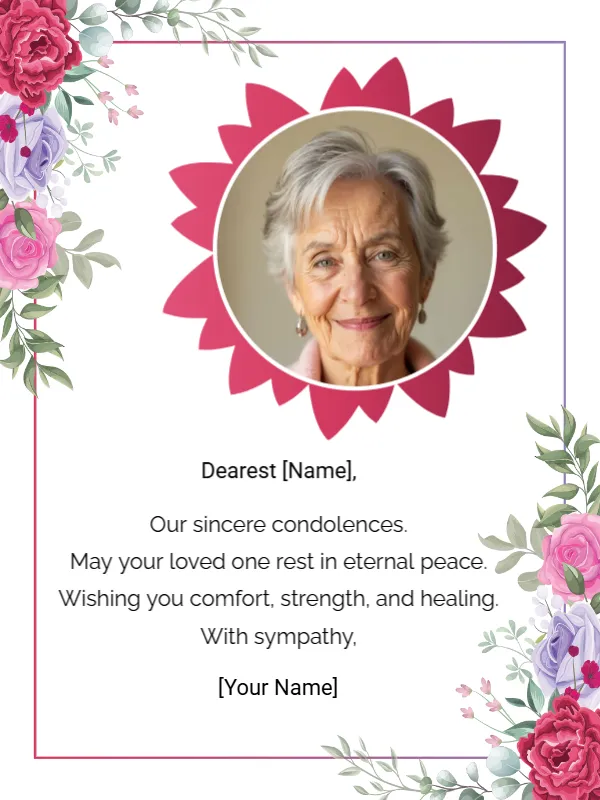
The card is 600 x 800 pixels in portrait. A thin plum and magenta frame runs around the white page, and watercolour roses in deep pink, red and lavender, with eucalyptus leaves and small buds, gather at the top left and the bottom right. A bright magenta starburst with pointed petals opens near the top, and inside it a round photograph of a smiling older woman sits in a white ring. Below it, the greeting and the lines of the verse are centred in a soft sans serif, finishing with With sympathy, and [Your Name]. The fonts are Roboto and Raleway.
Is the Photograph Required?
The photograph is optional. If you are sending the card on behalf of a group, such as a team, you may not have a picture of the person. In that case, click the photo in the editor and choose Replace Image to put in a flower, a candle, a landscape or the logo of your group. A calm picture of a lake or a sunrise is a gentle choice. Or delete the photo and enlarge the starburst, leaving only the colour.
Filling in the Two Brackets
- Replace [Name] with the name of the person you are writing to, for example “Dearest Anna.”
- Replace [Your Name] with your own name, or the names of the people sending the card.
That is all the card needs. If you wish, add a short personal line before the sign off, such as “I will never forget his kindness to me.” Personal memories are the part of a condolence message that people value most.
Examples of What to Add
- A short memory of the person who died, in one sentence.
- An offer of practical help, such as bringing a meal.
- A promise to stay in touch in the weeks ahead.
Keep it to a sentence or two. A short, sincere note is better than a long one.
What to Avoid Saying
People often reach for phrases that are meant to help but can hurt. “At least he lived a long life” or “she is in a better place” may not feel comforting to someone in shock. Stick to what you know and feel: you are sorry, you care, you are thinking of them. If you are not sure how to word something, simplicity is safest.
Colours and Mood
Bright pink and magenta make this card warmer than most sympathy designs. That suits a celebration of life, a loved elder who lived fully, or a family that prefers colour to black. If the loss is sudden or the family is formal, a quieter card may suit better, such as the black and white designs in the same collection.
Sharing the Card
Download it as PNG or JPG and send it by message or email, or print it small and slip it into a handwritten envelope. Signing by hand adds a human touch if you print. If you send it online, add a line in the message body so that the person knows it comes from you, not from a mass mailing.
For a card that honours the person by name, see the In Loving Memory card with green leaves. For a monochrome card with a large portrait, see the In Loving Memory and gentle peace card. More are in condolence templates.