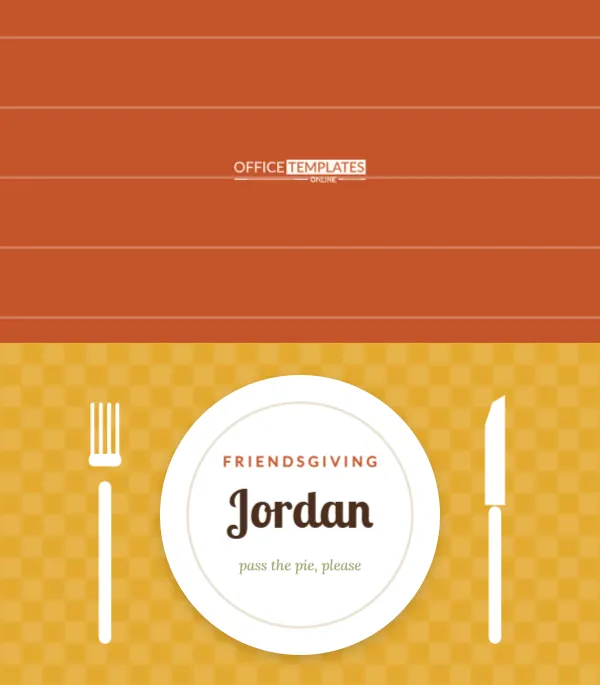
Friendsgiving is Thanksgiving’s younger, more relaxed cousin: a potluck feast with friends, usually the weekend before or after the official holiday, where someone always brings a surprise dish, and nobody minds mismatched chairs. It deserves a place card with a sense of humour. This one turns the card itself into a tiny place setting. Each guest’s name sits on a white dinner plate, flanked by a fork and knife, on a mustard tablecloth with a subtle check pattern. It is witty, warm, and instantly understood.
A Place Setting on a Place Card
Flat, the card is 3.5 x 4 inches; folded, it stands 3.5 x 2 inches. The whole card is mustard yellow covered in a faint white check, like a tablecloth. On the front, a large white plate with a soft shadow sits in the centre, with a thin inner rim. A white fork stands on the left and a white knife on the right. On the plate, Friendsgiving is written in small terracotta capitals; the name Jordan is set in Lobster Two, a bold retro script, in dark brown, and pass the pie, please sits underneath in sage italic. The back panel is terracotta with thin white horizontal lines, like a striped napkin, and the logo in cream.
The Check Pattern Is an Editor Texture
The faint checks on the tablecloth come from the editor’s background Pattern feature, using the built-in Tiny Checkers pattern in white at low opacity. You can change it in the Backgrounds panel under Pattern: increase the opacity for a bolder gingham, change its colour to red for a picnic look, or choose another pattern such as Polka Dots or Stripes. The plate, cutlery and back panel sit on top, so the texture shows wherever the mustard tablecloth shows.
Funny Lines for the Plate
The line under the name is the joke of the card. Change it for each guest to make everyone laugh as they sit down:
- pass the pie, please
- in charge of the mashed potatoes
- brought the wine (we hope)
- first in line for leftovers
- no politics at this table
- chief turkey carver
- saving room for dessert
Matching the line to what each friend brought to the potluck is a fun way to thank them.
Editing the Plate
Click the name and type your friend’s name. Lobster Two is bold and readable, but the plate is round, so short names look best; for longer names, reduce the size until the name fits inside the rim. Edit the line underneath, download the card, and repeat for the next guest. The fork, knife, and plate are separate shapes, so they stay in place while you type.
Potluck Planning With Place Cards
| Dish category | How many to assign | Card line idea |
|---|---|---|
| Turkey or main | The host | chief turkey carver |
| Sides | Three or four friends | Queen of the stuffing |
| Salads | One or two friends | Bringing the greens |
| Desserts | Two friends | pie royalty |
| Drinks | One or two friends | keeper of the cider |
Changing the Tablecloth Colour
Mustard and terracotta are warm, autumnal and a little retro. To change them, select the canvas background and pick a new colour; the check texture will sit on top of it. Try sage green with white checks, burgundy with cream checks, or classic red-and-white gingham for a picnic feel. Then change the back panel and the Friendsgiving label to match.
Printing the Plate Shadow
The plate has a soft drop shadow that makes it look as if it is resting on the cloth. Shadows print well on smooth matte cardstock at normal or high quality; very absorbent paper can blur them. Use a bright white stock so the plate stays white. Mustard can look greenish when the cyan ink is low, so check your ink and print one test card first.
Folding: So the Striped Napkin Faces Across
Trim the card to 3.5 x 4 inches and score where the mustard front meets the terracotta back. Fold with the plate facing out. The striped terracotta back then faces across the table like a folded napkin.
Friendsgiving Table Ideas
Mismatched vintage plates, kraft paper runners where friends write what they are thankful for, candles in jars, and a big board of cheese and crackers set a relaxed scene. Place each card on its owner’s plate, or slip it under the edge of the plate so the name peeks out.
Friendsgiving Games
Turn the cards into a game: write a piece of trivia about one friend on the back of each card (This person once ate twelve slices of pie). Guests read them aloud between courses and guess who it is. It breaks the ice when friends from different circles meet for the first time.
Supper Clubs and Potlucks Beyond November
The plate design works for any dinner party: supper clubs, birthday dinners, cooking club nights, Galentine’s brunch, potluck work lunches, or a family dinner when relatives visit. Change Friendsgiving to the name of your event.
Hosting Friendsgiving Without the Stress
Hosts of Friendsgiving often cook the turkey and coordinate everything else. A simple shared list of dishes, a clear arrival time, and a seating plan with place cards keep the evening relaxed. Set the table the day before, including the cards, so you can focus on the oven on the day. Ask an early arrival to light candles and pour drinks, and let friends who arrive with dishes find their seat immediately rather than hovering in the kitchen.
Friendsgiving Card Questions
Can I add a turkey illustration?
Yes. Add a turkey icon from the editor’s library and place it small on the plate above the name.
Why can’t I select the checks?
They are a background texture. Change them in Backgrounds, Pattern.
What is the folded size?
3.5 inches wide and 2 inches tall.
Can I use a real plate colour, like blue and white china?
Yes. Change the plate fill to pale blue and the rim to a deeper blue for a willow-pattern feel.
Is the fork an icon I can recolour?
The fork and knife are simple white shapes; select them to give them a silver or gold colour instead.