Preparing an Incumbency Certificate for Use Abroad? Start with a Clear, Professional Document
Business documents sometimes need to travel beyond the country or jurisdiction where they were prepared. When a Certificate of Incumbency is intended for international use, the document may need to go through additional authentication steps, which can include obtaining an apostille where applicable.
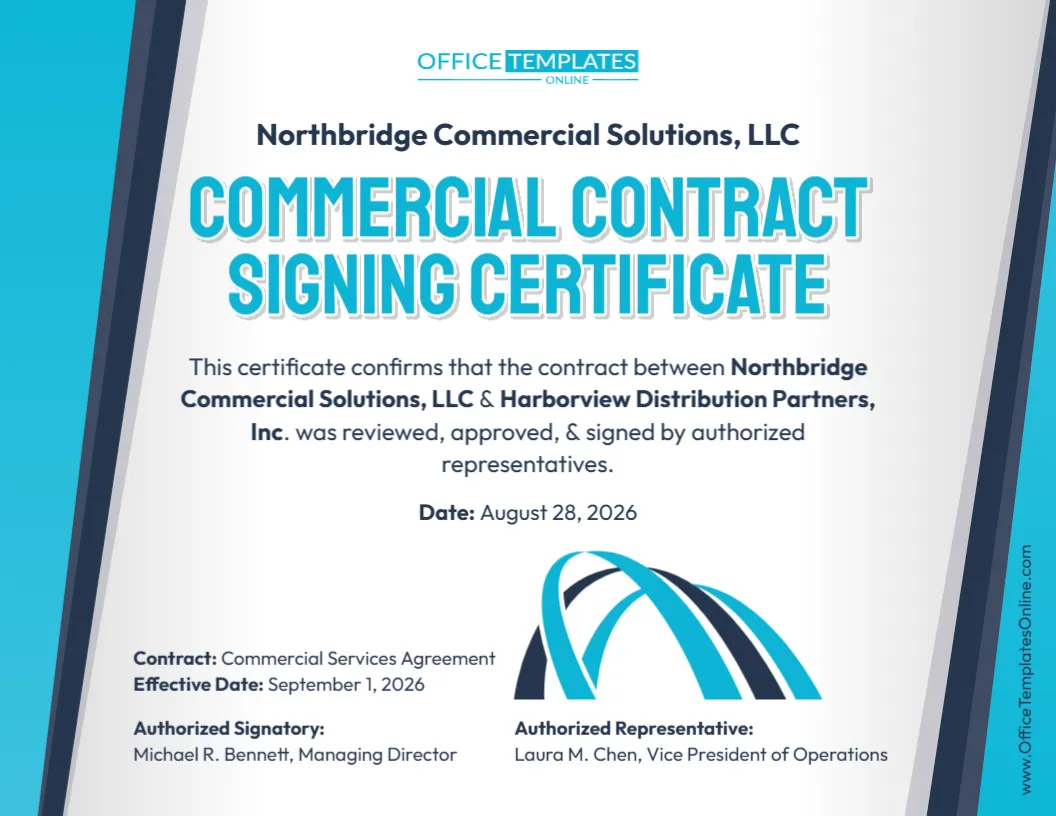
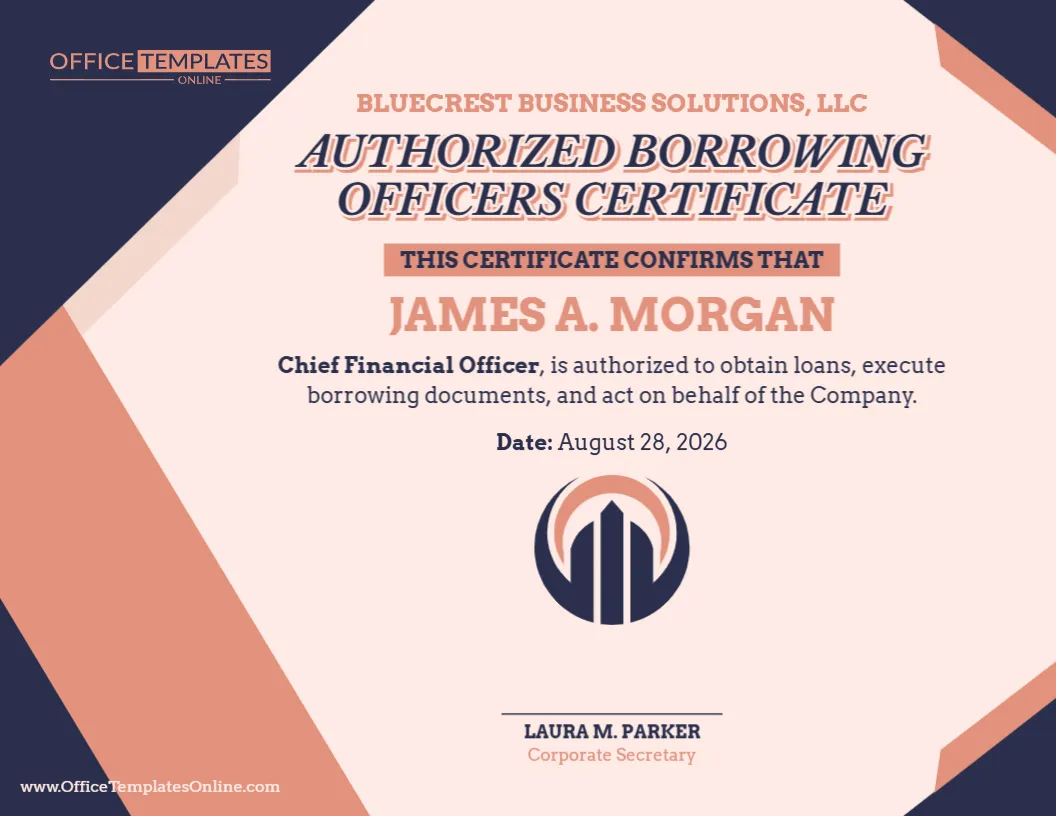
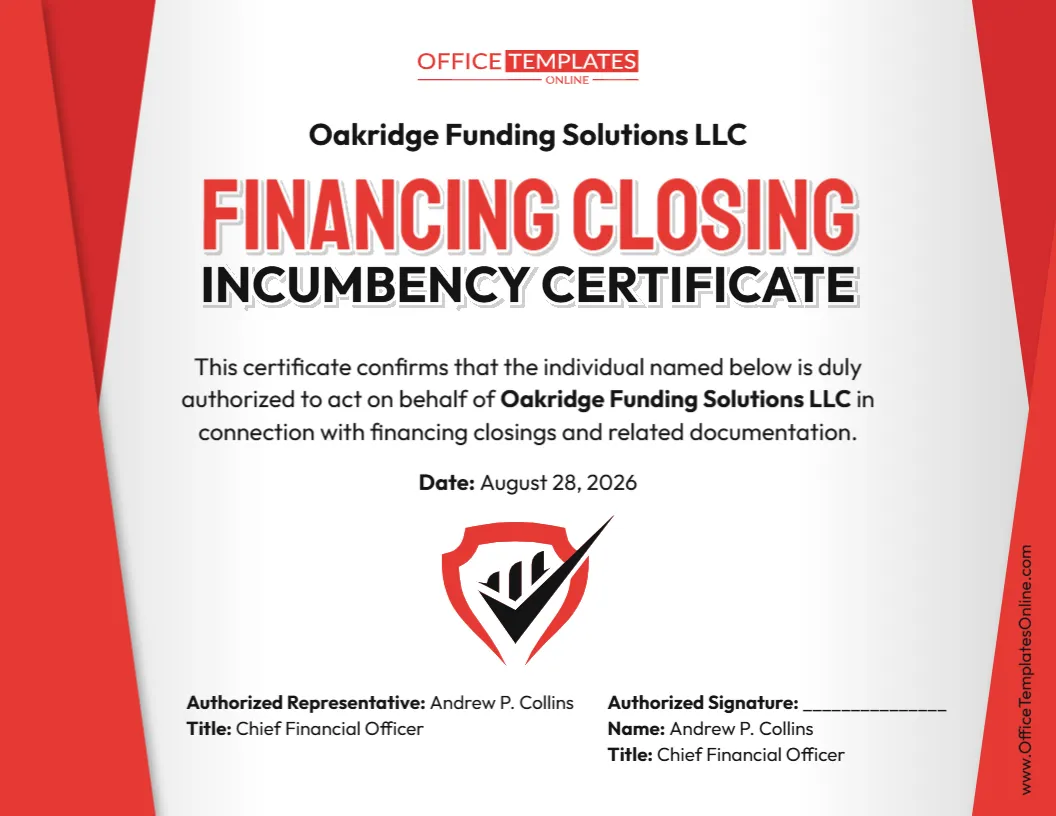
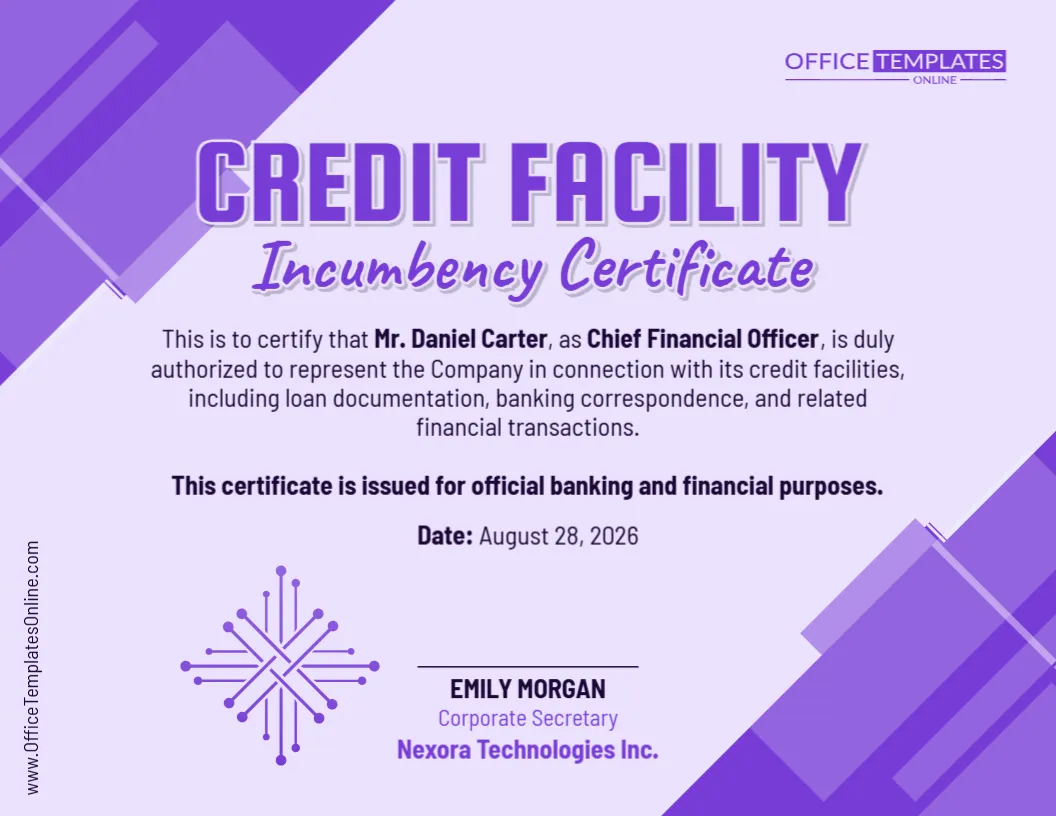
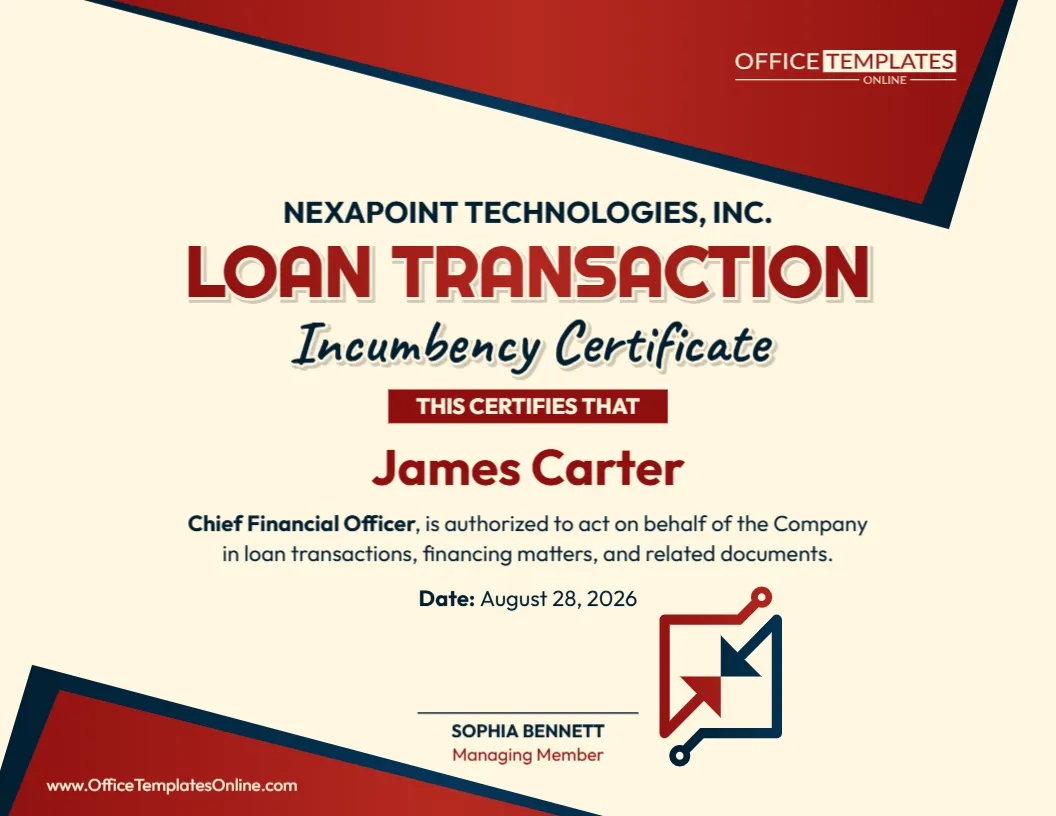
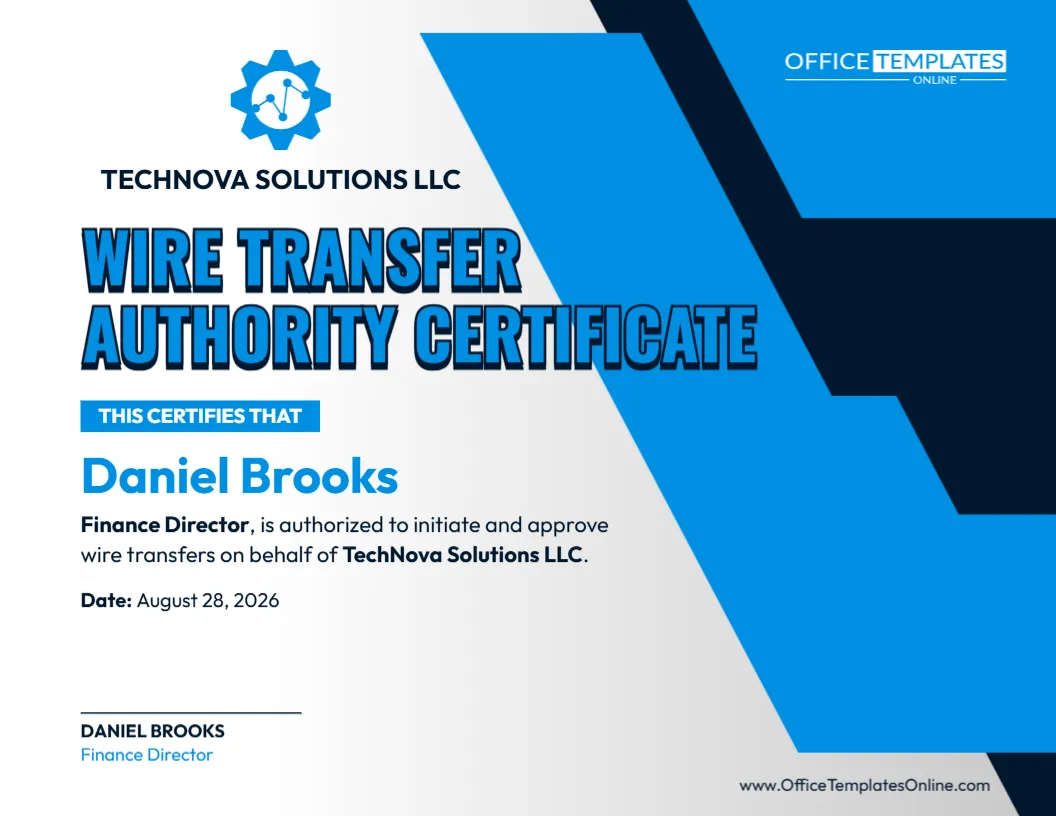
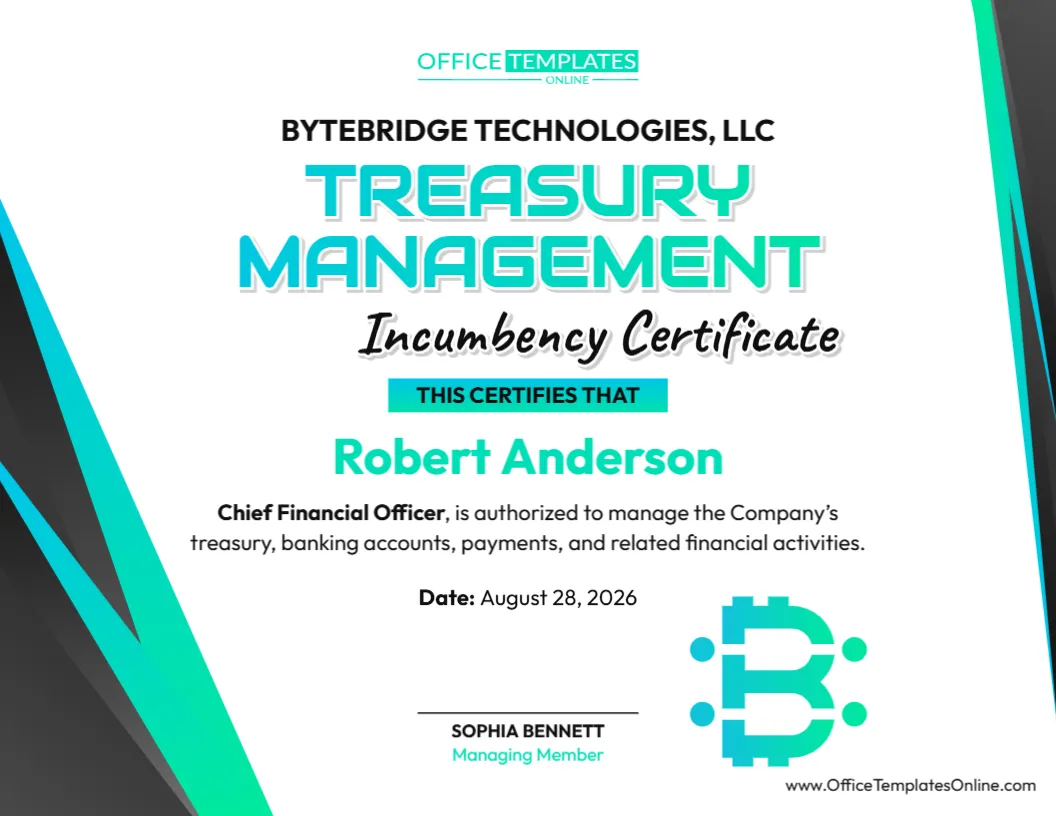
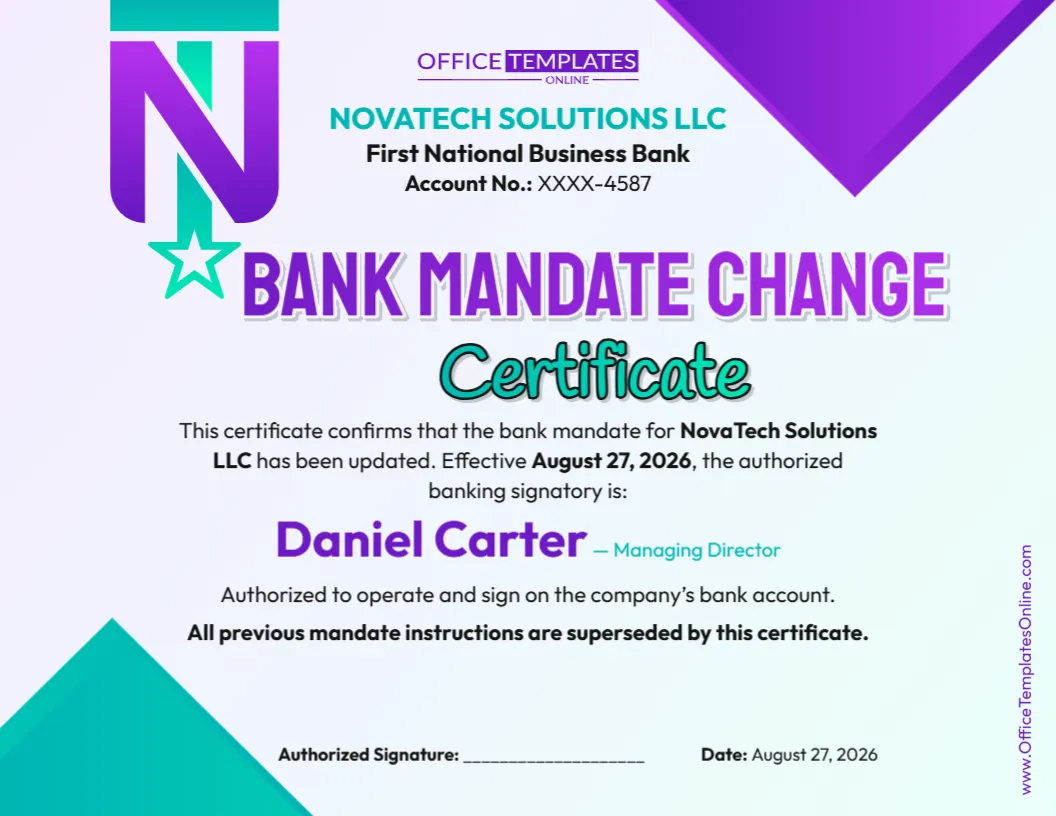
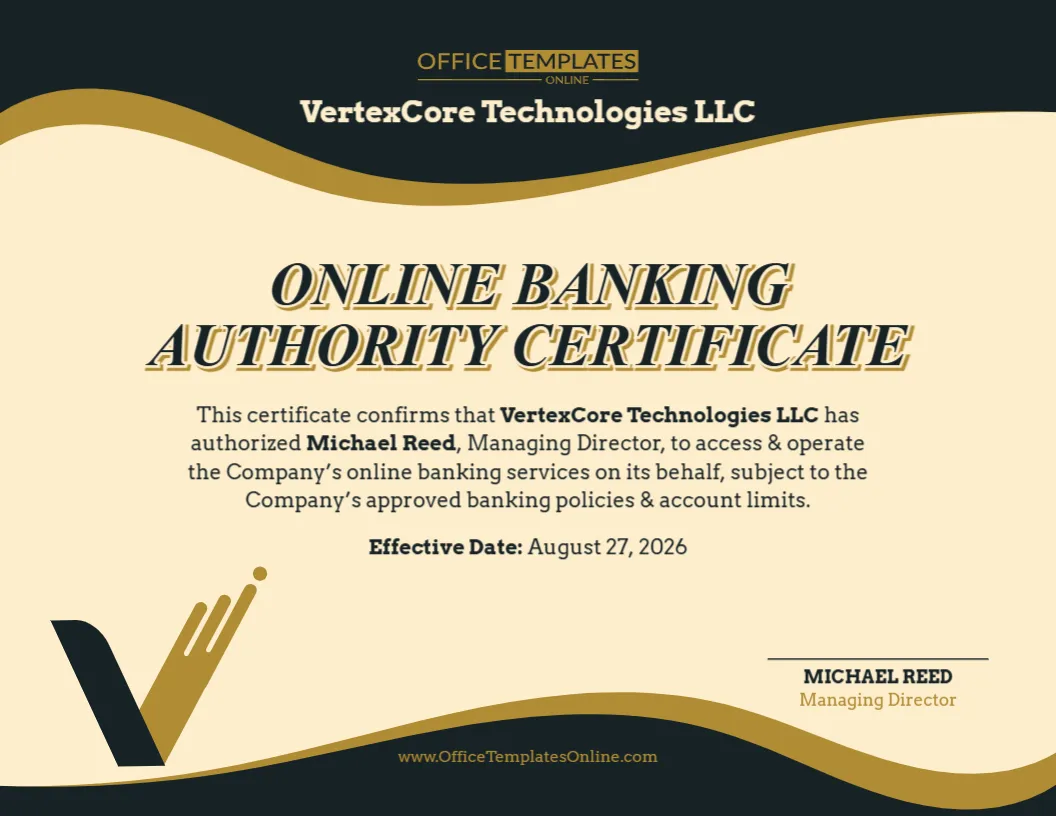
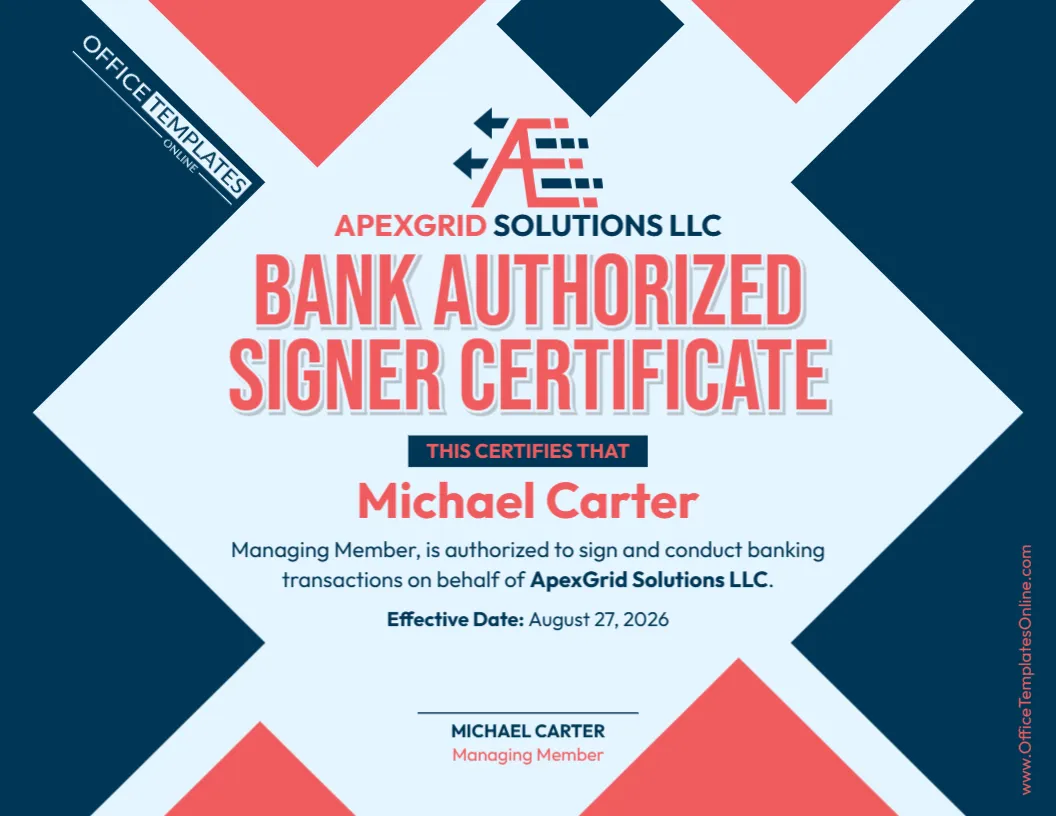
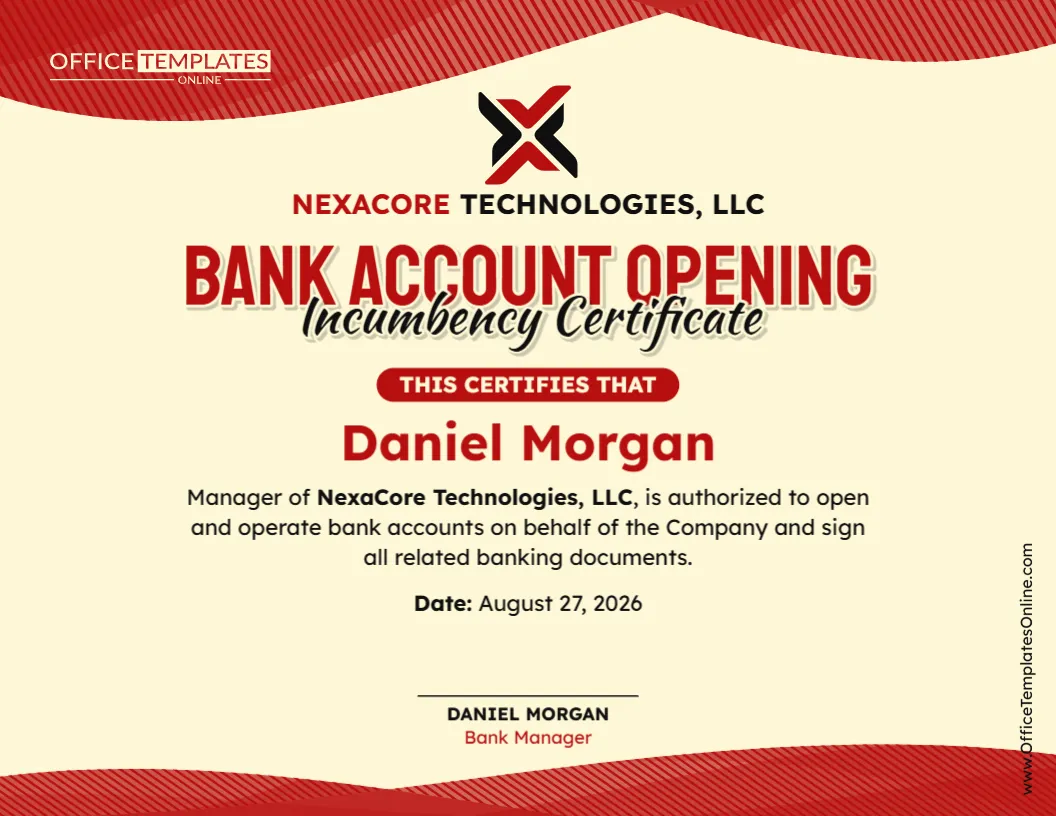
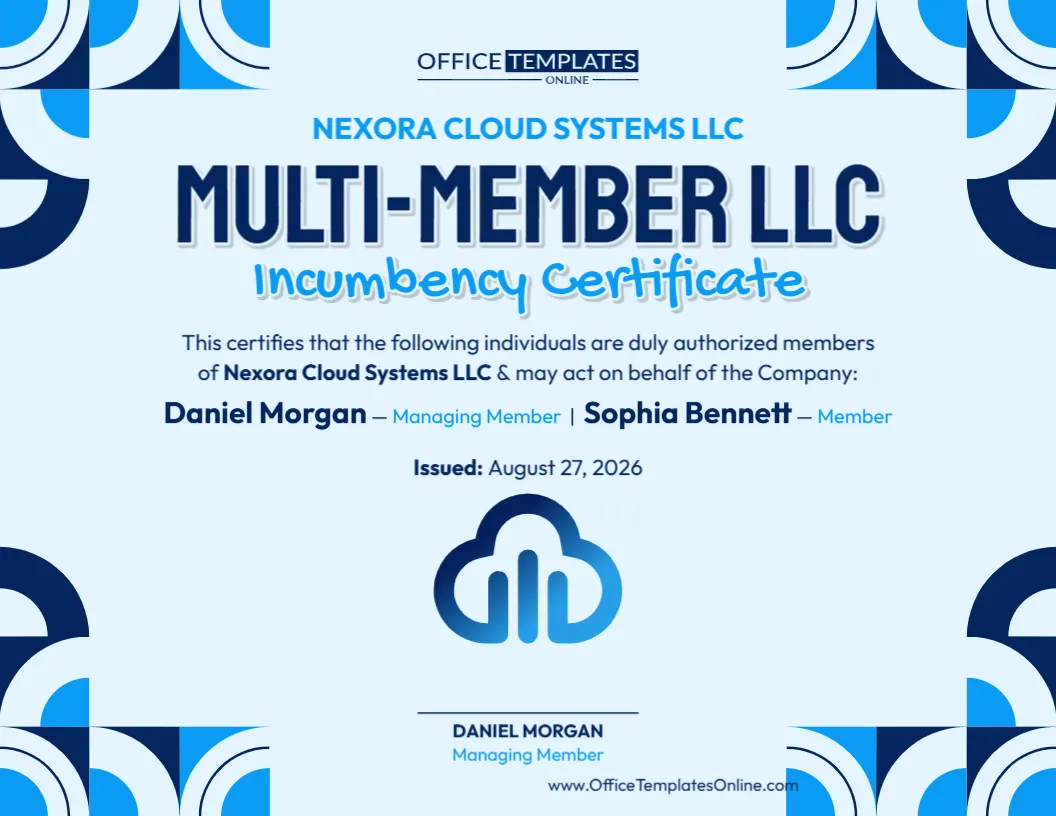
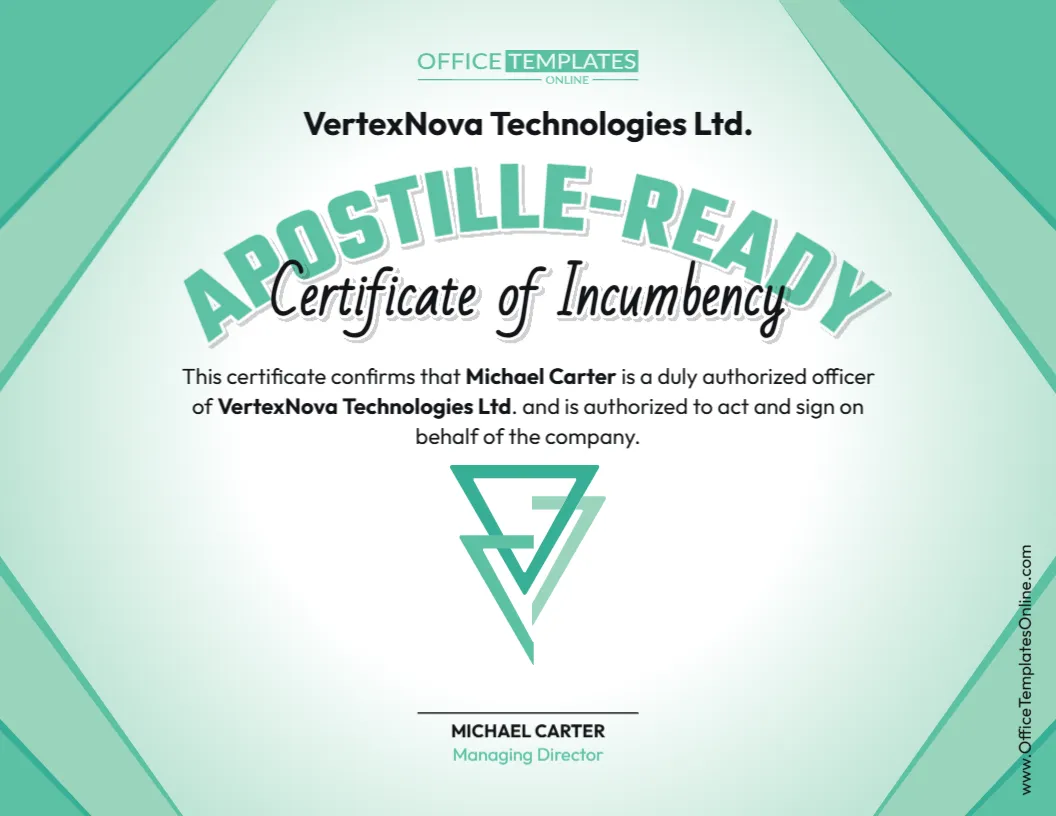
This Apostille-Ready Certificate of Incumbency Template gives you a clean, professional starting point for preparing the underlying certificate. It is designed to clearly identify the company, name the incumbent officer, and state the authority being certified. Its simple certificate-style presentation also leaves the essential information easy to locate when the document is later reviewed, signed, notarized, certified, or submitted for authentication as required.
You can customize the template online in your browser without logging in. Replace the sample company and officer information, revise the certification statement, and adjust other editable elements to suit your needs. When finished, download your personalized certificate as a PDF, PNG, or JPG.
First, What Is a Certificate of Incumbency?
A Certificate of Incumbency is a corporate document used to confirm the identity and position of one or more people who currently hold offices or authorized roles within a company.
Depending on its wording and purpose, an incumbency certificate can identify a President, Chief Executive Officer, Managing Director, Corporate Secretary, Treasurer, Director, or another authorized representative. It may also confirm that the named person has authority to sign documents or act for the company.
This particular design focuses on one authorized officer, making it suitable when you want a straightforward certificate centered on a specific individual rather than a lengthy list of company officers.
The template’s sample statement confirms that the named individual is a duly authorized officer of the company and is authorized to act and sign on its behalf. You can modify this wording if your situation requires a more specific description of authority.
What Does “Apostille-Ready” Mean Here?
This is an important distinction.
“Apostille-ready” does not mean that the template already has an apostille or becomes apostilled simply because you complete and download it.
An apostille is an official certificate issued by a competent authority under the Hague Apostille Convention. It authenticates the origin of a public document so that it can be presented in another Convention country, subject to the applicable rules.
A privately prepared corporate certificate may first need another official act—such as notarization or certification—before it is eligible for an apostille. The exact procedure depends on the document, the place where it is executed, the competent authority, and the country where it will be used.
In this template, apostille-ready means that you have a professional underlying certificate that can be completed and then taken through whatever signing, notarization, certification, and authentication process applies to your situation.
The downloaded template itself is not an apostille and does not include government authentication.
A Simple Design Can Be an Advantage
Documents prepared for official or international use benefit from clarity.
This certificate avoids an overcrowded layout and instead gives the important information plenty of room. The company name appears at the top, followed by the prominent “Apostille-Ready Certificate of Incumbency” heading.
The main certification statement identifies the officer and explains their relationship with the company. Below that, the design provides a distinct area for the officer’s name and position.
The result is a certificate where the core facts are immediately visible:
Company ? Incumbent officer ? Authority ? Position
That simple structure can make the document easier for recipients and other parties involved in the authentication process to review.
What Can You Personalize?
The sample certificate is intended to show how the completed document could look. Before using it, replace all example information with accurate details from your organization.
You can customize items such as:
- Full legal name of the company
- Name of the incumbent officer
- Officer’s corporate position or title
- Statement confirming incumbency
- Description of signing or representative authority
- Certification wording
- Names or titles shown in the certification area
- Other text needed for the intended use
Depending on the requirements you have been given, you may also need to add a certificate date, signature statement, notarial wording, additional officer information, or other details.
Do not add formal legal or authentication language simply for appearance. If a notary, government authority, lawyer, bank, registry, or recipient has provided required wording, use those instructions when customizing the certificate.
When Might an Apostilled Incumbency Certificate Be Requested?
Companies operating internationally can encounter situations where another party needs reliable evidence of who currently has authority within the organization.
Depending on the transaction and country involved, an authenticated incumbency certificate may be requested in connection with matters such as overseas banking, establishing a foreign business relationship, international corporate transactions, opening or managing accounts, cross-border contracts, foreign subsidiaries or branches, due diligence, or other official business processes.
The receiving organization may want confirmation that the individual signing or acting for the company actually holds the stated position.
However, requirements vary widely. One recipient might ask for an apostilled Certificate of Incumbency, while another may require a Certificate of Good Standing, board resolution, power of attorney, notarized officer certificate, company registry extract, or a combination of documents.
Always work from the requirements of the actual recipient and relevant authorities rather than assuming that one document is accepted everywhere.
Apostille and Notarization Are Not the Same Thing
These terms are sometimes used as though they mean the same thing, but they describe different processes.
A notarization generally involves a notary public performing an authorized notarial act, such as acknowledging a signature or administering an oath, depending on the document and applicable law.
An apostille is a separate form of authentication issued by a designated competent authority for documents intended for use in another country covered by the Hague Apostille Convention.
For some corporate documents, notarization may be a step that takes place before an apostille can be obtained. In other situations, different certification procedures may apply.
For that reason, if your finished Certificate of Incumbency needs an apostille, check the exact procedure before signing it. This can help you avoid completing the document in a way that does not meet the authentication requirements.
Prepare the Certificate Online in a Few Easy Steps
The template can be personalized without installing specialist design software.
Open it in the online editor and work directly from your browser. You do not need to log in to customize the template.
A practical preparation process is:
- Replace the sample company name with the correct legal name.
- Enter the full name of the current officer.
- Add the officer’s correct corporate title.
- Review the statement confirming their incumbency.
- Edit the description of their authority if necessary.
- Add any other information required by the recipient.
- Carefully proofread the completed certificate.
- Download it in your preferred format.
- Complete any required signing, notarization, certification, or apostille process separately.
This approach gives you a ready-made visual structure while still allowing the actual certificate information to be tailored to your organization.
Be Precise About Signing Authority
The sample wording states that the officer is authorized to act and sign on behalf of the company. That statement should only be used if it accurately reflects the individual’s authority.
Corporate titles alone do not necessarily tell the whole story.
An officer’s powers may be defined or limited by bylaws, board resolutions, shareholder decisions, operating agreements, internal authorization policies, powers of attorney, or other governing documents.
If the individual is authorized only for certain transactions or documents, consider whether the certificate should describe that limitation.
A professional-looking certificate should never be used to imply authority that the named person does not actually have.
Check the Destination Country Before Seeking an Apostille
Before starting the authentication process, determine where the certificate will ultimately be used.
Apostilles are associated with countries participating in the Hague Apostille Convention. If the destination is not covered by the relevant apostille arrangements, a different authentication or legalization process may be required.
You should also check whether the recipient requires the original document, a notarized copy, a particular type of certification, a recent issue date, a certified translation, or additional supporting corporate records.
Checking these requirements early can save time and reduce the chance that you will have to prepare the certificate again.
The Template Does Not Replace the Apostille Process
Downloading the certificate as a PDF, PNG, or JPG does not make the document apostilled.
Likewise, adding the word “apostille,” inserting a seal graphic, or typing a notary’s name into a design cannot replace an official authentication process.
A genuine apostille is issued by the competent authority responsible for that service. The process and eligible documents depend on the applicable jurisdiction.
This template is therefore best understood as the editable certificate you prepare before the required official steps are completed.
That distinction helps prevent confusion between preparing a document and authenticating it.
Review the Corporate Information Before Finalizing
International use can make accuracy especially important because mistakes may not be discovered until a document reaches another institution or country.
Check the legal spelling of the company name against official corporate records. Confirm the officer’s full name and current position. Make sure the authority statement accurately describes what the individual is permitted to do.
If the recipient has requested specific language, compare your completed certificate with those instructions.
You should also determine who is expected to sign or certify the certificate. Depending on the situation, this may be a corporate secretary, director, another officer, or another authorized person.
If notarization is required, do not sign the document prematurely if the applicable notarial procedure requires the signature to be made or acknowledged before a notary.
Download as PDF, PNG, or JPG
After customizing the design, you can download the completed certificate in PDF, PNG, or JPG format.
PDF will often be the most practical choice when you need to print the certificate or maintain it as a conventional document. PNG and JPG are available when an image version is more appropriate for your workflow.
Keep in mind that an authority handling notarization, certification, authentication, or apostille services may have requirements concerning originals, signatures, paper documents, electronic documents, or accepted formats.
The ability to download a particular format does not necessarily mean that format will be accepted for the official process, so check before proceeding.
A Helpful Pre-Apostille Checklist
Before moving your completed certificate into any official authentication process, make sure that:
- The company’s legal name is correct.
- The named officer currently holds the stated position.
- The officer’s name is spelled correctly.
- The authority statement matches actual corporate authority.
- Any required certificate date has been included.
- The correct person will sign or certify the document.
- You know whether notarization is required.
- You have checked the apostille requirements in the issuing jurisdiction.
- You know the requirements of the country and recipient where the document will be used.
Completing these checks before seeking authentication can make the next steps easier.
Start with the Certificate—Then Complete the Required Authentication
If you need to prepare an incumbency certificate for possible international use, this Apostille-Ready Certificate of Incumbency Template gives you an organized place to begin. Its focused design makes the company, officer, position, and authority easy to identify while leaving you free to adapt the wording to your specific requirements.
Customize the certificate online without logging in, carefully check the corporate information, and download the completed design as a PDF, PNG, or JPG. If an apostille is required, the finished certificate can then proceed through the appropriate signing, notarization, certification, or authentication steps required by the relevant authorities.
This template helps you prepare the underlying document; the apostille itself must be obtained separately from the appropriate competent authority.