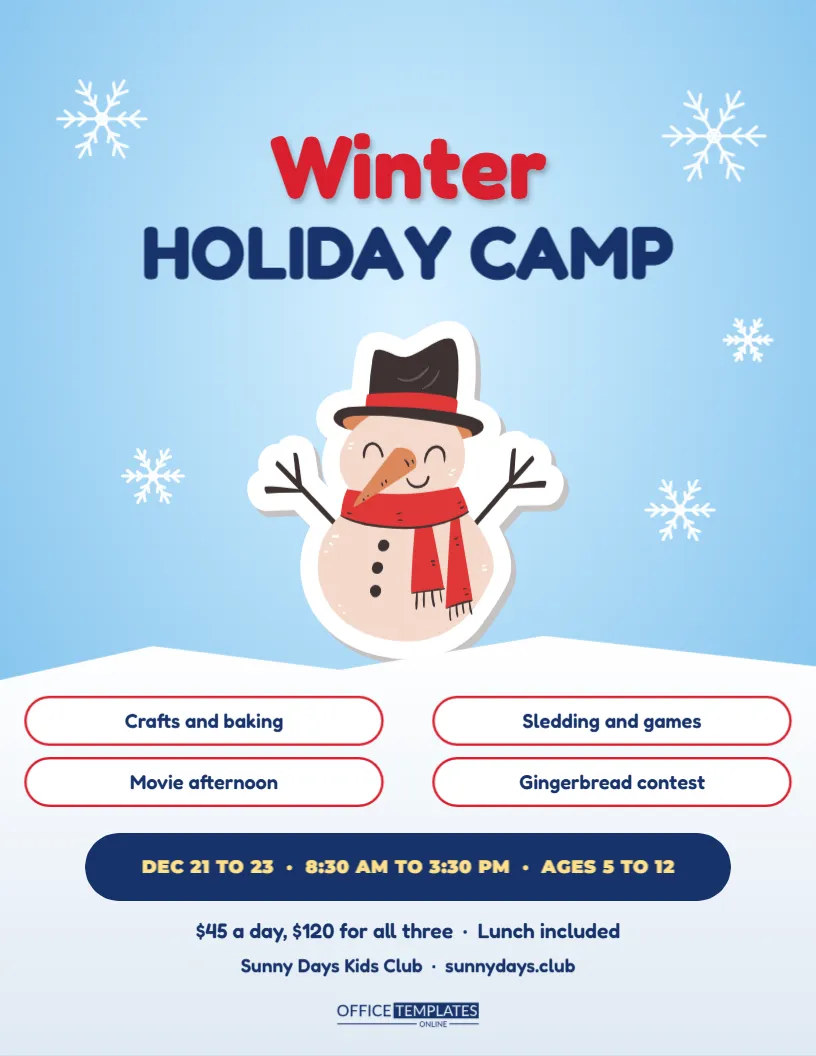
When schools close for Christmas, working parents scramble for childcare, and a holiday camp flyer needs to calm them down. This design uses a sky blue background with paper snowflakes, a friendly snowman sticker, rounded Fredoka titles in red and navy, four activity chips, and a navy banner with dates, age range, and prices. Sports clubs, schools, nurseries, community centres and childcare providers can use it to sell places in a winter camp. It looks cheerful for children and organised for adults.
A Friendly Look for Parents and Children
The bright blue and white palette and rounded lettering make the camp feel safe and fun. The snowman smiles from the middle, and the paper snowflakes suggest crafts. Parents see an organised programme, while children see something they want to do.
Editing the Title and Camp Name
The red word Winter sits above HOLIDAY CAMP in navy. Replace them with Winter Wonder Camp, Christmas Club, or Snow Days. A rounded font keeps the text friendly, so avoid very long names that would shrink the type.
The Snowman Sticker and Snowflakes
The snowman has a hat, scarf, and carrot nose in sticker style with a white outline. Snowflakes float around him. You can resize him or move him to a corner to make space for a logo or a photo of your own staff.
Filling In the Four Activity Chips
| Chip | Example | Skill |
|---|---|---|
| Crafts and baking | Gingerbread houses | Creativity |
| Sledding and games | Snow races | Teamwork |
| Movie afternoon | Popcorn and a film | Rest |
| Gingerbread contest | Judged by staff | Fun |
Dates, Hours and Age Groups
The navy banner gives the days, the daily hours and the age range, for example Dec 21 to 23, 8:30 AM to 3:30 PM, ages 5 to 12. Working parents need early drop-off and late pick-up, so mention extended care if you offer it.
Prices, Discounts and What Is Included
State the daily price and any discount for the full camp. Say whether lunch, snacks, and materials are included. Offer a sibling discount and mention payment options, because families often compare several camps.
Staffing Ratios and Safeguarding
Parents trust camps that are open about safety. Mention the staff-to-child ratio, first aid training, and background checks. A short sentence shows professionalism and eases the worry of leaving a child with new adults.
Lunch, Snacks and Allergy Policies
Explain whether children bring lunches or eat provided meals. State your policy on nuts and allergies. A clear plan keeps children safe and avoids last-minute problems at drop-off.
Drop-off, Pick-up and Communication
Give parents a clear process for arrival and collection, along with an emergency contact. Mention that you send updates and photos by email or an app. Regular communication makes parents more comfortable and more likely to book again.
Outdoor Play and Weather Plans
Children need fresh air, but winter weather can be harsh. Describe your plan for rainy or icy days, and ask parents to pack warm clothes and spare socks. Indoor games ensure that the programme continues in any conditions.
Special Guests and Themed Days
A visit from Santa, a magician, or a local firefighter gives children something to look forward to. Name themed days, such as pajama day or elf day, on the flyer. These details make the camp memorable.
Partnerships With Schools and Clubs
Ask schools to send the flyer home in book bags and clubs to display it. Offer a small commission or a free place for a staff member. Partnerships bring trusted referrals.
Printing and Sharing the Camp Flyer
The light blue background prints cheaply. Hand copies to parents at pick-up, post them in libraries, and share the image in local parent groups. Add a booking link to every post.
Managing Registrations and Waiting Lists
Use an online form with required fields and a deposit if you need one. Keep a waiting list for full days. A prompt reply to every enquiry encourages parents to complete their booking.
Final Check Before Registration Opens
Confirm dates, prices, ratios, and contact details. Make sure your venue and insurance are in place. Print a copy and ask a parent to read it and explain what a day at camp looks like.
Keeping Parents Informed With Daily Updates
Send a summary and a couple of photos each evening, with consent. Parents love to hear what their children did. Regular updates show professionalism and lead to repeat bookings for spring and summer.
Fun Challenges and Awards at Camp
Give out small certificates, such as Best Snowman Builder or Most Helpful Elf. A closing ceremony on the last day lets each child shine. Mention awards on the flyer, and children will be eager to attend.
Sibling Groups and Age-Mixed Activities
Plan activities that work for mixed age groups, such as a shared craft or a team relay. Siblings can stay together, which parents appreciate. Add a note on the flyer about how you manage different ages.
Recruiting and Training Camp Counsellors
Hire counsellors who like children and are comfortable leading games. Run a short training on safeguarding, first aid, and behaviour. Provide a daily plan so that every counsellor knows what to do and the programme runs like clockwork from the first morning.
Early Bird Offers and Multi Camp Passes
Reward parents who book early with a discount or a free snack pack. Offer a pass that covers winter, spring, and summer camps. Early commitments help you plan staffing and give you cash flow before the holidays begin.
What Parents Compare When Choosing Between Camps
Parents compare price, hours, location, staff ratios, and the quality of activities. State each of these clearly so that your camp stands out. A short testimonial from last year, a photo of the venue, and a link to your safeguarding policy answer the questions parents ask before they book. Make the booking steps simple, reply fast to enquiries, and send a welcome message with a packing list. Parents choose camps they trust, and trust is built by being clear, prompt, and friendly from the first contact.