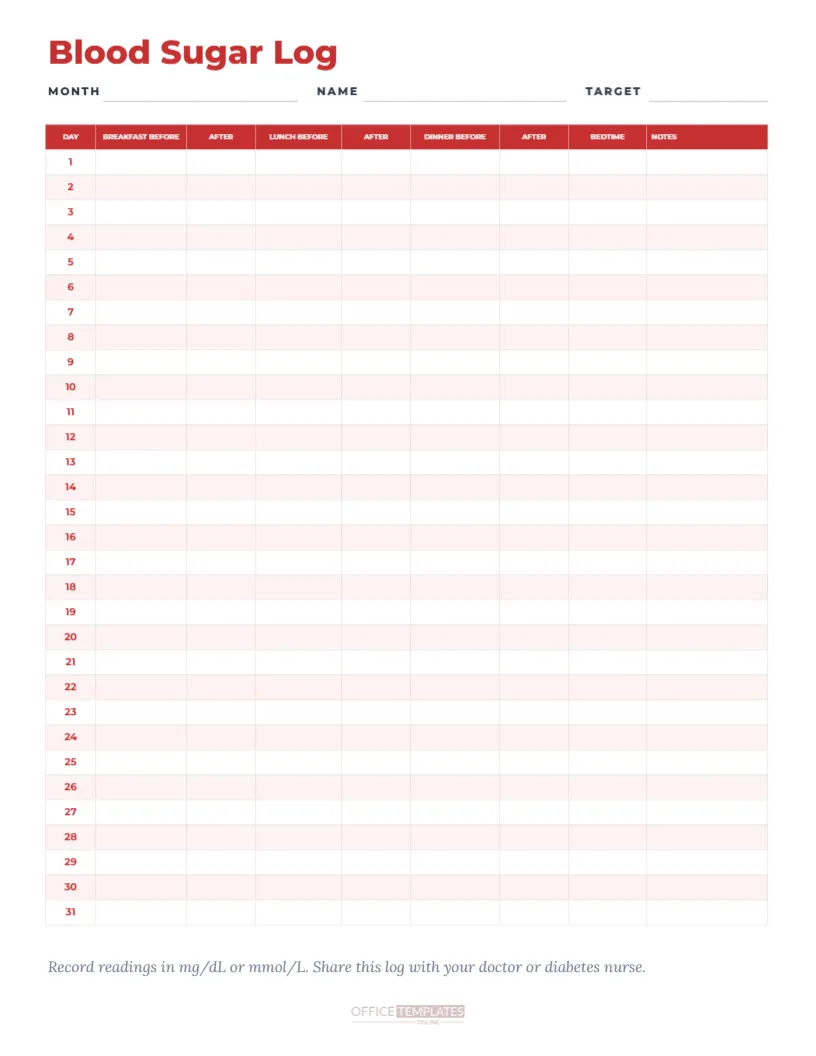
Keeping a clear record of blood glucose readings helps people with diabetes and their care teams make better decisions. This Blood Sugar Log Calendar puts a whole month of readings on one portrait page. The red title Blood Sugar Log sits above lines for the month, the patient’s name, and their target range. A large table lists days 1 to 31 down the left in bold red, with columns for before and after breakfast, before and after lunch, before and after dinner, bedtime, and notes. Alternating soft pink rows make it easy to follow each day across the page, and a short reminder at the bottom suggests sharing the log with a doctor or diabetes nurse.
Why Keep a Blood Sugar Log
A written log reveals patterns that single readings cannot, such as high readings after a particular meal, low readings at night, or changes on exercise days. Doctors and diabetes educators use these patterns to adjust medication, insulin doses, and meal plans. Even with a meter that stores readings, many people find a paper log easier to review and discuss.
Columns for Every Mealtime
The log includes readings before and after each main meal, plus a bedtime reading. Fill in only the columns your care team recommends, which may be fewer for some people with type 2 diabetes or more for those using insulin.
The Notes Column
Use the notes column for anything that might explain a reading: exercise, illness, stress, a large meal, alcohol, a missed dose, or a hypo treated with sugar. These details help your care team interpret the numbers accurately.
Writing Your Target Range
Write the target range agreed with your doctor at the top, for example 80 to 130 mg/dL before meals. Having the target on the page lets you spot readings outside the range quickly, perhaps by circling them in red.
mg/dL or mmol/L
The log works with either unit. People in the United States usually use mg/dL, while the UK, Canada, Australia, and many other countries use mmol/L. Note your unit next to the target range so anyone reading the log understands the numbers.
Bringing the Log to Appointments
Take the completed log to every appointment. Reviewing a month of readings together helps your doctor understand your daily life and make informed changes. Keep past logs in a folder to track changes over time.
Blood Sugar Log for Gestational Diabetes
Women with gestational diabetes are often asked to check fasting and after-meal readings. Use the before breakfast column for fasting readings and the after columns for one- or two-hour post-meal checks, as advised by your midwife or doctor.
Blood Sugar Log for Caregivers
Parents of children with diabetes and carers of older adults can use the log to record readings taken at home, at school or in care settings, keeping everyone informed and consistent.
Editing the Blood Sugar Log
The table is editable. Rename columns, add a column for insulin doses or carbohydrates, change colours, or adjust the number of rows. The header lines can also be edited.
Red and Pink Clear Design
The red title and day numbers make the log easy to navigate, while soft pink rows guide your eye across each day. The design is clear enough to read quickly during busy appointments.
Printing the Blood Sugar Log
Print on US Letter or A4 at actual size. Print several months at once and keep them in a binder with your meter, so the log is always at hand when you test.
Using the Log Digitally
Download a PDF and fill it in on a tablet, or take a photo of the paper log each week as a backup. Digital copies are easy to email to your care team before telehealth appointments.
Spotting Patterns Over the Month
At the end of each month, look down each column. Consistently high after dinner readings or low bedtime readings are worth discussing with your care team. Highlighting readings outside your target makes patterns jump out.
Important Medical Note
This log is for record-keeping only and is not medical advice. Always follow the testing schedule and targets set by your healthcare professional, and seek urgent help for very high or very low readings with symptoms.
Health Organisation Templates to Pair With the Log
Pair the blood sugar log with our medication and doctor appointment calendar, meal planner, and weight loss tracker for a complete health organisation set.
Saving the Blood Sugar Log Template
Save the log in your account and print a fresh copy each month, writing the month and year at the top.
Blood Sugar Log File Formats
Download a PDF for printing or an image for digital records. The table stays aligned and readable in every format.
Recording Insulin and Medication
If you take insulin or diabetes medication, recording doses alongside readings helps your care team see how treatment affects your levels. Add a column for units or tablets in the editor, or write doses in the notes column. Over time, this record supports safer and more precise adjustments to your treatment plan.
Recording Hypos Clearly
If you have a low reading, circle it and note the symptoms, what you treated it with, and the reading afterwards. Clear hypo records help your care team prevent future lows and keep you safe.
Teaching Children to Use the Log
Older children with diabetes can learn to fill in their own log with adult support. Taking part builds confidence and understanding of how food, activity and insulin work together.
Testing Times Explained
After-meal readings are usually taken one or two hours after starting to eat. Write the timing your care team recommends at the top of the after columns so every reading is taken consistently and patterns are easier to compare.
Adding Exercise and Activity
Physical activity affects blood sugar, sometimes for many hours afterwards. Note the type and length of exercise in the notes column, such as a 30-minute walk after dinner, to see how activity influences your readings and to help plan safe exercise routines with your care team.