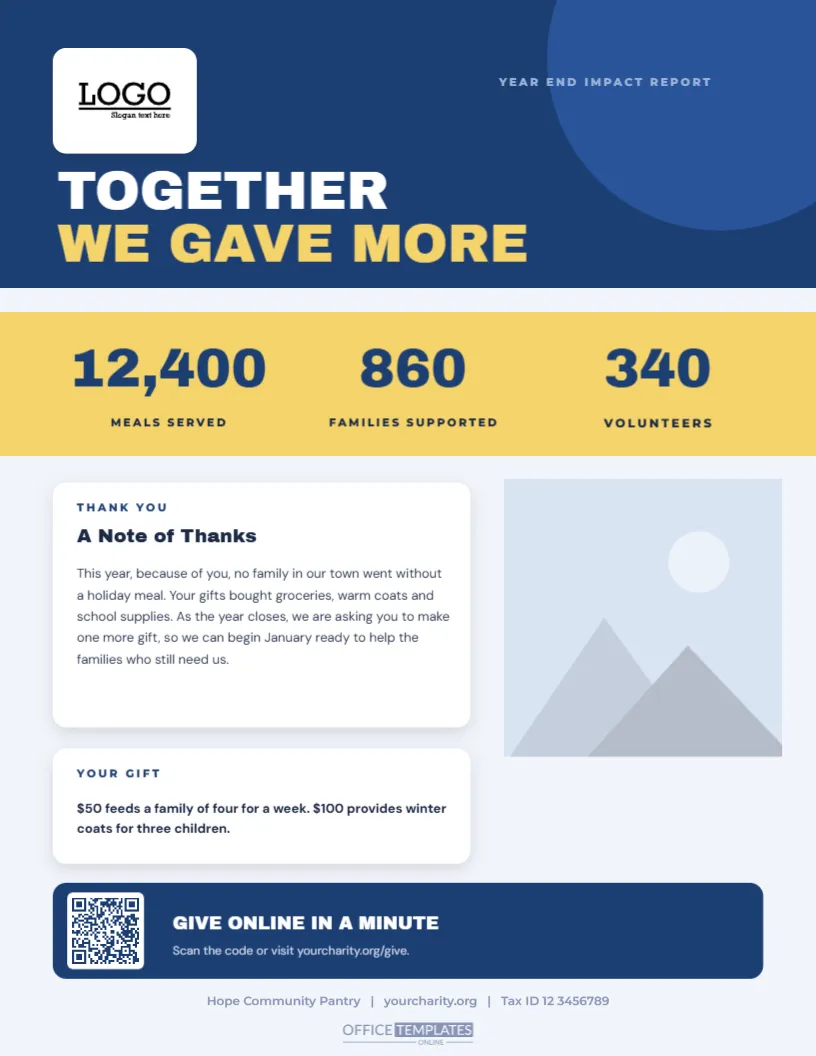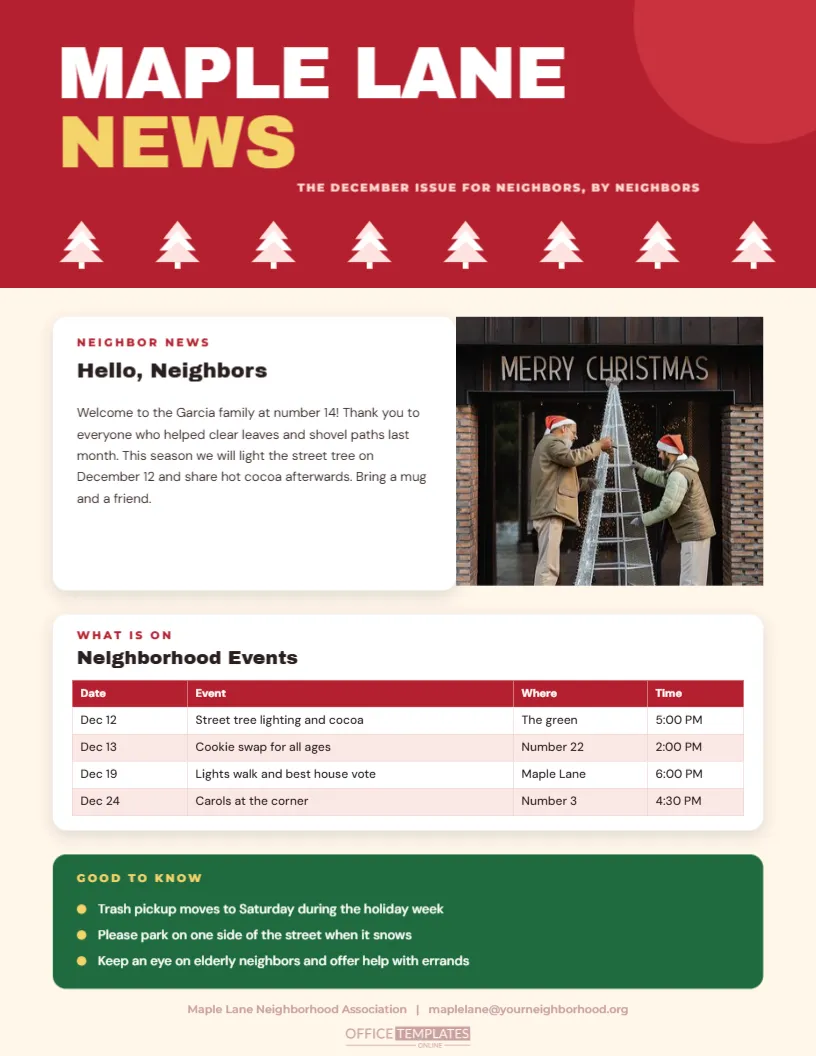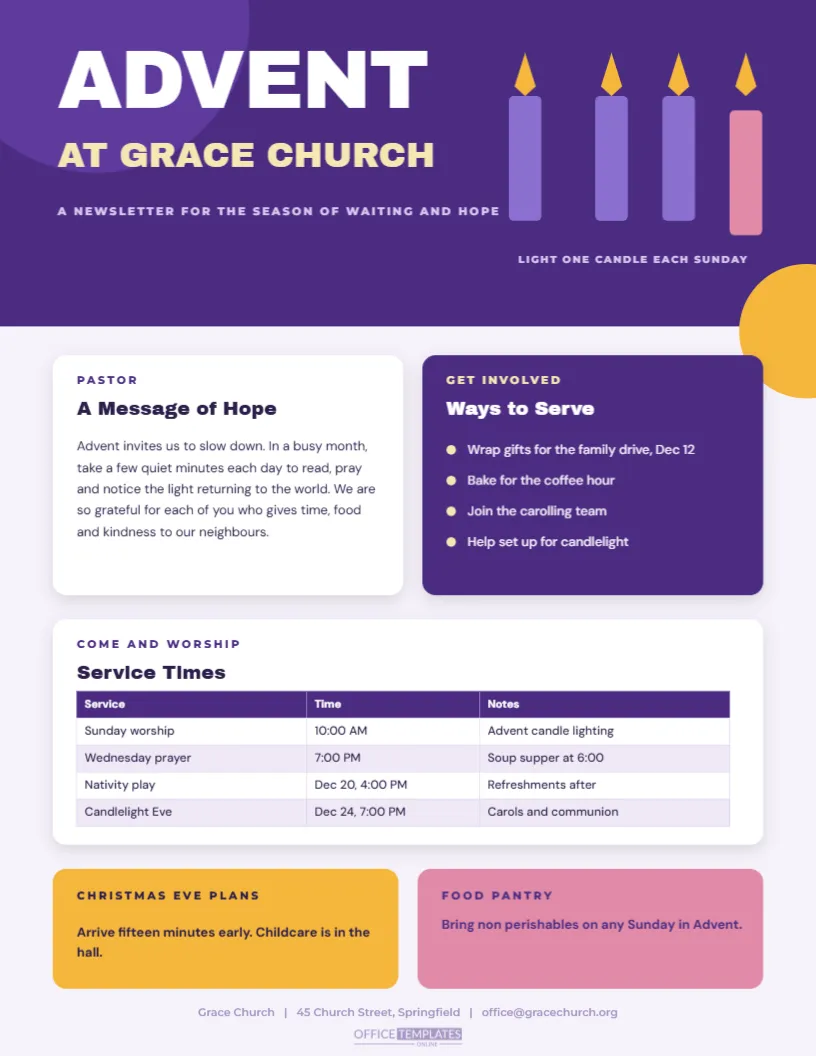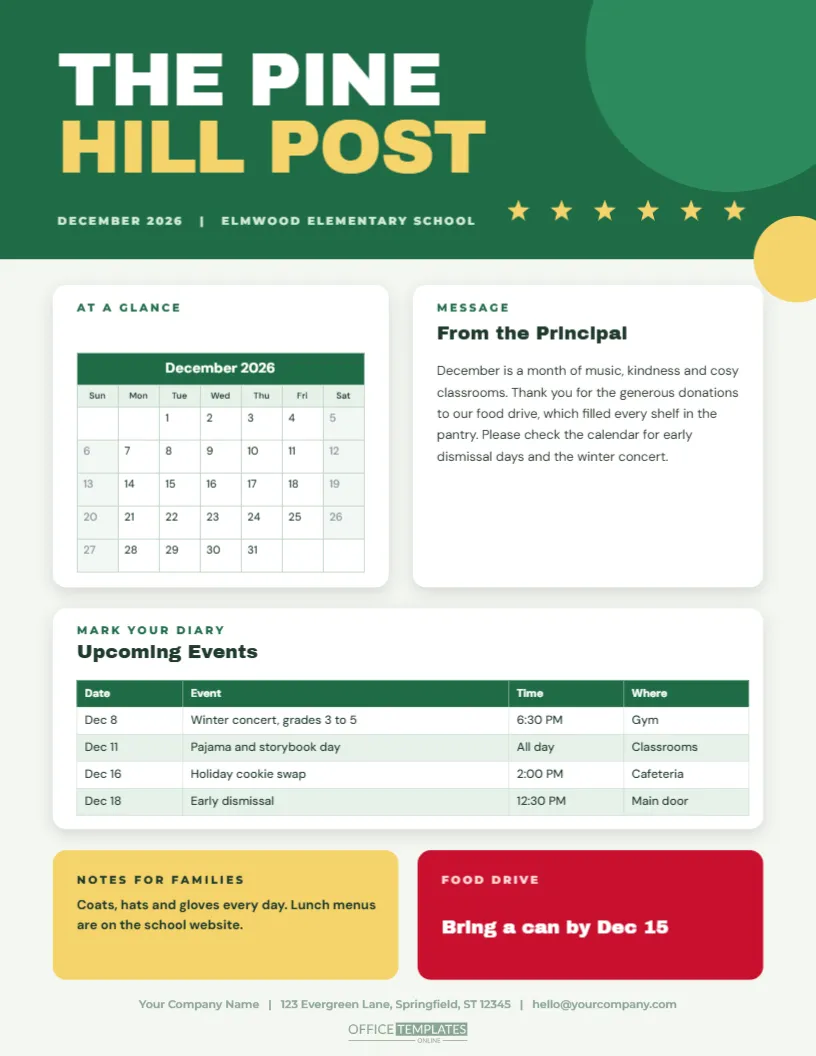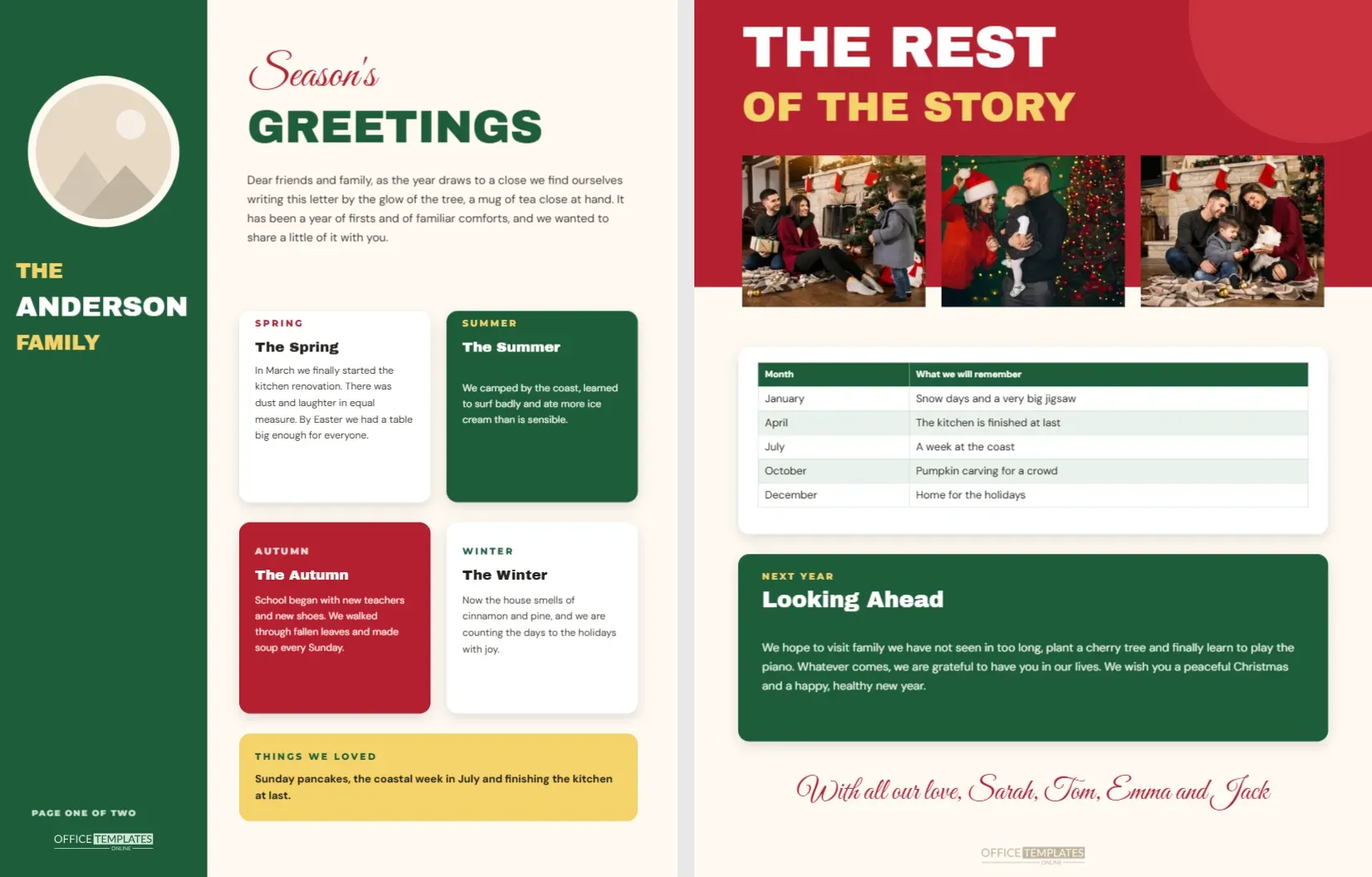
Some years deserve more than a single page. This template gives a family letter two pages. Page one has a wide green sidebar with a round portrait slot and the family name in capitals, then Season’s Greetings in a red script over heavy green capitals, an opening paragraph, and four coloured cards called The Spring, The Summer, The Autumn, and The Winter, with a gold strip of things loved. Page two, The Rest of the Story, opens with a red block and three photo slots, then a real table of memories by month, a green Looking Ahead card and a script signature.
When Two Pages Are Better Than One
A longer letter suits a year with lots to report, a family with several children, or a letter going to relatives who value detail. Two pages give room for photographs, a table of memories, and a longer closing message. The template keeps the structure clear, with headed sections and a table, so that even a long letter is easy to read and skim.
Page One: The Story of the Seasons
The first page tells the year in four paragraphs, one for each season. This structure makes the writing easier, since each section covers about three months, and the headings help readers find the part about their favourite family member. Add or remove sections as you need. If your year was dominated by one event, such as a move, give it a heading of its own.
| Page | Contents | Editing tip |
|---|---|---|
| One | Portrait, greeting, four seasonal sections, list of favourites | Replace Image and type |
| Two | Three photos, month table, looking ahead, signature | Table options and Replace Image |
The Portrait and the Photo Row
The portrait on page one is a round photo slot, and the three slots on page two form a row. Click each and choose Replace Image. A clear portrait of the writer or the whole family works for the circle. For the row, choose three photographs from different parts of the year. Crop them to similar sizes before uploading, so that the row looks tidy.
The Memory Table
On page two, a real table lists five months with a short memory for each: snow days, a finished kitchen, a week at the coast, a pumpkin carving, a homecoming. Edit the rows to match your year, add more months or change the header colour in the table options. A table gives the reader a quick summary and breaks up the longer paragraphs.
Writing a Letter That Holds Attention
- Open with a personal image, such as writing by the light of the tree.
- Keep each seasonal paragraph to three or four sentences.
- Mention each family member and one specific detail about them.
- Include one funny moment and one grateful moment.
- End with plans and a wish for the reader.
Questions About the Two-Page Letter
Can I print on both sides of one sheet?
Yes. Print page one, flip the sheet, and print page two on the back.
Which fonts are used?
On the two-page Christmas family letter page, Archivo Black sets the titles and card headings, DM Sans sets the body text and tables, and Montserrat sets the small labels.
Can I add a third page?
Yes. Duplicate a page and change the content.
Can I email the letter?
Yes. Export both pages as a PDF and attach it.
Printing and Folding
Print on good-quality cream paper, double-sided if you can. Fold the pair of pages in three to fit a standard envelope, or send them flat in a large one. A small sticker or a paper clip keeps the two pages together. For a digital letter, export a PDF and name it with the year and the family name.
Making Your Own Seasonal Structure
If the seasons do not suit your year, use other headings: The Move, The Wedding, The Big Trip. Edit the headings and the paragraphs to match. A letter organised around events can be more natural than one organised by seasons, and the template makes either easy. Keep the sections short, and let the photographs tell part of the story.
Archiving the Letters
Save each year’s letter in a family folder, and print one copy for a scrapbook. After ten years, you will have a record of a decade. Keep the same template so the pages look like a set. A family archive of letters and photos becomes a treasure that children and grandchildren enjoy reading.
Sharing With Extended Family
Send the letter to relatives, godparents, and old friends. Add a handwritten line on the back of each printed copy, so that every reader feels the letter was written for them. A little personal effort turns a standard letter into a gift. Keep a list of recipients, and note who has received which year.
Dividing the Writing Between Family Members
A two-page letter is a good place for several voices. Let each family member write a paragraph, such as a child describing their favourite trip or a parent writing about the new home. Sign each section with a first name. The varied voices make the letter lively, and they spread the writing so that no one person has to produce all of it.
Choosing Photographs for the Grid
Pick three pictures that tell different parts of the story: one outdoors, one at home, and one with people. Avoid very similar photos. Check that faces are clear and that the lighting is pleasant. Crop each to the shape of its slot before uploading, so no heads are cut off. A well-chosen trio makes page two a pleasure to look at.
Printing a Two-Page Letter on One Sheet
If you would rather send a single sheet, print page one on the front and page two on the back, using the duplex setting on your printer. Choose flip on the long edge, so that both pages read the right way up. Print one test sheet first and hold it to the light to check that the green sidebar does not show through. If it does, choose a heavier paper, around one hundred grams, for a cleaner result.