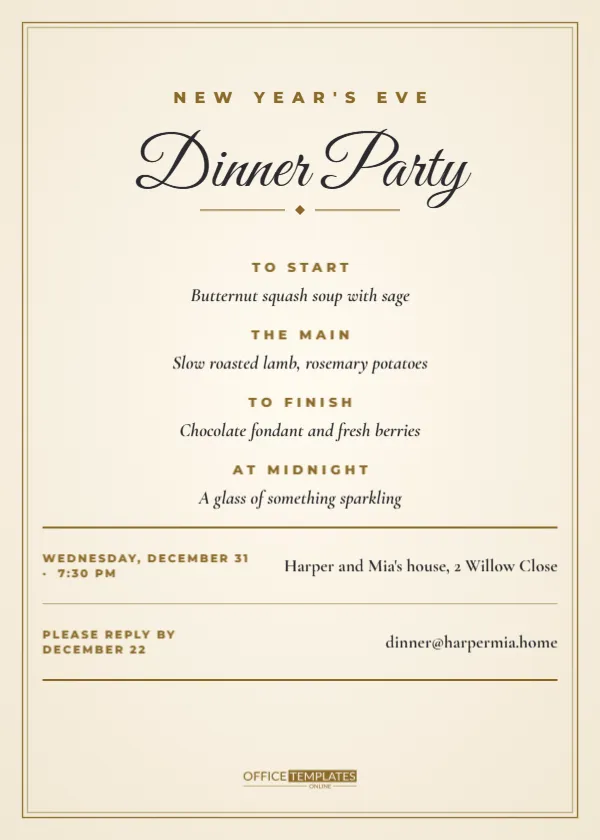
A dinner party invitation that doubles as a menu tells guests what to look forward to. This one is set on warm cream with a fine brown frame, a script Dinner Party under a spaced NEW YEAR’S EVE, a small rule, and four courses listed with gold labels: TO START, THE MAIN, TO FINISH, and AT MIDNIGHT. Two blocks below give the date, the host’s address, and the reply date. It suits home cooks, supper clubs, restaurants, and hosts who love to plan a meal.
Why a Menu Invitation Builds Appetite
Guests who see the menu start to look forward to dinner. Food is the main attraction at a seated party, and showing it builds excitement. A menu also helps guests with allergies decide in advance whether to ask for changes.
The Cream Page and Fine Frame
The warm paper tone and thin brown frame recall a printed restaurant menu. The look is classic and works in any home. You can recolour the frame, thicken it, or remove it for a lighter page.
Editing the Four Courses for the Dinner Party Invitation
Each course has a small gold label and an italic dish line. Replace the dishes with your own, and rename the labels to AMUSE BOUCHE, FISH, or CHEESE if you like. Keep the descriptions short so that every line fits on one row.
| Course | Sample dish | Edit idea |
|---|---|---|
| To start | Butternut squash soup with sage | Add a vegan option |
| The main | Slow-roasted lamb, rosemary potatoes | Add a vegetarian main |
| To finish | Chocolate fondant and fresh berries | Add a gluten-free dessert |
| At midnight | A glass of something sparkling | Add a non alcoholic toast |
Planning a Menu You Can Cook With Confidence
Choose dishes that you can prepare ahead, such as soup, braises, and desserts that bake in advance. Keep the main course simple and give yourself time to talk with guests. A menu you can handle makes the host relaxed.
Wine and Drink Pairings
Suggest a bottle for each course, or ask guests to bring a bottle to share. Offer a non alcoholic pairing, such as sparkling grape juice. A short note on drinks helps guests decide what to bring.
Handling Dietary Needs Through the RSVP
Ask guests to tell you about allergies and preferences when they reply. Prepare a flexible menu with swaps. A host who remembers dietary needs makes guests feel valued.
Table Setting and Place Cards
Use cloth napkins, candles, and a simple centrepiece. Write guest names on place cards in the same script as the title. A tidy table sets the mood and helps guests find their seats easily.
Timing the Evening From Arrival to Midnight
Plan arrival drinks, the first course by eight, the main by nine, and dessert by half past ten. Leave time for conversation and a short game before midnight. A schedule keeps the evening comfortable.
Cooking Together and Shared Menus
A supper club or friends can share the cooking, assigning each course to a different host. Mention the cook names on the invitation. Sharing tasks reduces stress and creates a lively evening.
Restaurants and Supper Clubs
Restaurants can print the same invitation with the price per guest and the seating time. A fixed menu is easier for the kitchen. State the cancellation policy and the deposit on the card.
Printing the Menu Invitation on Cream Stock for the Dinner Party Invitation
Cream or ivory card with a slight texture suits the look. Print at home with a quality setting, or ask a print shop for a small run. A matte finish keeps the card elegant.
Sending the Invitation With a Personal Note for the Dinner Party Invitation
Add a handwritten line such as Looking forward to cooking for you. A personal note makes the invitation feel like a gift. Send it three to four weeks ahead.
Keeping Leftovers and Thank You Notes
Provide small containers for guests to take dessert home. Send a thank-you message the next day. Hospitality does not end when the last guest leaves.
Colour Variations for Other Dinners for the Dinner Party Invitation
Try white and navy for a nautical dinner or sage and gold for a garden supper. The menu structure stays the same. A black and gold version suits a formal dinner.
Final Check Before Sending the Menu Invitation for the Dinner Party Invitation
Verify the date, the time, the address, and every dish. Read the menu aloud for typos, and print one proof to see how the brown frame looks on your paper.
Planning a Shopping List and Prep Schedule
Write the menu, list ingredients by dish, and schedule tasks over three days. Shop two days ahead for fresh items. A clear plan removes stress and ensures that nothing is forgotten on the day.
Setting Up a Welcome Drink for Arriving Guests for the Dinner Party Invitation
Offer a simple sparkling drink at the door, with a non alcoholic option. A welcome drink breaks the ice and gives guests something to hold. Pour a few ahead of time so arrivals feel welcomed.
Writing Handwritten Menu Cards for Each Place
Copy the menu from the invitation onto small cards at each place setting. Use the same script and gold labels. Guests enjoy reading the menu while they wait, and it adds elegance to a home table.
Keeping a Backup Plan for Last-Minute Cancellations
Prepare a simple extra portion and a flexible seating plan. If a guest drops out, nobody notices. Freeze leftovers, and offer them to neighbours the next day.
Planning a Cheese and Dessert Course After Midnight
If guests linger, set out cheese, fruit and sweets after the toast. A late course extends the evening gently and gives guests a reason to stay for one more conversation.
Thinking About Wine and Water Glasses at Each Place
Set a water glass and one wine glass at each seat, and refill them gently. Simple table details make a home dinner feel like a restaurant, and guests notice the care.
Offering a Small Takeaway Dessert for Each Guest
Wrap a single truffle or a slice of cake in a box with the menu design printed on the lid. Guests will smile when they find it on the table and enjoy it the next morning.