Clearly Record Who Can Execute Mortgage, Security, and Collateral Documents for a Company
Financing transactions often require more than a signature on a loan agreement. A company may also need to execute mortgages, security agreements, collateral documents, and other instruments connected with the financing. When these documents are being prepared, a lender or another transaction party may want confirmation that the individual signing for the company currently holds the stated position and has authority to execute the relevant documents.
This Mortgage/Security Document Incumbency Certificate Template provides a focused way to record that information.
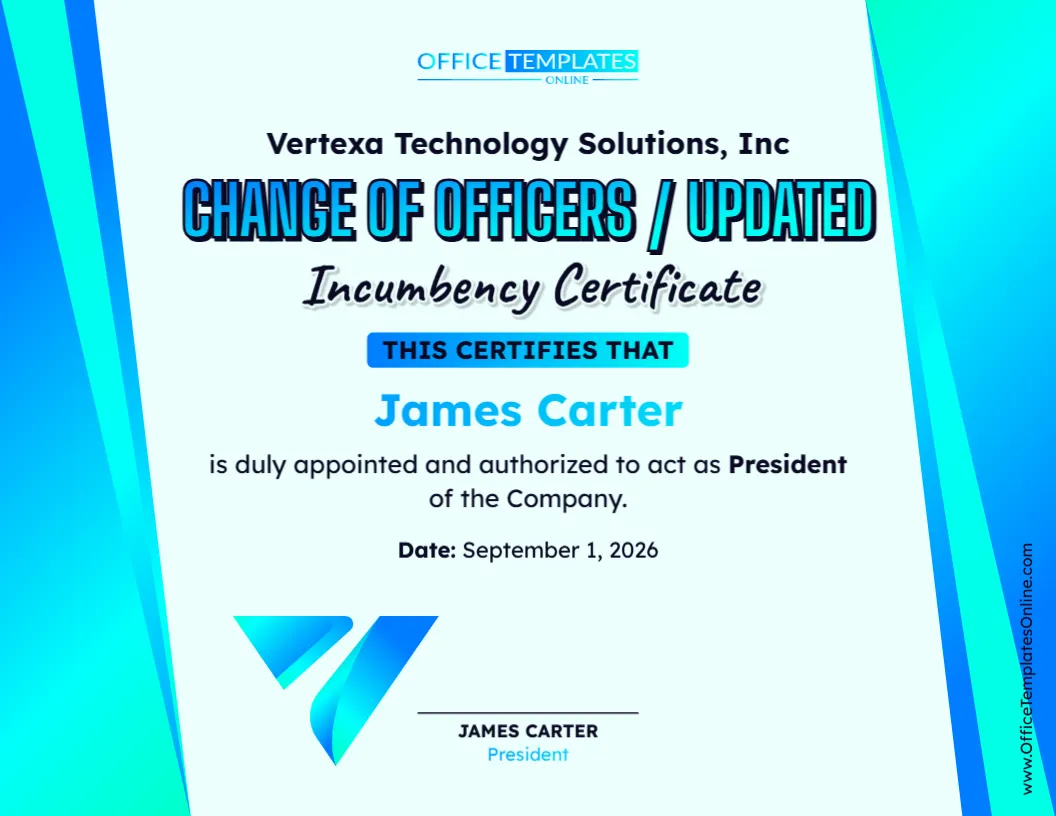
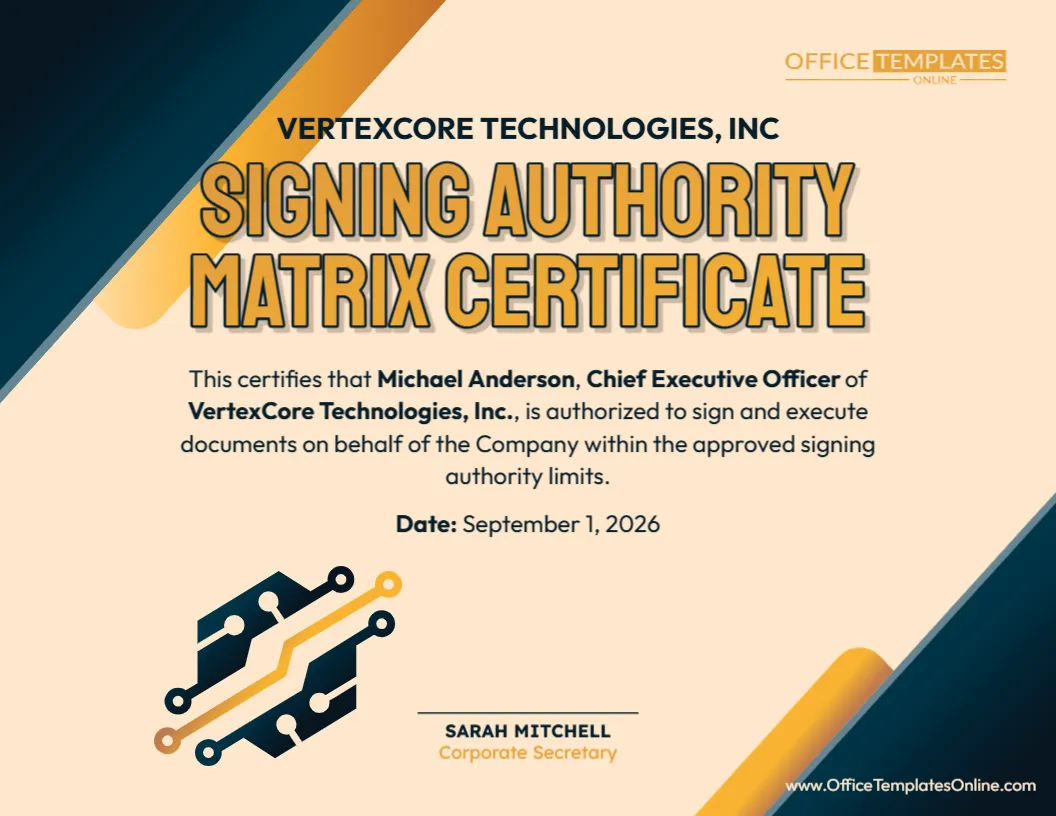
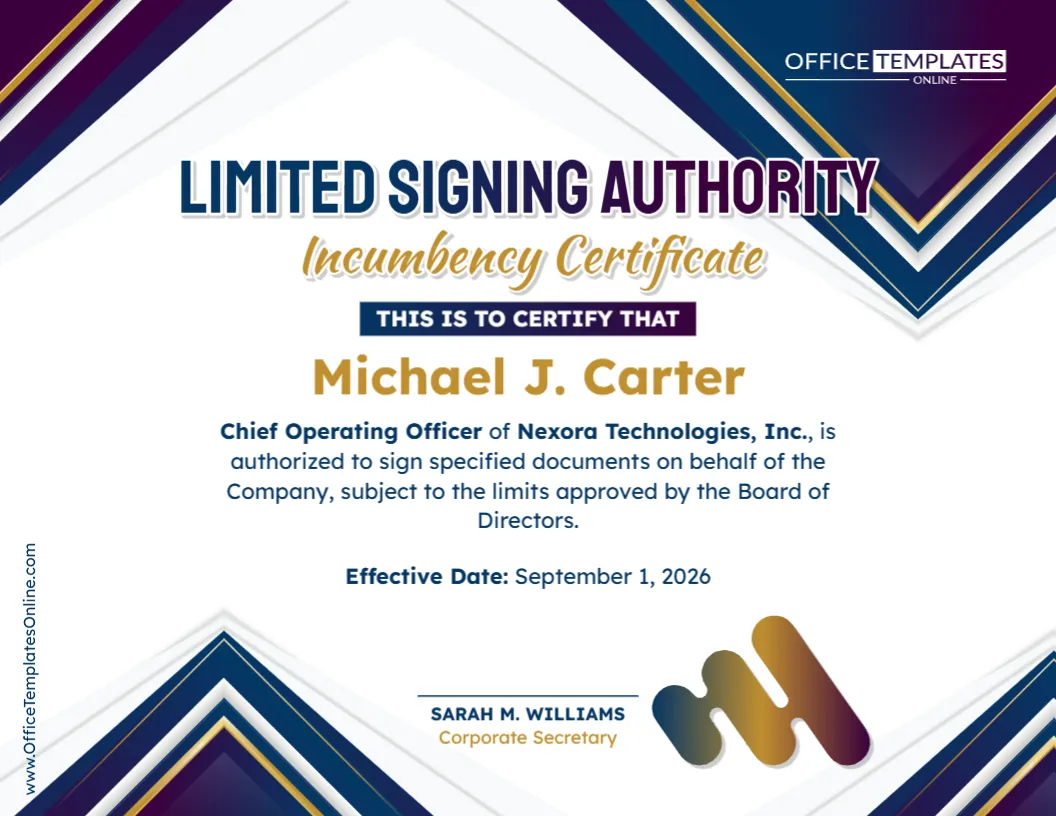
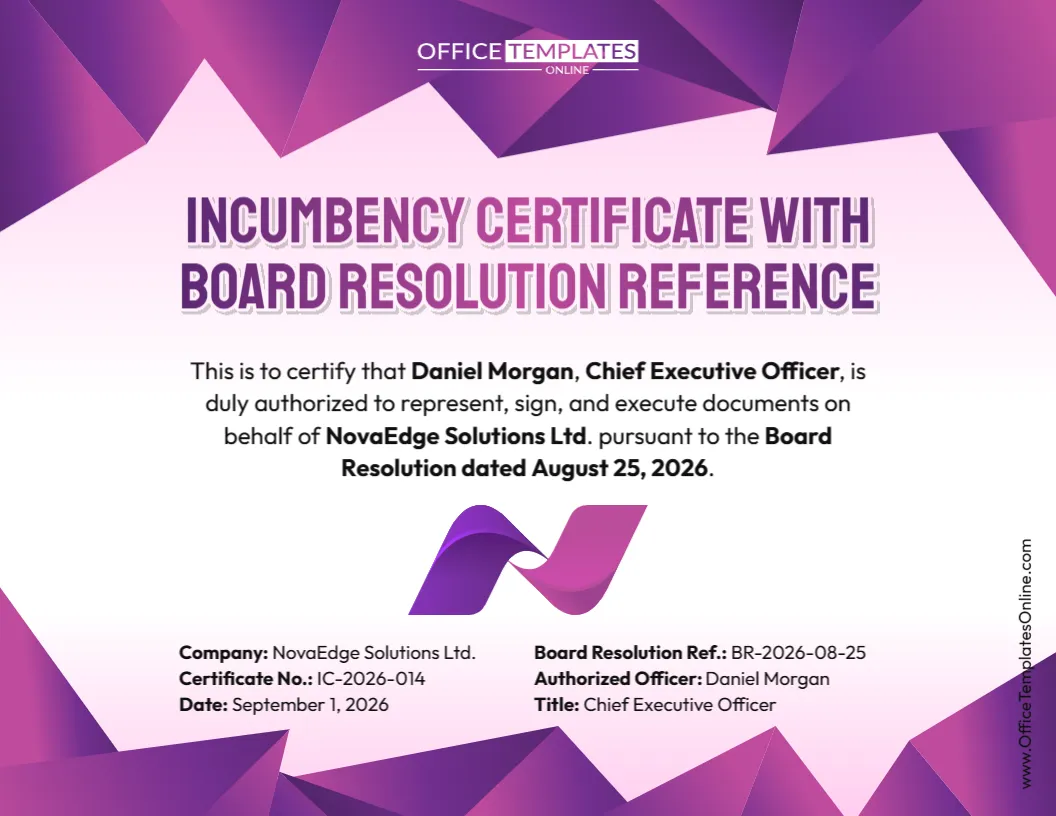
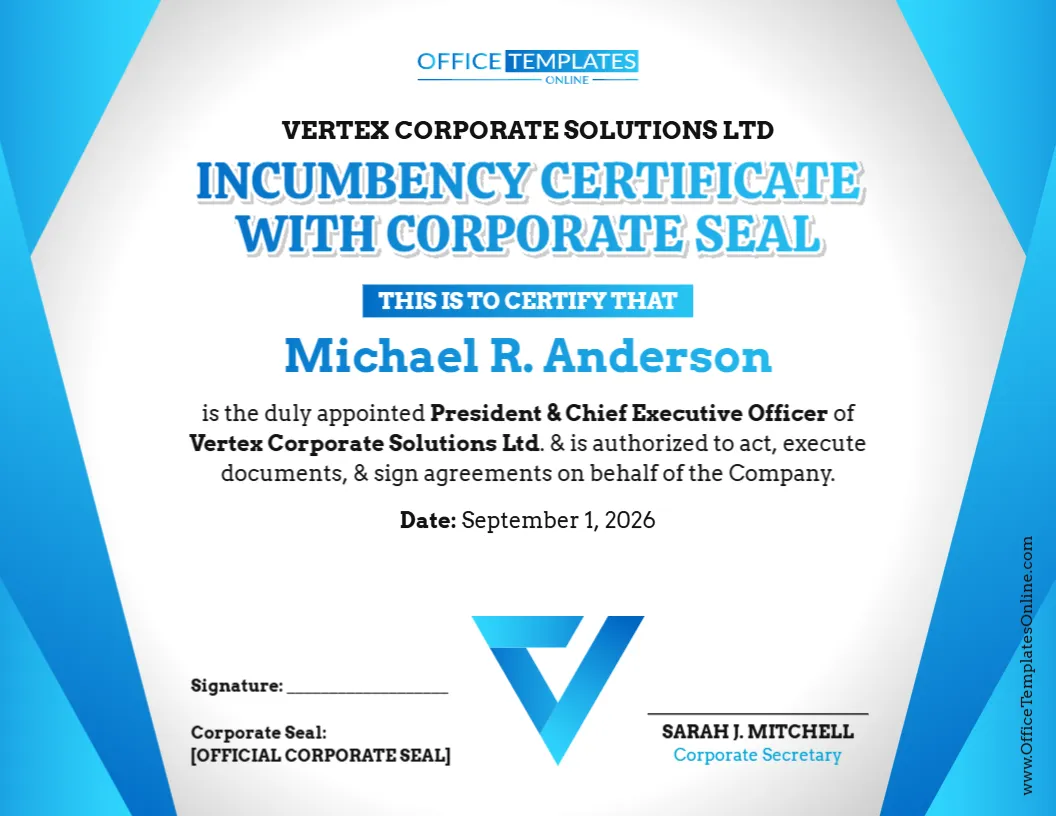
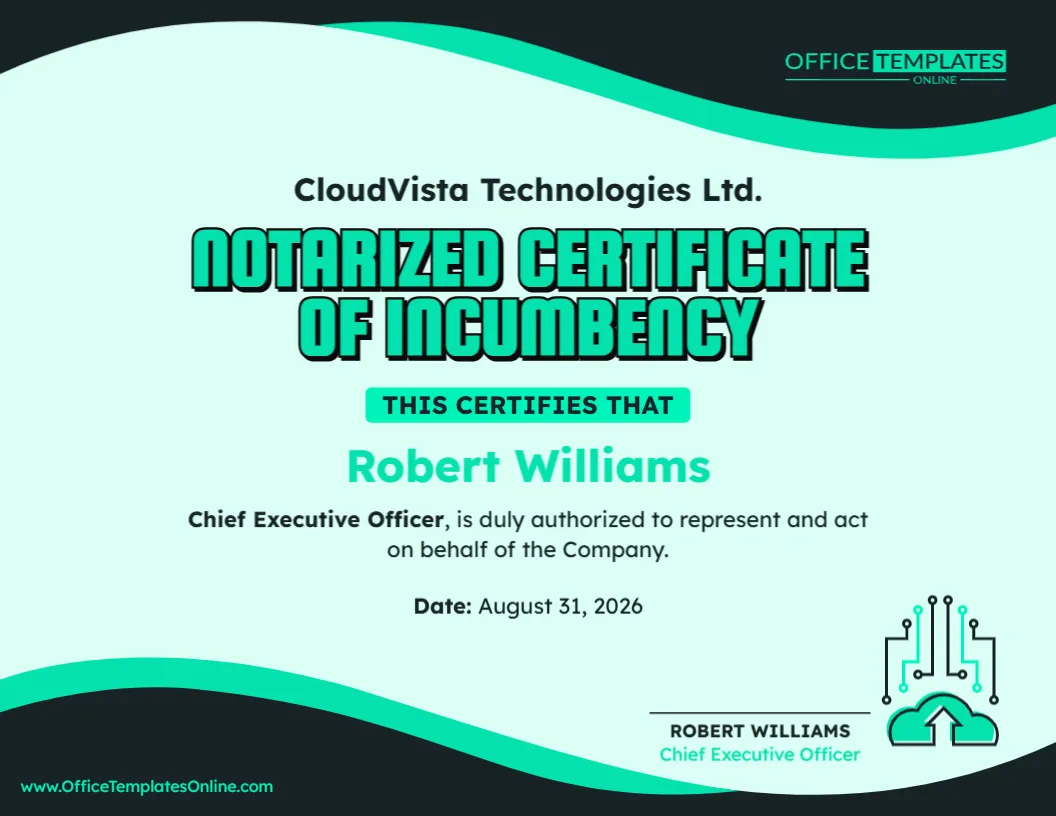
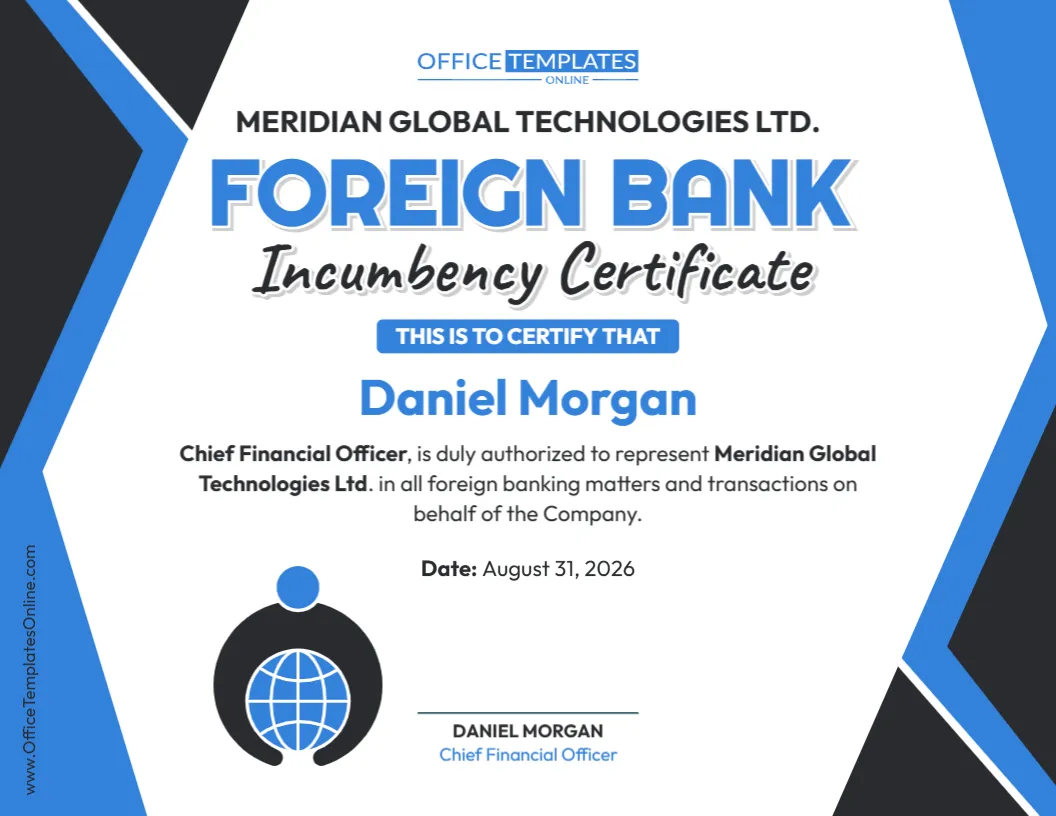
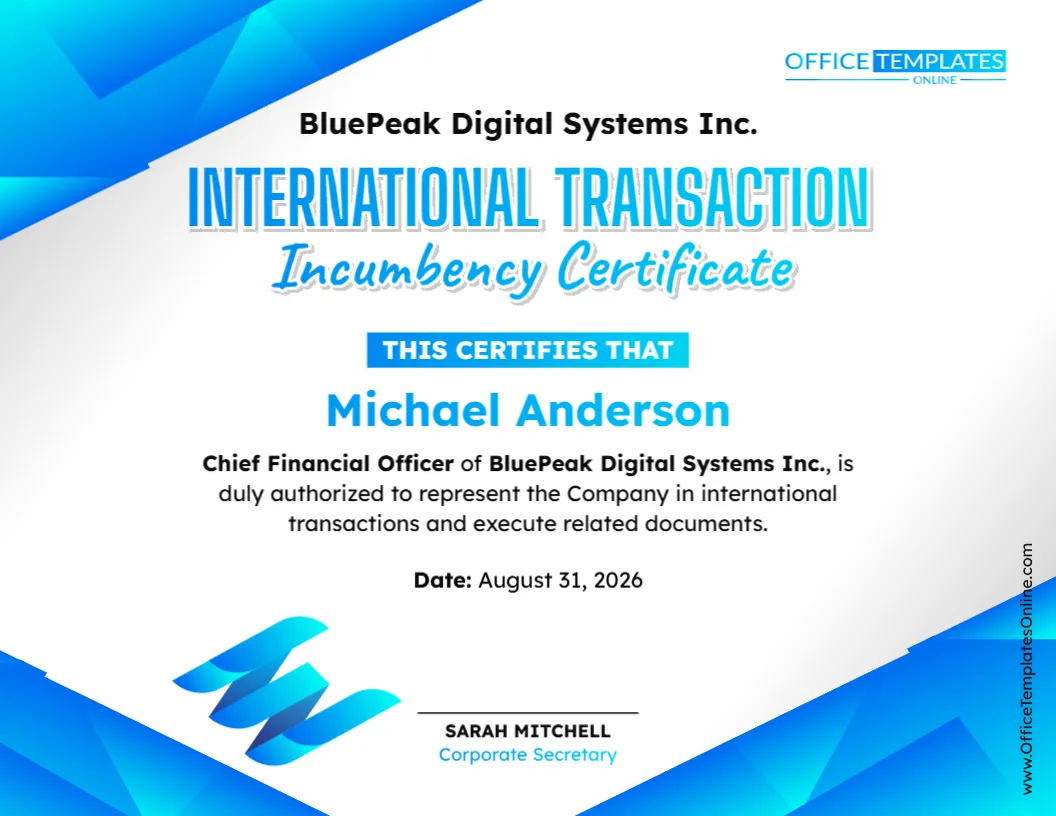
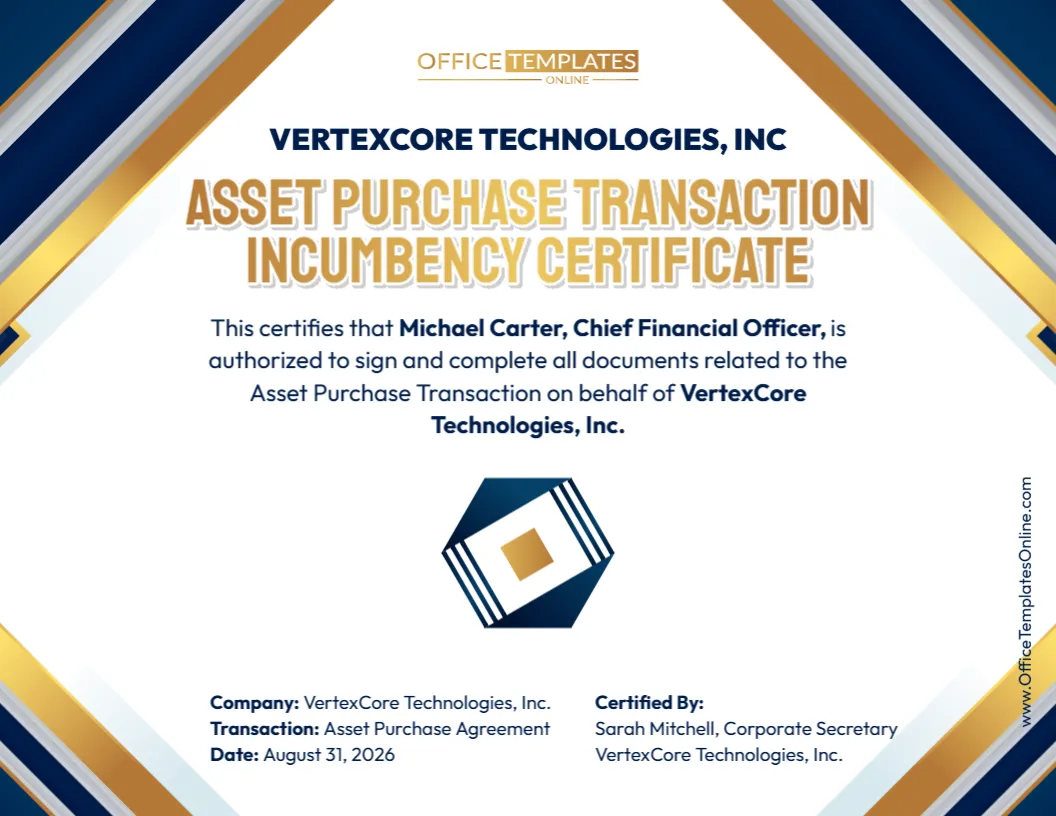
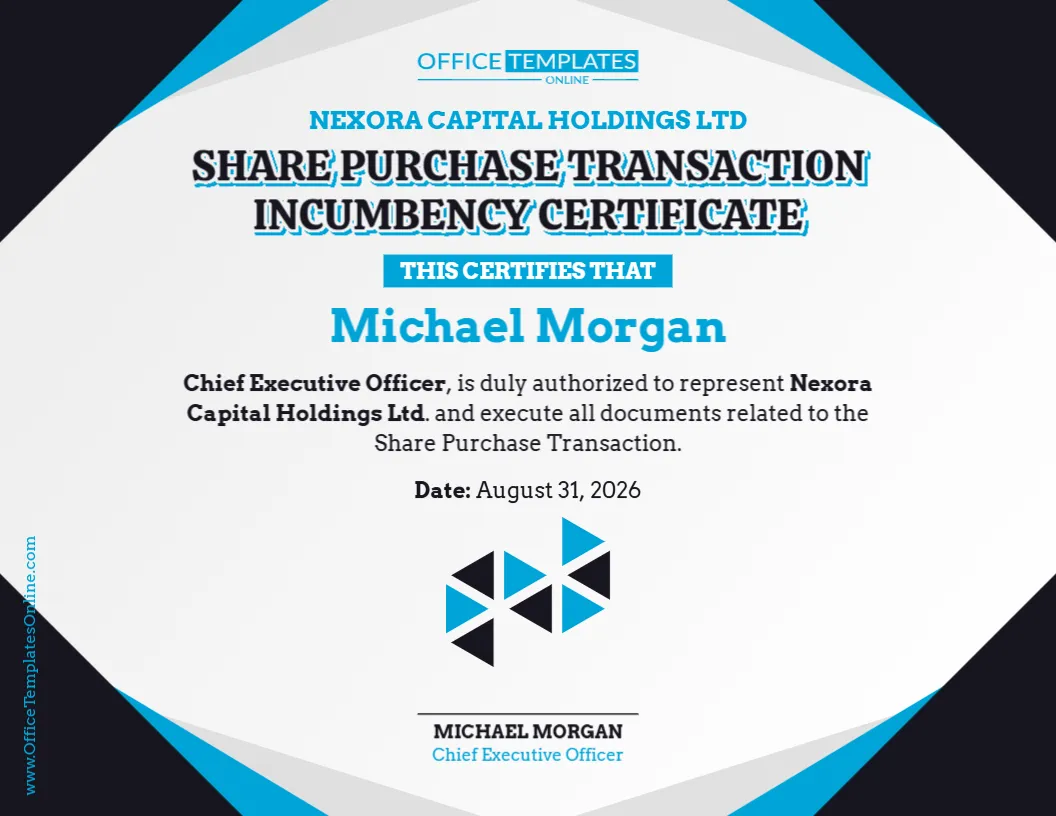
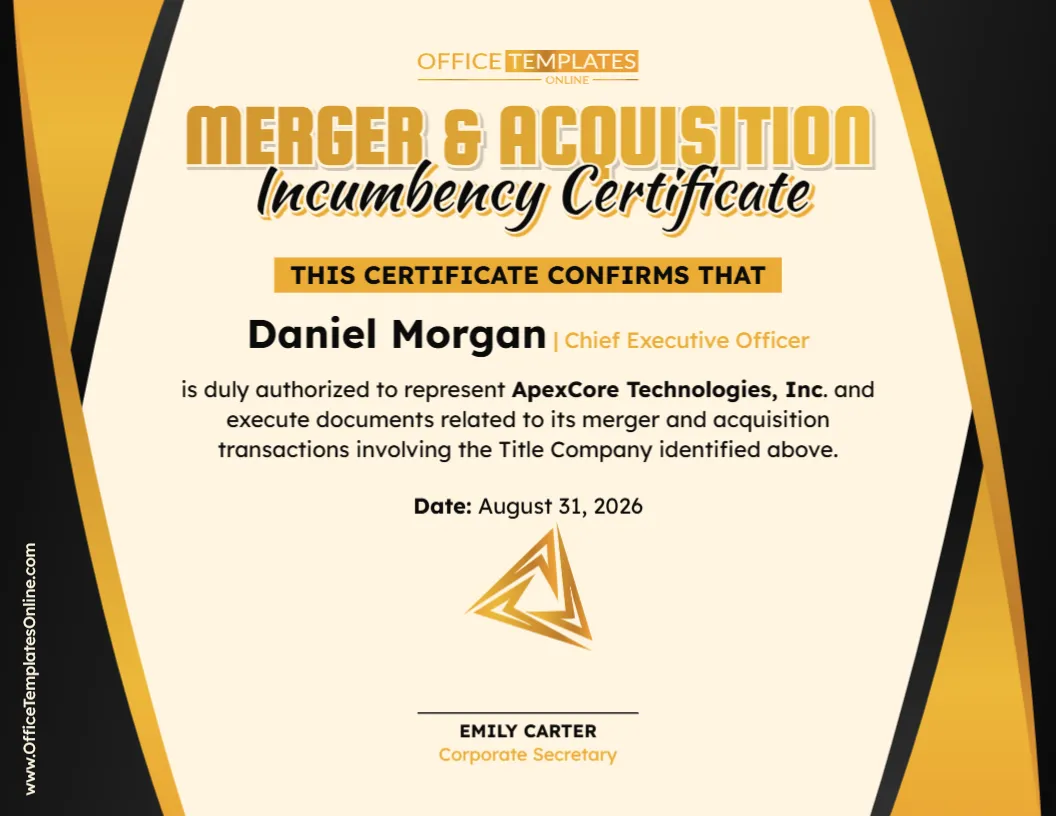
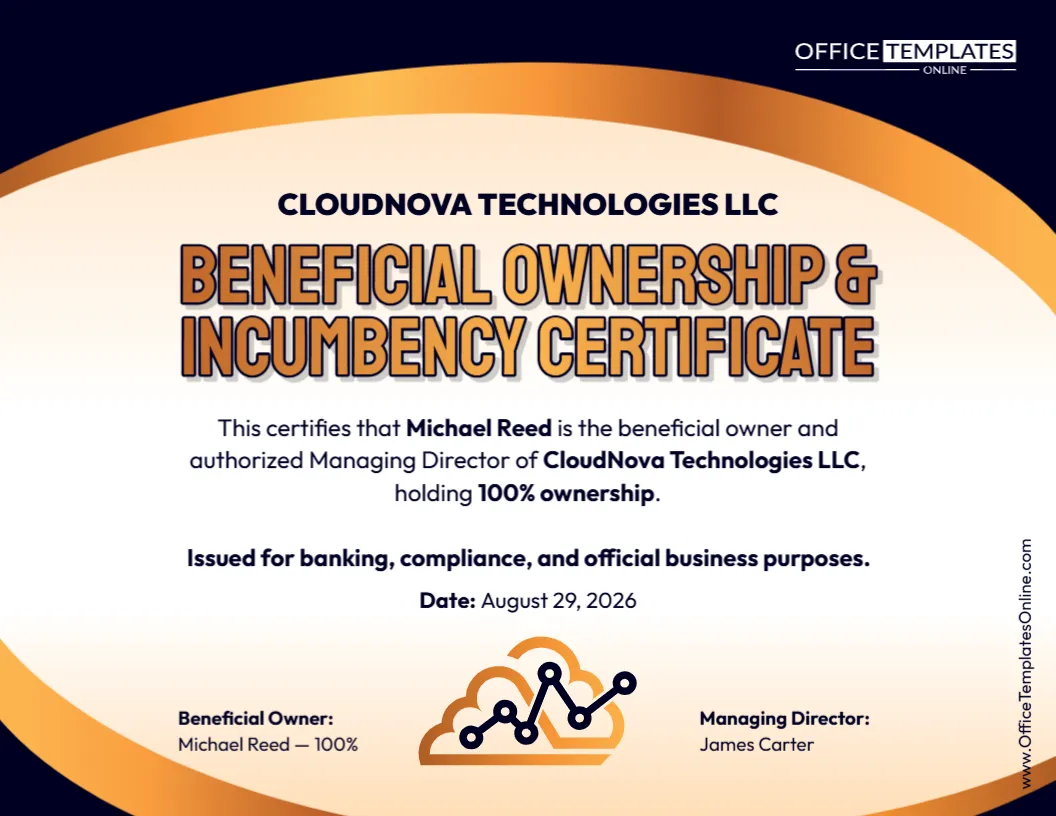
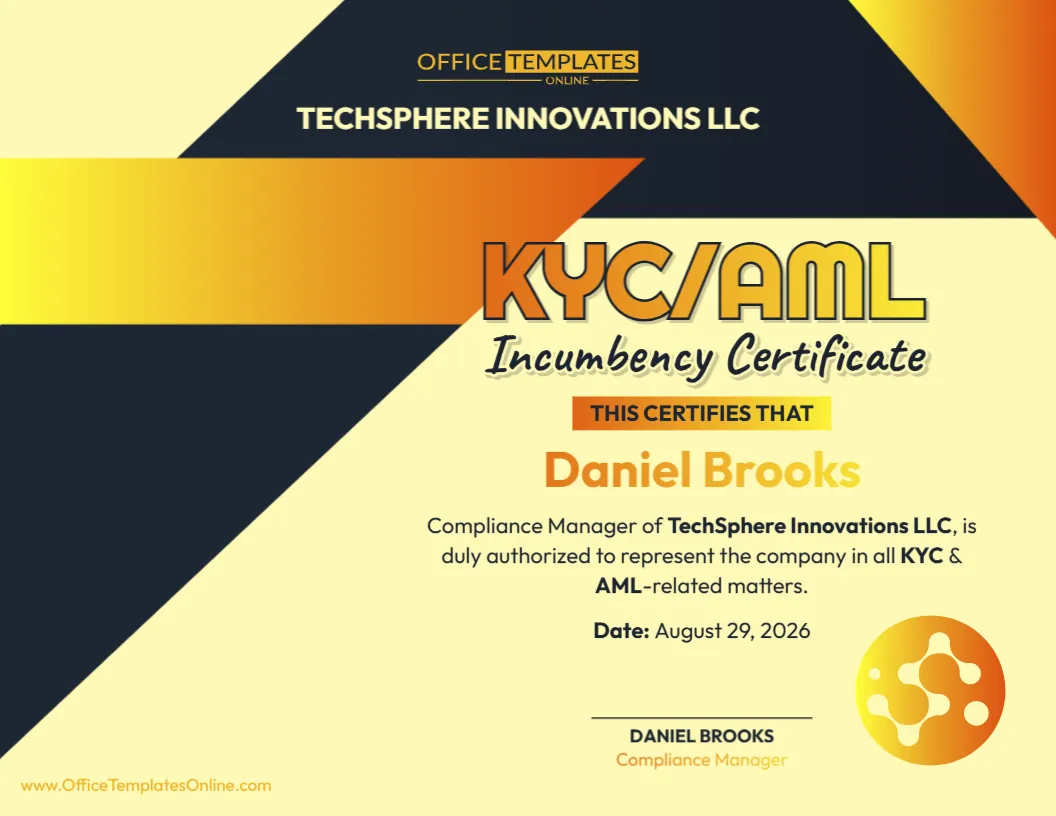
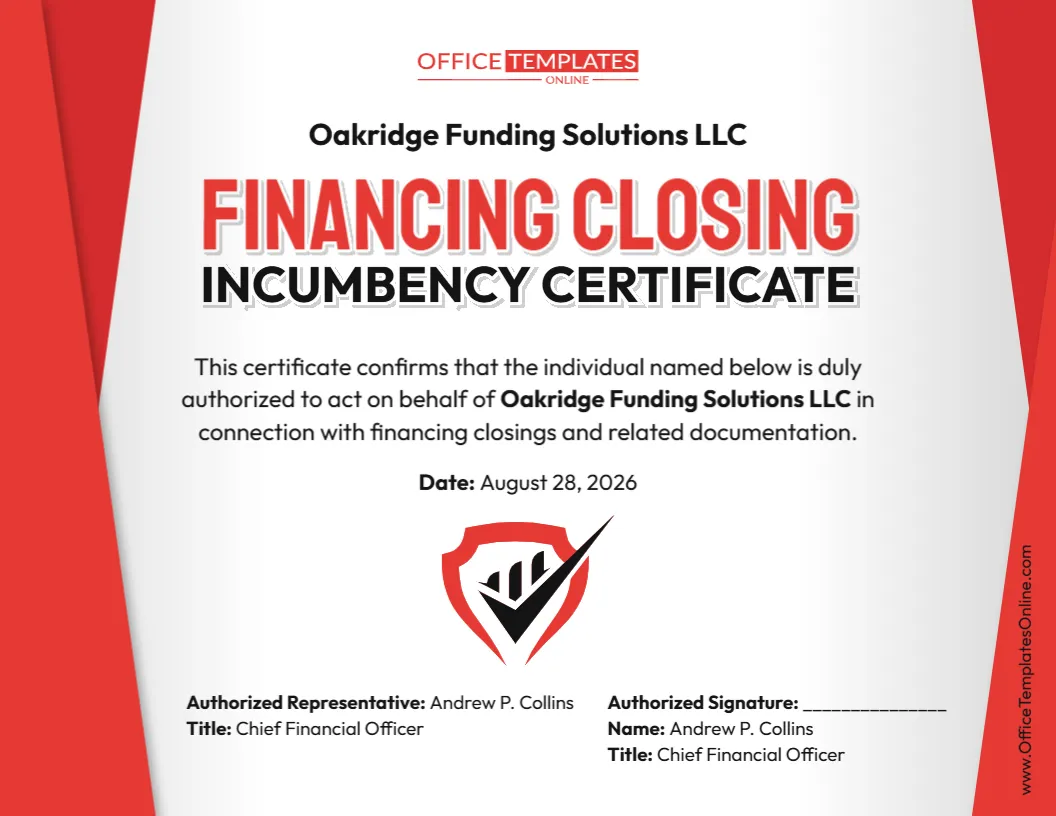
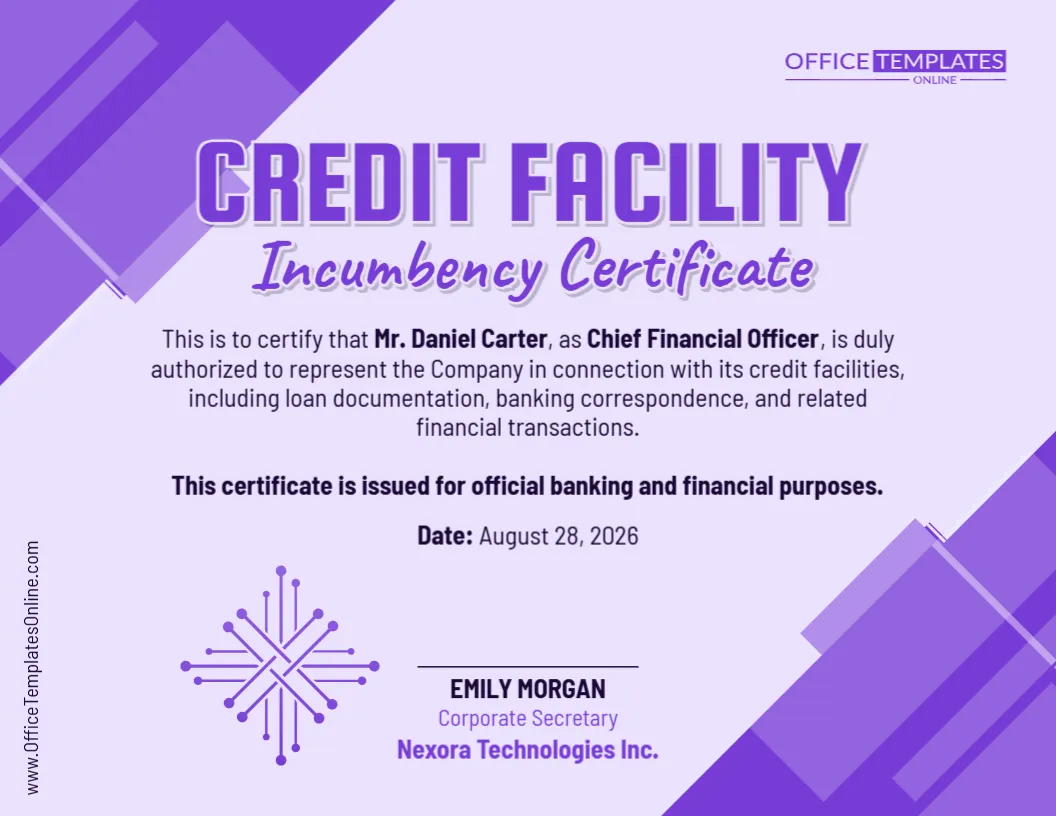
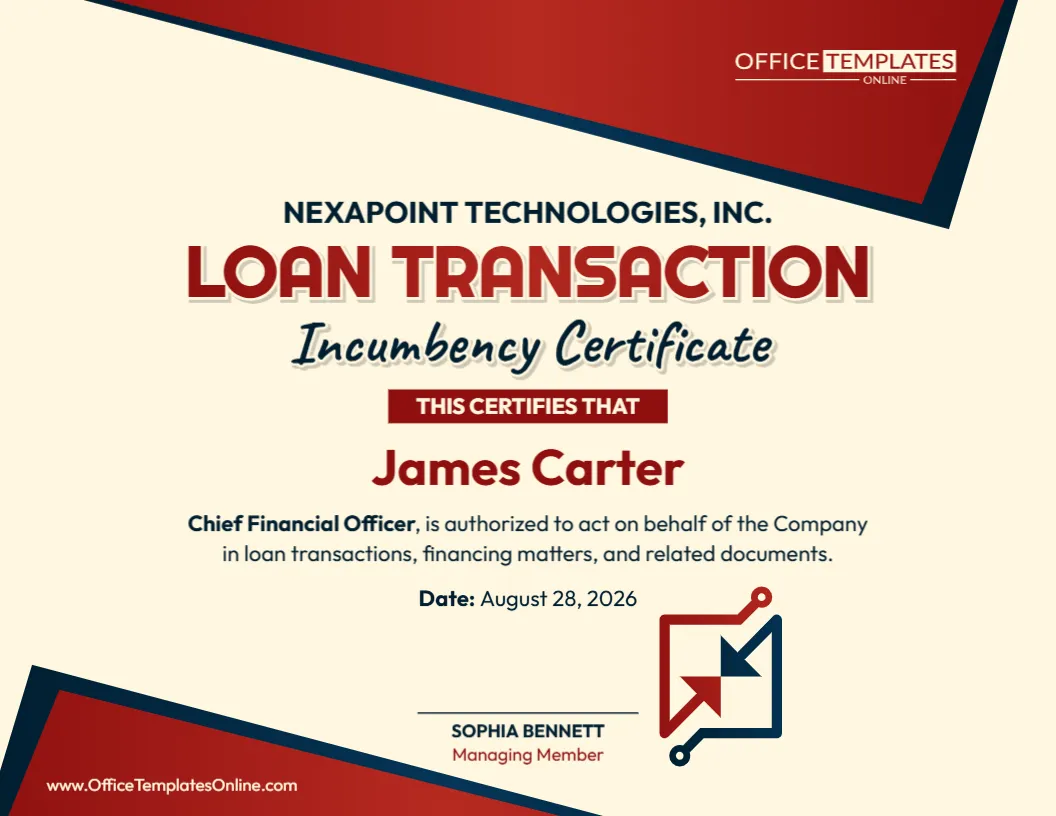
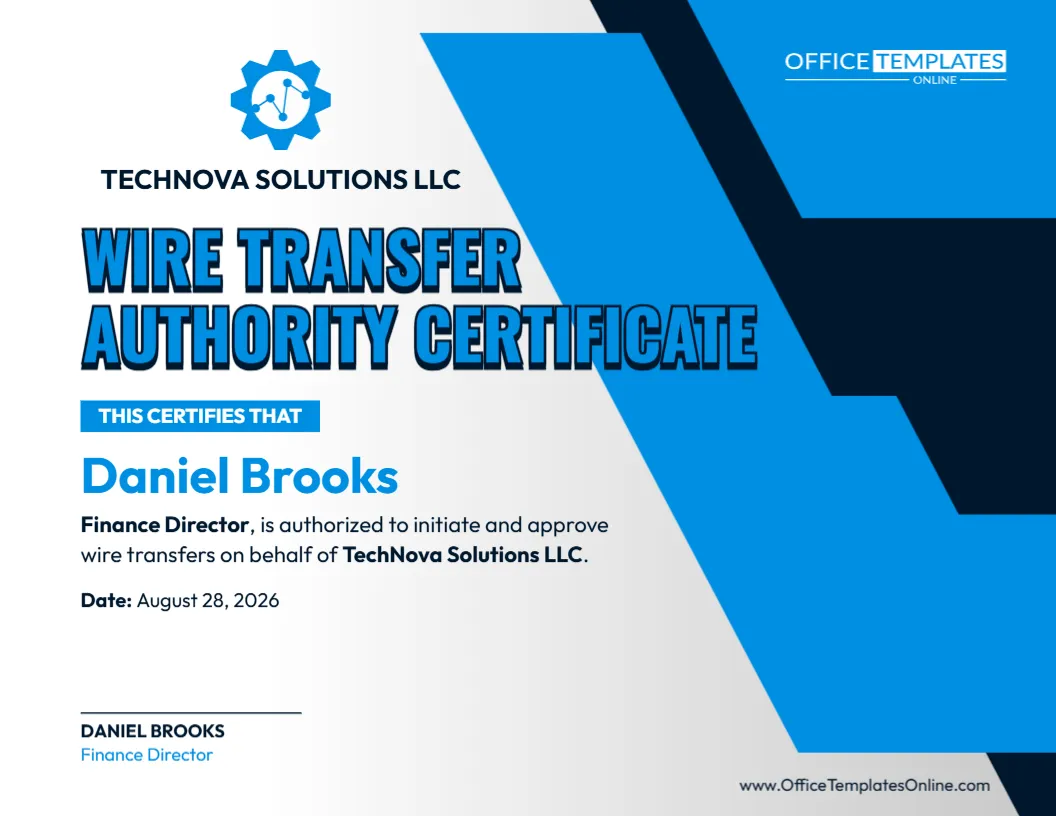
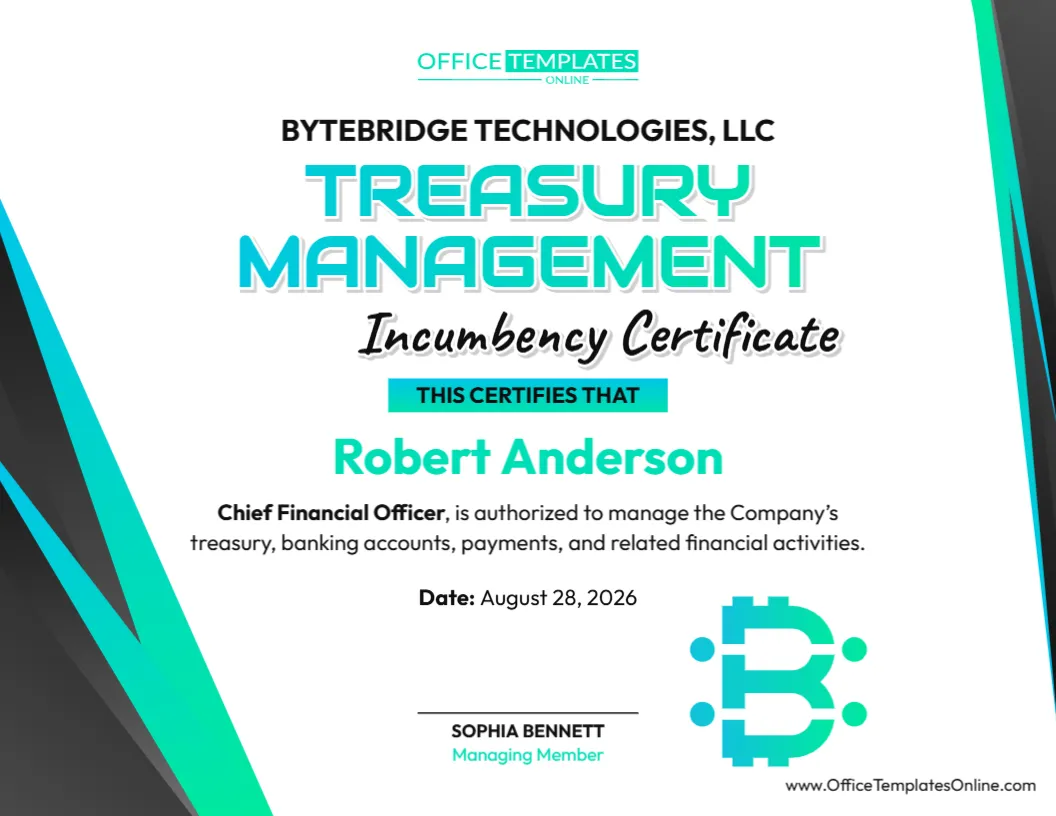
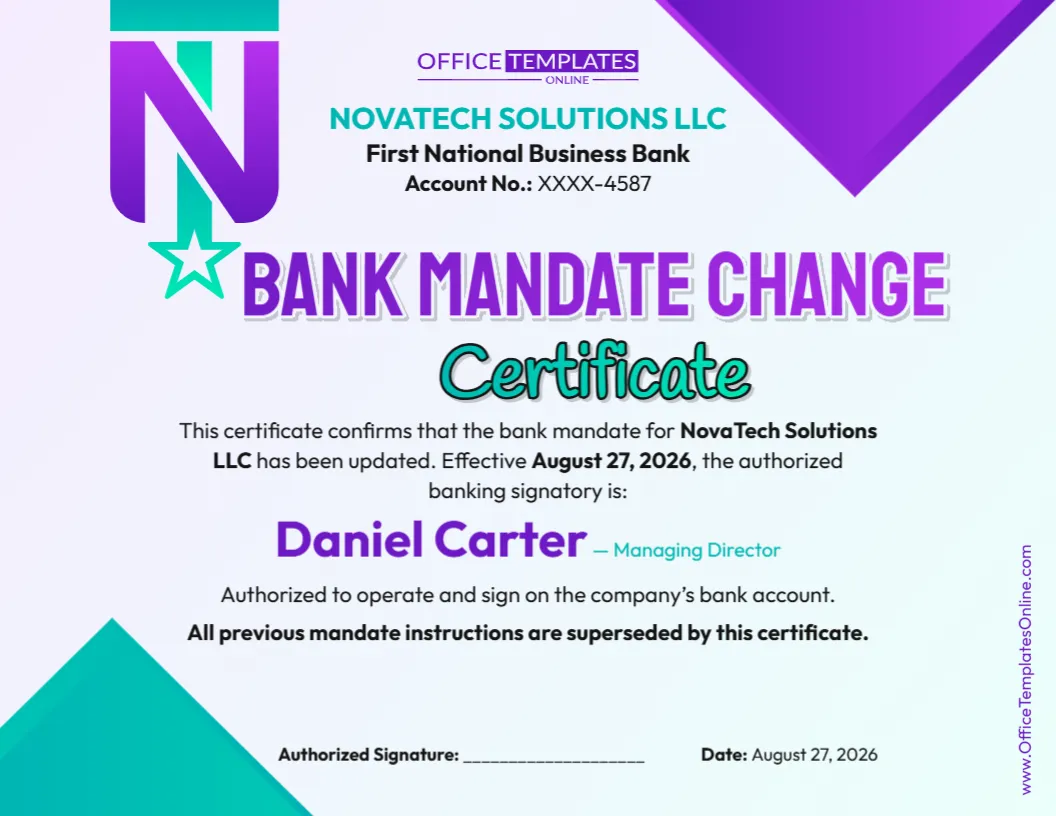
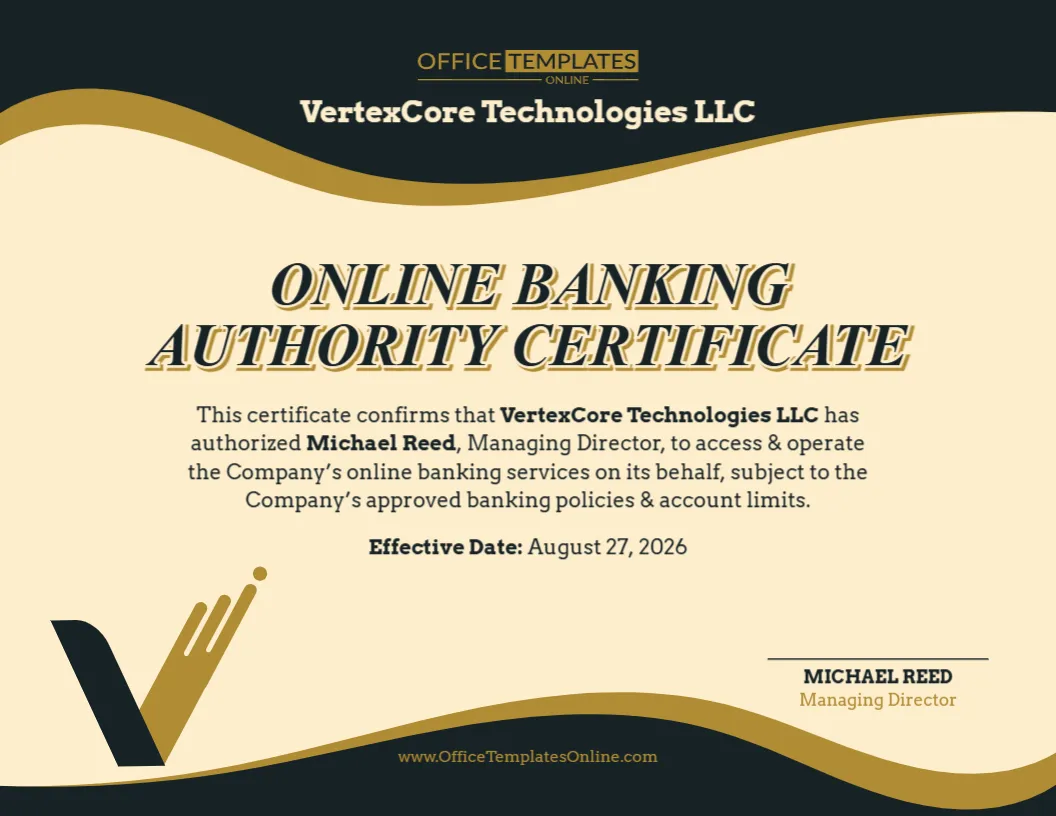
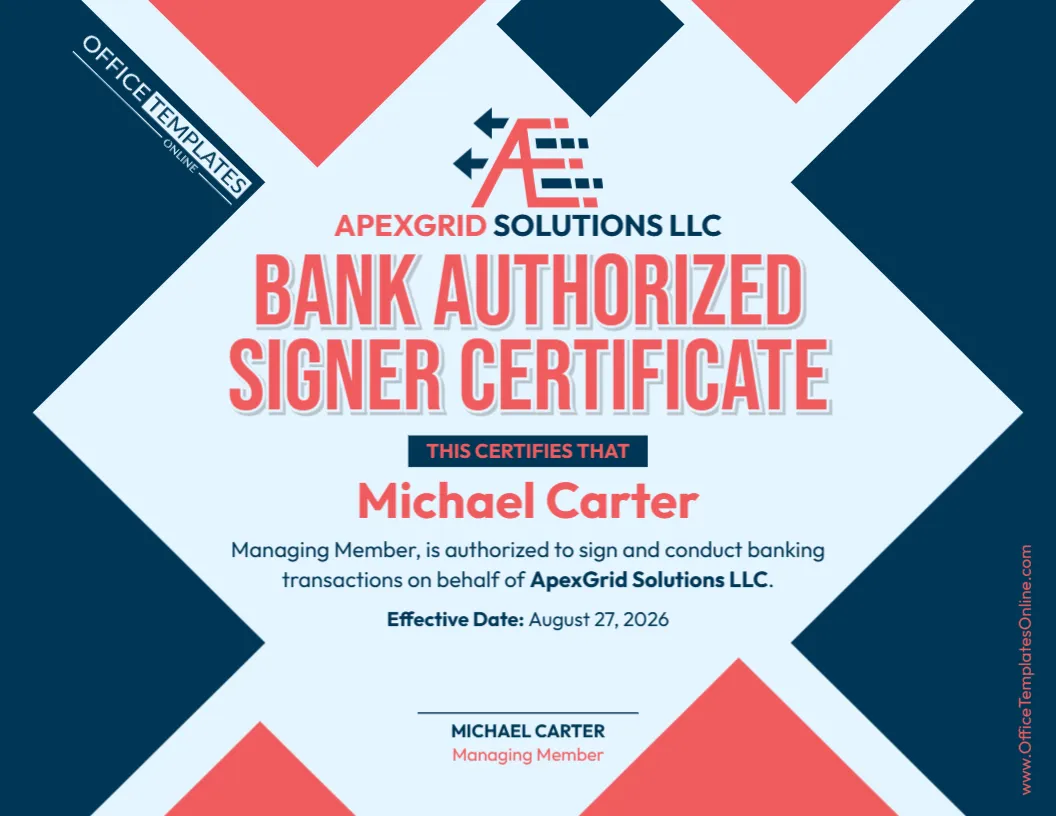
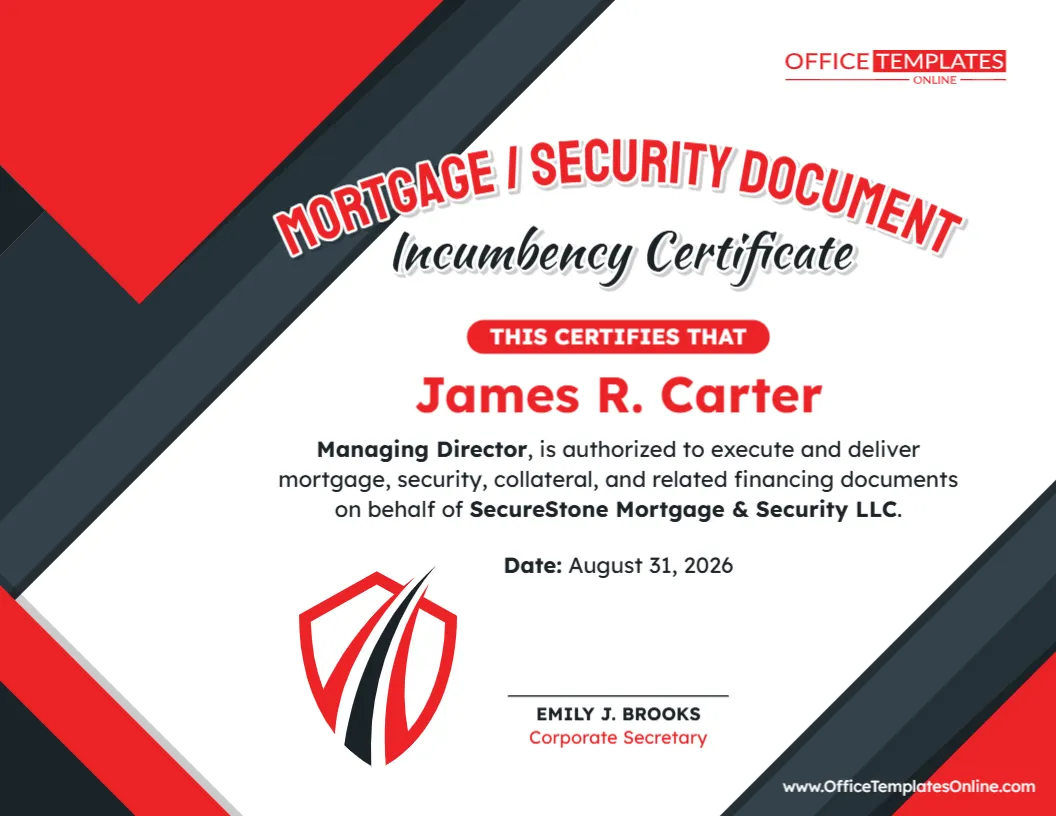
The certificate is designed around one authorized company representative. It identifies the officer by name and title, states the company being represented, and provides wording confirming authority to execute and deliver mortgage, security, collateral, and related financing documents. A certificate date and separate Corporate Secretary area complete the design.
You can customize the template online in your browser without logging in. Replace the sample officer, company, authority statement, date, and certifying person with accurate information, then download your finished certificate as a PDF, PNG, or JPG.
What Is a Mortgage/Security Document Incumbency Certificate?
An incumbency certificate is a corporate document used to confirm that a named person currently occupies a particular office or authorized role within a company.
This template applies that concept specifically to mortgage, security, collateral, and related financing documents.
In practical terms, the certificate can help communicate:
“This individual currently holds this corporate position and has the stated authority to execute the identified financing-related documents on behalf of this company.”
That can be useful when a lender, financial institution, transaction adviser, or another party needs a concise record of the person acting for the company.
The certificate documents authority; it does not create that authority by itself.
What the Sample Certificate Contains
This design follows a simple transaction-oriented structure rather than presenting a lengthy list of officers.
At the center is the name of the authorized individual. Immediately below, the certificate identifies the person’s corporate position and describes the relevant authority.
The sample wording covers authority to execute and deliver:
- Mortgage documents
- Security documents
- Collateral documents
- Related financing documents
The certificate also shows the company name, an effective certificate date, and a separate area for the Corporate Secretary.
Every sample detail can be edited to suit the actual transaction.
Why “Execute and Deliver” Matters
The wording in a financing certificate deserves careful attention.
The sample certificate states that the officer is authorized to “execute and deliver” specified documents. In business and legal documentation, execution generally concerns properly signing or completing a document, while delivery can relate to formally providing or putting that document into effect as required by the transaction.
You should keep this wording only when it accurately reflects the officer’s authority and the documents involved.
If the individual is authorized to sign but not perform every action suggested by the sample language, change the wording.
Similarly, if the authority applies only to a particular mortgage, security agreement, financing facility, or closing, the certificate can be narrowed accordingly.
Mortgage Documents and Security Documents Are Not Necessarily the Same
The template deliberately refers to several categories of documents because secured financing can involve different instruments.
A mortgage commonly relates to a security interest involving real property, subject to the terminology and law of the applicable jurisdiction.
A security agreement may establish a security interest in specified personal property or other collateral.
Other financing arrangements can involve additional collateral documents, assignments, guarantees, pledges, financing statements, certificates, or related instruments.
Not every transaction uses all of these documents.
That is why the certificate is editable. Remove references that do not apply and adapt the authority statement to the actual financing arrangement rather than treating the sample list as mandatory.
One Authorized Representative, Clearly Identified
This template focuses on a single representative instead of listing the company’s entire management team.
The officer’s name is displayed prominently, followed by the corporate title. In the example, that title is Managing Director.
Your authorized representative may hold another position, such as Chief Executive Officer, President, Chief Financial Officer, Treasurer, Director, Manager, or another appropriate role.
Use the title found in the organization’s current records.
More importantly, verify that the individual has the authority described in the certificate. A senior title by itself should not be treated as proof of unlimited authority to mortgage company property or grant security interests.
Incumbency and Financing Authority Are Two Different Facts
This distinction is especially useful when preparing this type of certificate.
Incumbency answers:
“Does this individual currently hold the position shown?”
Financing authority answers:
“Is this individual authorized to execute the mortgage, security, collateral, or related financing documents concerned?”
A person can be the company’s Managing Director while still needing a board resolution or another corporate approval before granting security over company assets.
Your certificate should accurately address both points.
Before completing it, check the company’s current records and any transaction-specific approvals that establish the officer’s authority.
The Authority Can Be Made Transaction-Specific
The sample wording is fairly broad. It refers generally to mortgage, security, collateral, and related financing documents.
For a particular financing transaction, you may prefer more precise language.
For example, the certificate could be customized to refer to a particular loan transaction, mortgage, security agreement, financing facility, lender, property, or another suitable transaction reference.
Transaction-specific wording can be useful when the officer has authority for one financing arrangement rather than broad authority over every future secured transaction entered into by the company.
The correct level of detail depends on the company’s authorization and the recipient’s requirements.
Start with the Legal Company Name
The company name is one of the first details to verify.
Use the correct legal entity name rather than automatically entering a brand, trade name, or shortened business name.
This is particularly important when a corporate group contains multiple entities.
For example, a parent company may negotiate a financing arrangement while a subsidiary owns the property or collateral. The entity granting a mortgage or security interest may therefore be different from another company involved in the wider transaction.
Make sure the certificate identifies the company whose officer and authority are actually being certified.
Check What the Officer Is Authorized to Sign
Financing authority can be structured in many ways.
An officer might be authorized to execute all documents associated with a particular loan. Another might be permitted to sign only after specific board approval. A company may require two officers to act jointly, or it may impose limits based on transaction value or the type of asset being pledged.
Before customizing the certificate, ask:
Which documents are covered?
Is the authority limited to one transaction?
Does another officer need to sign as well?
Is there a financial or asset-value limit?
Was board, shareholder, member, or another approval required?
The certificate should not suggest broader authority than the company has actually granted.
Edit the Template Online Without Creating an Account
You do not have to build the certificate manually in a word processor or design program.
Open the template in the browser-based online editor and customize the existing content. No login is required.
A useful editing sequence is:
- Replace the sample company name with the correct legal entity.
- Enter the authorized representative’s full name.
- Update the corporate title.
- Review the mortgage and security-document authority statement.
- Remove document categories that do not apply.
- Add transaction-specific wording where needed.
- Replace the sample certificate date.
- Update the Corporate Secretary or other certifying person.
- Compare the certificate with the underlying authorization.
- Download your completed design.
This gives you a professional certificate format while leaving the important transaction information under your control.
The Corporate Secretary Has a Separate Place in the Design
The bottom of the template includes a dedicated area for a Corporate Secretary.
This helps separate the person whose financing authority is being confirmed from the person certifying the corporate information.
For example, the certificate might identify a Managing Director as the authorized signer while a Corporate Secretary certifies that the individual currently holds that office and has the stated authority.
That arrangement will not be appropriate for every organization.
Your company may use another officer or authorized person for certification. If a lender or transaction adviser specifies who should certify the certificate, follow those instructions and edit the template accordingly.
How This Certificate Can Relate to a Board Resolution
A board resolution may be an important supporting record in a secured financing transaction.
For example, a resolution might approve a borrowing arrangement, authorize the granting of security over particular company assets, and identify the officers permitted to execute the related documents.
An incumbency certificate can then help confirm that the named signer currently holds the relevant office and has the authority being certified.
The two documents have different purposes.
The resolution can record the corporate approval, while the incumbency certificate can confirm the current officer and stated authority.
If the officer’s authority comes from a specific resolution, make sure the certificate does not contradict it.
This Certificate Does Not Create a Mortgage or Security Interest
Completing this template does not itself mortgage property, pledge collateral, create a security interest, or complete a financing transaction.
Those effects depend on the actual transaction documents, applicable law, execution requirements, and other necessary steps.
Likewise, typing an officer’s name into the certificate does not grant that individual authority.
The certificate is a supporting corporate record. Its job is to present the relevant incumbency and authorization information in a clear format.
This distinction is particularly important when documents concern valuable company property or significant financial obligations.
Think Carefully Before Using “All Related Financing Documents”
Broad phrases can be convenient, but they can also create ambiguity.
If an officer is authorized to execute only a mortgage and security agreement, it may not be appropriate to say that the person can execute all related financing documents.
That broader phrase could potentially include other documents not covered by the original authorization.
Where the scope is limited, name or describe the permitted documents more precisely.
Where broad authority genuinely exists, the wider wording may be appropriate.
Use the online editing capability to make the certificate match the actual authorization rather than forcing the transaction into the sample language.
The Date Helps Show When the Information Was Current
The template contains a clearly visible date field.
This is important because officer positions and signing authority can change.
A person may have been authorized when financing negotiations started but leave the company before closing. A board may also amend an earlier authorization or appoint a different officer.
Before issuing the certificate, verify that the named person currently holds the stated office and that the relevant authority is still effective.
If a transaction takes a long time to complete, the lender or another party may request a newly dated certificate closer to closing.
A Useful Supporting Document for Secured Financing
Depending on the transaction, a Mortgage/Security Document Incumbency Certificate may be included with a wider collection of financing and corporate records.
Those records might include the principal financing agreement, mortgage, security agreement, corporate resolutions, closing certificates, organizational documents, collateral records, or other transaction-specific paperwork.
The exact package depends on the financing.
This certificate should be treated as a focused supporting document, not as a replacement for those agreements or approvals.
If the lender supplies a required incumbency certificate or authorized-signatory form, use the requested format or wording where necessary.
Signatures and Corporate Seals Should Follow Actual Requirements
The certificate design contains a certification area, but the execution requirements should come from the transaction—not from assumptions based on the appearance of the template.
A recipient may require the certificate to be signed by a Corporate Secretary or another officer. A corporate seal may be requested in some circumstances. Other transactions may not require a seal at all.
The document may also need electronic or handwritten signatures depending on the process being used.
Determine these requirements before finalizing the certificate.
A typed name or decorative seal should never be presented as an official signature, notarization, or corporate certification when the corresponding process has not actually occurred.
Does the Certificate Need to Be Notarized?
Not necessarily.
Whether notarization is needed depends on the transaction, document, jurisdiction, and recipient.
In some financing or real-estate-related matters, particular documents may have acknowledgment, notarization, witnessing, recording, or other formal requirements. Those requirements should not automatically be assumed to apply to every incumbency certificate.
If the lender, closing professional, government office, registry, or another recipient requires notarization, complete that process separately.
Customizing this template online does not notarize the certificate.
Property and Collateral Details May Need Separate Documentation
This template is primarily focused on the authorized officer, not on describing the property or collateral itself.
Detailed property descriptions, collateral schedules, legal descriptions, account information, or other transaction-specific details may belong in the underlying mortgage, security agreement, schedule, or related financing documents.
If the recipient specifically wants a transaction reference in the incumbency certificate, you can add one.
However, avoid turning the certificate into a substitute for the underlying security documentation.
Keeping each document focused on its intended purpose can make the overall transaction package easier to review.
Download Your Finished Certificate as PDF, PNG, or JPG
Once all company and authorization details have been reviewed, download the completed certificate as a PDF, PNG, or JPG.
A PDF is often convenient for printing, sharing with a lender, storing with financing records, or including in a closing package.
PNG and JPG provide image versions when that format better fits your workflow.
The available download options do not determine what a lender, registry, closing platform, or other recipient will accept. Check any submission or execution requirements before choosing the final format.
A Quick Accuracy Test Before You Finalize It
Read the completed certificate as though you were the lender receiving it for the first time.
Can you immediately identify the company?
Is the authorized officer clearly named?
Is their current corporate title correct?
Does the certificate explain which mortgage, security, collateral, or financing documents the person can execute?
If the authority is transaction-specific, is that clear?
Then confirm the date and certifying person.
Finally, compare the authority statement with the board resolution, delegation, or other corporate record supporting it. If the underlying authorization contains restrictions, the certificate should not hide or contradict them.
Create a Focused Record of Mortgage and Security Signing Authority
The Mortgage/Security Document Incumbency Certificate Template gives companies a professional starting point for documenting who is currently authorized to execute relevant secured-financing documents.
Its focused layout brings together the authorized person’s name, corporate title, company, mortgage/security-document authority, certificate date, and certifying officer in one easy-to-read design.
Customize the certificate online without logging in, adjust the authorization language to reflect the actual financing arrangement, and download the finished version as a PDF, PNG, or JPG.
The template helps document existing incumbency and authority. It does not itself authorize borrowing, create a mortgage or security interest, pledge collateral, grant an officer signing power, or replace the financing documents, corporate approvals, filing or recording requirements, and other formalities that may apply to the transaction.