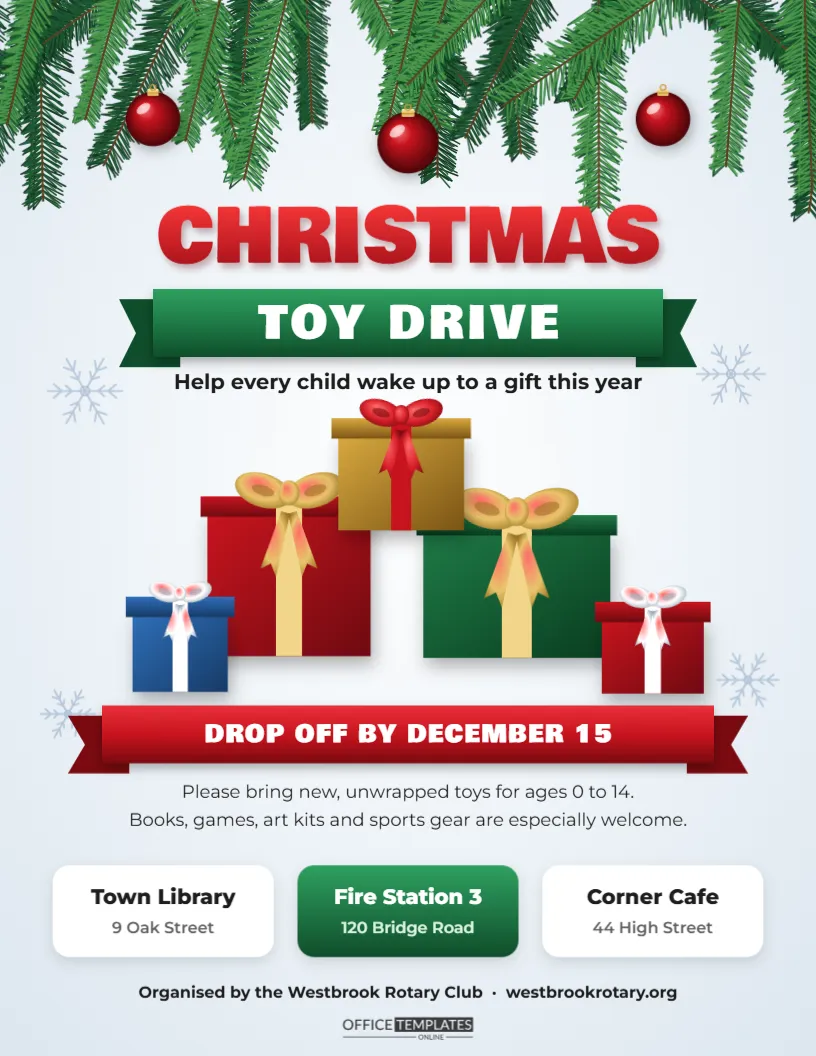
A toy drive succeeds when donating feels easy, and the need feels real. This flyer is built for both. A snowy white background carries a garland with red baubles, a gradient title, and a green ribbon banner, and a tall pile of wrapped gifts shows what a full donation point looks like. A deadline banner tells people when to give, and three drop-off cards list where. It is ideal for schools, fire stations, churches, charities, and businesses running a seasonal collection for children in need.
A Bright and Hopeful Look for a Charity Collection
Charity posters can feel heavy, but the cheerful snowy design here invites people to take part. White space keeps the page clean, and bright red and green draw the eye to the key information.
Editing the Title and Green Ribbon Banner
The title is set in a gradient-filled display style, with a green ribbon banner that holds a short line such as Help Every Child Unwrap a Gift. You can change it to name your organisation, for example, Firefighters Toy Drive or School Toy Collection.
Setting the Collection Deadline Banner
A banner across the middle gives the last day to donate. Pick a date that leaves enough time to sort, wrap, and deliver gifts, usually a week or ten days before Christmas. Write it clearly, such as Drop off by December 14.
Listing Three Drop-Off Locations
| Drop-off card | Example | Add |
|---|---|---|
| Location one | Town Hall lobby | Weekday hours |
| Location two | Fire Station 4 | Staffed times |
| Location three | Maple Street Library | Collection box position |
Fill each card with a place and the hours it is open. If you only have one drop-off point, delete two cards and enlarge the remaining one.
What Gifts to Ask For and What to Avoid
Be specific. Ask for new, unwrapped toys, books and games for ages from babies to teenagers, and name gifts that are hard to receive, such as teen items. Note that used toys, weapons, and battery-powered items without batteries may not be accepted.
The Pile of Wrapped Gifts Illustration
A tall stack of presents in several colours rises toward the title. It suggests the target you want to reach. You can move boxes, recolour them, or remove a few if you want to place a logo.
Explaining Who Receives the Toys
Donors want to know where gifts go. Add a line such as: Gifts go to families in our county through the Community Action Programme. Transparency builds confidence and often increases donations.
Recruiting Volunteers Through the Same Flyer
A toy drive requires sorters, drivers, and wrappers. Add a small line at the bottom with a volunteer email address or sign-up link. People who see the poster for giving may also offer time.
Running a Toy Drive at a School or Workplace
Place a labelled box by the entrance, post the flyer on notice boards, and send it in the newsletter. A friendly competition between classes or departments can encourage more giving. Announce a final tally and thank everyone.
Partnering With Local Shops for Matching Gifts
Some shops match donations or offer discounts on toys bought for the drive. Add their names to the footer and thank them publicly. It rewards their support and persuades other businesses to join next year.
Printing and Posting the Toy Drive Flyer
The page prints well on standard paper because the background is light. Post copies in supermarkets, libraries, and community centres. Ask for permission first, and remove the posters after the deadline.
Posting on Social Media to Reach More Donors
A tally image showing how many gifts have arrived keeps momentum going. Share the flyer first, then post progress updates using the same colours and fonts, so supporters recognise the campaign.
Thanking Donors After the Collection
Send a short thank you message with photos, if allowed, and share the number of children helped. People who see results are more likely to give again, and your organisation builds trust.
Last Review Before the Drive Begins
Check dates, addresses, and contact details. Confirm that each drop-off site agrees to be listed. Print a copy and test whether a stranger could find the nearest location from the page alone.
Age Groups That Need Gifts Most
Donations tend to cluster around toddlers and young children. Ask for gifts for teenagers, and for babies under one, because they are often overlooked. Gift cards for teenagers are welcome in many programmes. A short guide on the flyer helps donors choose something that will actually be used.
Sorting and Wrapping the Gifts
Once donations arrive, volunteers sort them by age and type, then wrap them or label them for family pickup. Mention the sorting day so that helpers can join. Set up a clean and safe space for the work, and record each item to avoid duplicates.
Tracking Donations and Reporting Results
A simple tally sheet at each drop-off point shows what has come in. Share the progress with donors every few days, with a picture of the growing pile. Report the final totals after Christmas to show that the collection made a difference.
Giving Companies an Easy Way to Join the Toy Drive
Businesses often want to help but need a simple process. Offer a collection box, a branded poster, and a pickup date. Provide a short email template that managers can send to staff. When a firm adopts the drive, the flyer in the break room becomes a powerful reminder to donate.
Safety Standards for Donated Toys
Only new toys in original packaging should be accepted, to avoid safety problems with recalled or damaged items. Say so on the flyer and train volunteers to check labels for age ranges. Small parts are unsuitable for babies, so sort carefully before wrapping and distributing the gifts.
Recognising Top Donors and Collection Champions
A little recognition goes a long way. Display a thank-you board near the main drop-off point, or name the class, team, or shop that collected the most gifts. Friendly competition raises the total, and the people involved feel proud to be part of something that brightens a child’s morning.