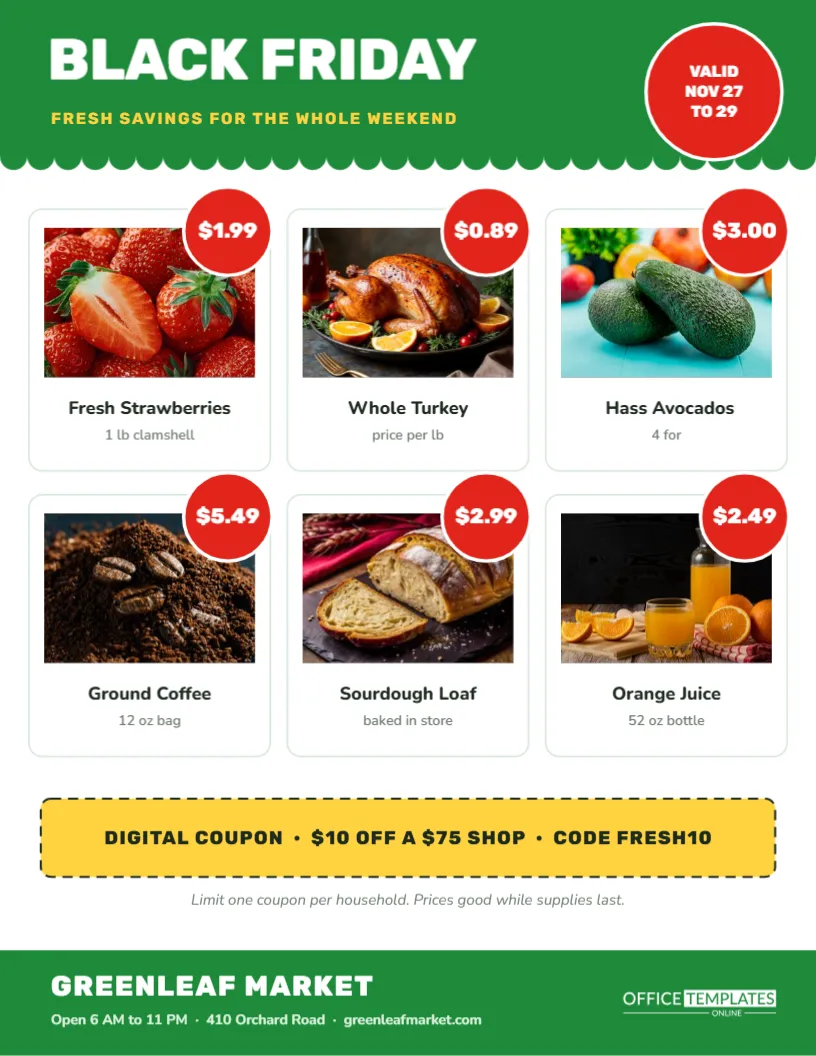
Grocery stores have their own Black Friday. After Thanksgiving dinner, families need to restock, guests are still in town, and many people host leftovers parties over the weekend. A weekly ad that looks like the familiar supermarket circular tells shoppers exactly where to find fresh savings. This flyer uses a green scalloped header, six product tiles with round red price bubbles and a coupon strip, so it feels instantly recognisable as a grocery ad.
The Classic Grocery Weekly Ad Format
Supermarket circulars follow a well-known pattern: a coloured header with the dates, a grid of products with large prices, and a coupon near the bottom. Shoppers scan them, looking for the prices that matter to them. This template keeps the pattern because familiarity helps people find deals fast.
The Green Scalloped Header
The header is a fresh green band with a scalloped lower edge, like an awning over a market stall. BLACK FRIDAY sits in bold white Rubik, with FRESH SAVINGS FOR THE WHOLE WEEKEND below in yellow. A red circle on the right states the validity dates: November 27 to 29. Weekly ads always need clear dates, so they are placed where people look first.
Six Product Tiles With Price Bubbles
| Product | Detail | Price |
|---|---|---|
| Fresh Strawberries | 1 lb clamshell | $1.99 |
| Whole Turkey | price per lb | $0.89 |
| Hass Avocados | 4 for | $3.00 |
| Ground Coffee | 12 oz bag | $5.49 |
| Sourdough Loaf | Baked in store | $2.99 |
| Orange Juice | 52 oz bottle | $2.49 |
Each tile has a rounded white frame, a photo, a red price bubble in the corner, the product name in bold, and a small unit line in grey.
Why Unit Details Matter in Grocery Ads
A price means little without a unit. Is the turkey per pound or per bird? Is the coffee 12 or 24 ounces? The small grey line under each name answers that question. It prevents disappointment at the shelf and helps customers compare value with other stores.
The Digital Coupon Strip
A yellow strip with a dashed border offers DIGITAL COUPON, $10 OFF A $75 SHOP, CODE FRESH10. Spend threshold coupons are common in grocery and encourage a bigger weekly shop. A short italic line below reads: limit one coupon per household; prices good while supplies last. Adjust both lines to match your loyalty system.
Choosing Products for a Post-Thanksgiving Ad
Think about what families need after the holiday: fresh fruit, bread, coffee, juice, and items for leftover meals. Turkey may still sell well at a discount for freezing. Mixing staple items with a few treats keeps the ad useful and gives people several reasons to visit.
Editing the Grocery Weekly Ad
- Change the validity dates in the red circle.
- Replace the six product photos.
- Retype names, unit lines, and prices.
- Edit the coupon offer and code.
- Update the store name, hours, and address in the footer.
Photographing Fresh Food
Fresh food looks best in daylight with a little shine. Photograph produce on a light wooden board or a white plate, close enough that the texture is visible. For packaged goods, a clean front-facing shot is enough. Consistent backgrounds across the tiles make the ad look professional.
Price Bubbles and Readability
The red bubbles use white bold figures, which are readable even when the flyer is small. Keep prices to four or five characters. For multi-buy offers like 4 for $3, put the quantity in the unit line and the price in the bubble, as the avocado tile does.
Printing Grocery Ads in Quantity
Weekly ads are often printed in large numbers for doors, bags and counters. Send the PDF to a print shop for a cheaper per-copy price. On a home printer, the white background keeps ink use low, and only the header, bubbles, and footer need full colour.
Publishing the Ad on Your Website
Most grocery shoppers check the weekly ad online before they go. Upload the flyer image to your website and social pages on Wednesday or Thursday, so people can plan their weekend shop. Include the coupon code in the post text too, so it can be copied.
Using the Flyer for Farm Shops and Delis
The same layout suits farm shops, delis, bakeries and specialty food stores. Replace the products with your own, such as cheeses, local honey, or pies, and change the green to your brand colour. The tile and bubble format works for any shop with priced items.
Keeping Prices Accurate on Shelf Tags
Customers bring weekly ads to the shelf and compare. Make sure the shelf tags match the flyer before the doors open, and brief staff on the coupon. A mismatch between the ad and the shelf is the most common complaint in grocery promotions.
Pricing Fresh Food for Black Friday Weekend
Fresh produce and bakery items have short shelf lives, so price them to sell over the weekend rather than for one day. A per-pound price, a multi-buy deal, and a simple fixed price all appear in the sample. Choose formats your checkout system already supports, so the price on the flyer matches the price scanned at the till.
Reaching Shoppers Who Plan Their Weekly Shop
Many households plan meals and shopping lists from the weekly ad. Release the flyer a day or two before the sale starts, both in print and online, so families can add your deals to their lists. A clear unit line and price help them compare quickly and decide to visit your store.
Making the Grocery Ad Accessible to Everyone
Large prices, high contrast, and simple product names help older shoppers and anyone reading quickly in a car park. Keep the font sizes generous and avoid placing text over photos. A clear ad is a kinder ad, and it reaches the widest range of customers in your area.
Grocery Weekly Ad Questions
Can I fit nine products?
Yes. Make the tiles smaller and add a third row, reducing the photo height.
Can I remove the coupon?
Yes. Delete the strip and move the fine print up, or use the space for more products.
Are the price bubbles editable?
Yes. Each bubble is a circle with text, and both can be changed.