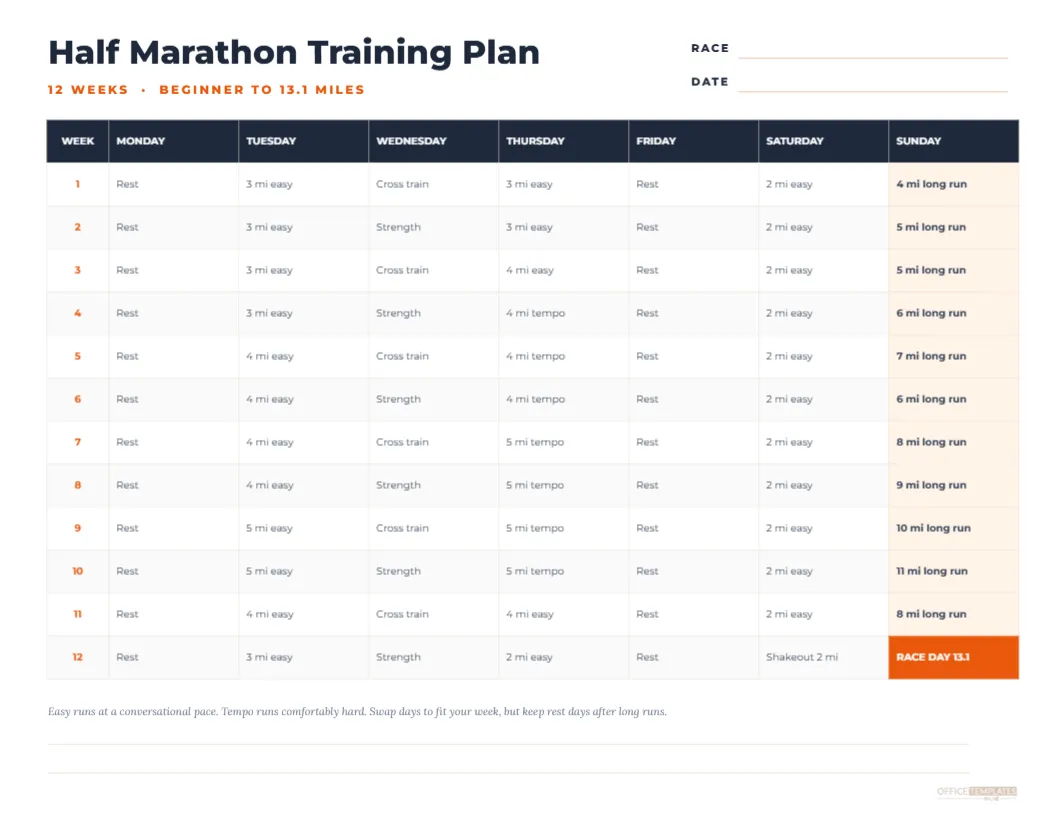
Training for a half marathon is far easier with a clear plan stuck to the fridge. This 12-week half marathon training calendar takes beginners from a four-mile long run to the full 13.1-mile race. The landscape page opens with the title Half Marathon Training Plan, the subtitle 12 Weeks, Beginner to 13.1 Miles, and lines for the race name and date. A table shows each week as a row and each day as a column. Mondays and Fridays are rest days, Tuesdays and Thursdays are easy or tempo runs, Wednesdays alternate cross-training and strength, Saturdays are short easy runs, and Sundays hold the long run, highlighted in soft orange. Race day sits in bold orange in the final week.

Who This Half Marathon Plan Is For
The plan suits runners who can already run about three miles comfortably and want to complete their first half marathon. If you are starting from scratch, follow a couch to 5K programme first, then begin this calendar once three miles feels manageable.
How the Long Runs Build
Sunday long runs grow gradually: four miles in week 1, then five, five, six, seven, six, eight, nine, ten and eleven miles in week 10. Week 6 steps back slightly to let your body recover. Week 11 drops to eight miles as you begin tapering, and week 12 ends with race day.
Easy Runs and Tempo Runs
Easy runs should feel conversational, where you could chat in full sentences. Tempo runs, from week 4 to week 10, are comfortably hard, the pace you could hold for about an hour. Mixing easy and harder efforts builds endurance and speed without overtraining.
Cross Training and Strength
Wednesdays alternate between cross-training, such as cycling, swimming, or brisk walking, and strength work for legs, hips, and core. These sessions improve fitness and help prevent injuries while giving your running muscles a break.
Rest Days Matter
Mondays and Fridays are rest days. Rest lets muscles repair and adapt, and it reduces the risk of injury. Gentle stretching or a short walk is fine, but resist the urge to add extra runs.
Tapering Before Race Day
In the final two weeks, the mileage drops so you arrive at the start line fresh. A short shakeout run the day before the race keeps your legs loose. Trust the taper, as the hard work has already been done.
Adjusting the Plan to Your Week
If your long run day is Saturday, swap the Saturday and Sunday columns. Keep at least one rest day after your long run and avoid two hard sessions back to back. Edit any cell in the table to fit your schedule.
Writing in Your Race Details
Fill in the race name and date at the top. Count back twelve weeks from race day to find your start date, and write the dates of each week beside the week numbers if you like.
Tracking Your Training
Tick each session as you complete it, or write your actual distance and how you felt. A completed calendar is a great confidence boost before race day.
Fuel, Hydration and Gear
Use your long runs to practise race day nutrition, hydration and clothing. Try energy gels or snacks, test your shoes and socks, and learn what works so there are no surprises on race morning.
Editing the Training Table
The plan is an editable table. Change distances to kilometres, adjust paces, swap workouts or add notes. The long run column is highlighted so you can see the progression at a glance.
Orange and Navy Sporty Design
The energetic orange highlights and navy text give the calendar a sporty feel. Change colours to match your running club or race branding.
Printing the Training Calendar
Print in landscape on US Letter or A4 and stick it on the fridge, in your locker, or beside your running shoes. Seeing the plan daily makes it easier to stay consistent.
Using the Plan on Your Phone
Download a PNG and save it to your phone so you can check the day’s workout before heading out, even when you are away from home.
Training With a Group or Friend
Share the calendar with a running buddy or club so you can train together on long run days. Running with others makes the miles pass quickly and keeps you accountable.
Matching Fitness Templates
Pair the training calendar with our habit tracker, fitness workout calendar, and weight loss tracker for a complete health and fitness planning set.
Saving the Training Template
Save the plan in your account and reuse it for your next race, perhaps adjusting distances as your fitness improves.
Training Calendar File Formats
Download a PDF for printing or an image for digital use. The table and highlights keep their layout in every format.
Choosing Your First Half Marathon
Pick a race twelve to sixteen weeks away so you have time for the full plan plus a buffer week in case of illness. Flat courses with good crowd support are ideal for a first half marathon. Read the race information early so you know the start time, the location of water stations, and any cut-off times, then plan your training runs to match.
Recovery After Race Day
After the race, take a few easy days with gentle walking and stretching. Most runners take a week or two of light running before starting a new plan. Celebrate your achievement and note what you learned for next time.
Sleep and Training
Good sleep is when your body adapts to training. Aim for regular bedtimes, especially before long runs, and treat rest as part of the plan.
Race Morning Checklist
Lay out your kit, bib, and fuel the night before, and plan travel to arrive early.
Training in Hot or Cold Weather
Adjust pace in extreme weather and run early in summer heat to stay safe.
Listening to Your Body
Any training plan is a guide, not a rule. If you feel pain, extreme fatigue, or illness, take an extra rest day or see a professional. Missing a run is far better than missing the race through injury.