A Christmas dinner party is a chance to bring friends to your table for a proper meal: candles lit, the good plates out, course after course of seasonal food. An invitation that includes the menu builds anticipation and lets guests mention any dietary needs in advance. This 5 x 7 inch template has two pages. The front is a deep emerald card with a gold place setting seen from above, a white plate with a holly sprig and a gold knife and fork. The back is a cream menu card listing four courses in elegant italic.
The Front Page: An Invitation to the Table
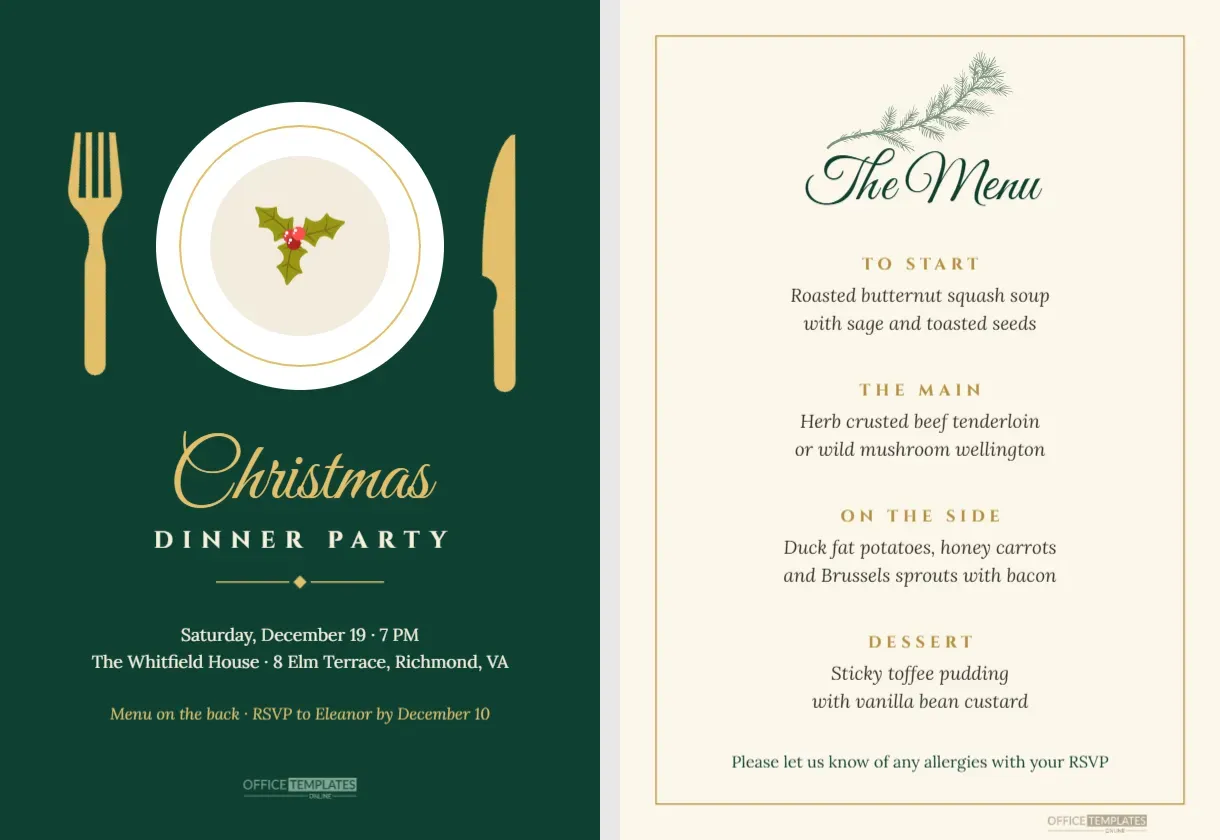
The front shows a dinner plate from above, with a white rim, a fine gold ring, and a cream centre holding a sprig of holly with berries. A gold fork with three tines stands to the left and a gold knife to the right, as if the table is set and waiting. Below the plate, Christmas in gold Great Vibes and DINNER PARTY in spaced cream Cinzel capitals form the title, with a gold divider. The date and hosts’ address follow in Lora, and a gold italic line says Menu on the back, RSVP to Eleanor by December 10.
The Back Page: A Menu Card
The back page is cream with a fine gold frame. A sprig of pine sits at the top above The Menu in green Great Vibes. Four courses follow, each with a small gold heading in spaced Cinzel capitals and two lines of dishes in Lora italic: a roasted butternut squash soup to start, a herb-crusted beef tenderloin or wild mushroom wellington for the main, duck fat potatoes, honey carrots and Brussels sprouts on the side, and sticky toffee pudding with vanilla custard for dessert. A final line asks guests to mention allergies with their reply.
Planning a Four Course Christmas Dinner
A four-course menu feels special without being exhausting. Plan dishes that can be prepared in advance so you can sit with your guests. Soups can be made a day ahead and reheated. Roasts and wellingtons can be prepared in the morning and cooked while guests enjoy drinks. Vegetables can be peeled and parboiled earlier in the day. Desserts such as sticky toffee pudding, trifle or chocolate tart are often better made the day before. Always offer a vegetarian main, as the sample does, and confirm any dietary needs when guests reply.
Writing the Four Course Menu
Each course on the back page has a heading and two lines. Click the heading to rename it, for example AMUSE BOUCHE, FIRST COURSE or CHEESE. Click the dish text and type your menu, keeping each dish to one line where possible. Describe dishes simply and appetisingly: mention the main ingredient and one flavour, such as roast turkey with sage and onion stuffing, rather than long lists. If you serve a cheese course or petit fours, add a fifth section by copying one course block and moving the allergy note down.
Setting the Table to Match the Front Page
The gold place setting on the invitation is a lovely guide for your actual table. Use white plates with gold or brass cutlery, cream napkins tied with green ribbon and a sprig of holly or rosemary on each plate. Add tall candles, a runner of greenery and small place cards. Print an extra copy of the menu page for each guest and stand it at their place.
Editing the Two Pages
The editor shows page one first; use the page navigation to move to the back. On the front, change the date, the host and address, and the RSVP line. On the back, change the menu. The plate, cutlery, and holly on the front can be recoloured: select the plate rings to change gold to silver, or the background to change emerald to burgundy. The back page frame and headings use the same gold, so update them together for a consistent look.
Printing Double Sided
Download both pages as a PDF and print them double-sided on a single 5 x 7 card, so the menu is on the back of the invitation. Use full bleed for the emerald front. Many print shops print two-sided cards inexpensively. At home, print page one, turn the sheets over and print page two, testing the orientation on plain paper first.
Dietary Requirements and Allergies
Including the menu helps guests with allergies or dietary preferences reply early. Common requests include vegetarian, vegan, gluten-free, dairy-free, dairy free and nut allergies. Keep a simple list as replies arrive, and plan alternatives for each course. Label any dishes on the night that contain common allergens.
Wine Pairing Suggestions
A dinner party feels complete with wine to match each course. A crisp white such as Sauvignon Blanc suits the squash soup; a Pinot Noir or Bordeaux suits beef tenderloin; a medium white suits the mushroom wellington; and a dessert wine or tawny port suits sticky toffee pudding. Offer good alcohol free options too, such as a sparkling pomegranate drink.
Sending a Digital Copy
Download both pages as images and send them together in a message or email, front first. Guests can save them and check the menu again before the evening.
Dinner Party Questions
Can I use only the front page?
Yes. Delete the menu page or simply download page one.
Can the menu have more courses?
Yes. Reduce the spacing between sections and add another block.
What date is the sample dinner?
Saturday, December 19, 2026, at 7 PM.
Seating Your Guests
At a dinner party, where people sit shapes the evening. Mix couples and friends so conversations flow between people who do not usually talk. Seat lively talkers next to quieter guests, and place anyone with mobility needs nearest the door. Small place cards in cream and gold, matching the invitation, make the table look finished and avoid awkward hovering when guests come to sit down.
Welcome Friends to Your Table
Plan your menu, fill in both pages, and send the invitation. A beautiful card with the menu on the back tells guests that a memorable Christmas dinner awaits.