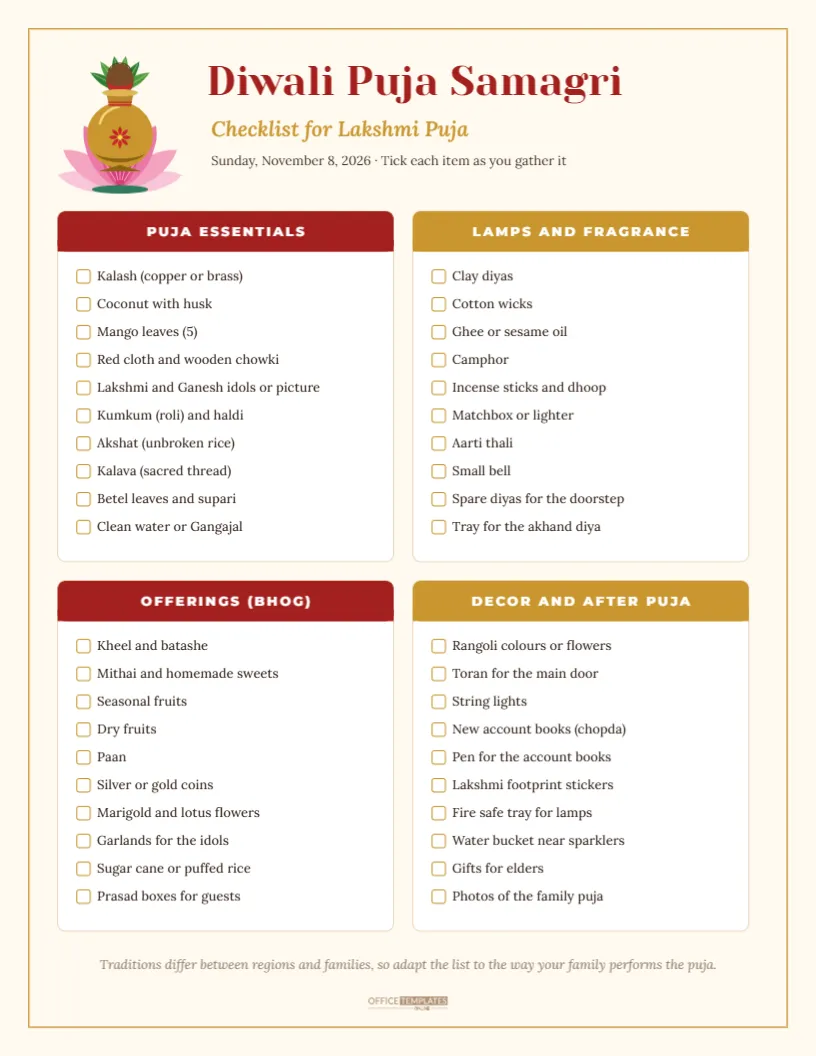
Every year, someone realises on Diwali evening that the camphor has run out, the kalava thread is missing, or nobody bought fresh mango leaves. A written checklist, filled in a few days before the festival, prevents that last-minute scramble. This printable groups the samagri (puja materials) for Lakshmi Puja into four clear lists, forty items in all, each with a box to tick as you gather them.
How the Checklist Is Organised
A kalash resting on a pink lotus sits in the top left corner beside the title Diwali Puja Samagri in maroon Yeseva One, with Checklist for Lakshmi Puja in gold italic and the date. A thin gold frame surrounds the page. Four white cards fill the page in two rows, each with a coloured header alternating maroon and gold:
- Puja Essentials: the items used to set up the altar and perform the core rituals.
- Lamps and Fragrance: everything for the diyas, aarti, and incense.
- Offerings (Bhog): foods, flowers, and coins offered during the puja.
- Decor and After Puja: decorations for the home and practical items for the rest of the evening.
A note at the bottom reminds families that traditions differ, and the Office Templates Online mark sits below it.
The Complete List
Puja essentials
Kalash in copper or brass; a coconut with husk; five mango leaves; a red cloth and a wooden chowki for the altar; Lakshmi and Ganesh idols or a picture; kumkum (roli) and haldi; akshat (unbroken rice); kalava (sacred thread); betel leaves and supari; and clean water or Gangajal.
Lamps and fragrance
Clay diyas; cotton wicks; ghee or sesame oil; camphor; incense sticks and dhoop; a matchbox or lighter; an aarti thali; a small bell; spare diyas for the doorstep; and a tray for the akhand diya, the lamp many families keep burning through the night.
Offerings (bhog)
Kheel and batashe; mithai and homemade sweets; seasonal fruits; dry fruits; paan; silver or gold coins; marigold and lotus flowers; garlands for the idols; sugar cane or puffed rice; and prasad boxes for guests.
Decor and after puja
Rangoli colours or flowers; a toran for the main door; string lights; new account books (chopda) for families and traders who perform Chopda Pujan; a pen for the account books; Lakshmi footprint stickers for the entrance; a fire safe tray for lamps; a water bucket near the sparklers; gifts for elders; and a camera or phone for photos of the family puja.
A Shopping and Preparation Timeline
| When | What to do | Items |
|---|---|---|
| One week before | Check what you already have at home | Kalash, idols, thali, bell, chowki |
| Four or five days before | Buy dry and long-lasting items | Diyas, wicks, ghee, camphor, incense, kumkum, rice, thread |
| Dhanteras (Friday, November 6, 2026) | Buy coins, utensils, or metal items | Silver coins, a new thali or kalash |
| Day before Diwali | Buy fresh items and make sweets | Mango leaves, flowers, garlands, fruits, mithai |
| Diwali day (Sunday, November 8, 2026) | Set up the altar and rangoli | Everything on the list, laid out before the muhurat |
Adapting the List to Your Family
Lakshmi Puja is performed differently across India and the diaspora. Bengali families celebrate Kali Puja on the same night; Gujarati and Marwari business families perform Chopda Pujan; some South Indian families focus on the oil bath and Naraka Chaturdashi the day before. Edit the list to match your own practice:
- Click any item to rename it, for example, changing kheel and batashe to modak or kozhukattai.
- Delete items you do not use, and type new ones in their place.
- Rename a whole card, such as changing DECOR AND AFTER PUJA to CHOPDA PUJAN for a business puja.
The tick boxes are small editable shapes; on a printed copy, tick them with a pen.
Preparing the Puja Space
Many families clean the home thoroughly before Diwali, because Lakshmi is believed to visit clean, well-lit homes. Choose a clean spot for the altar, place the chowki with its red cloth, set the idols or picture, and arrange the kalash, thali, and offerings before the family gathers. Keep the lamps on stable, fire-safe surfaces away from curtains and flowers, and make sure children know not to touch them.
Printing the Samagri List
Download the checklist as a PDF and print it on US Letter paper. A cream or ivory paper suits the warm design; regular white paper works too. Print one copy for the person shopping and one for the person setting up. The page can also be shared as a PNG image in a family WhatsApp group, so whoever is at the shop can check the list on their phone.
Recolouring the Page
The maroon and gold card headers can be changed to any colour by clicking them. The kalash and lotus are editable vector art; select them to change their colour swatches. The gold frame can be thickened or removed.
Puja Samagri Questions
Is the list complete for every tradition?
No list covers every family’s practice. It is a thorough starting point for a typical North Indian Lakshmi Puja; ask an elder or your family priest what your tradition requires.
Can I add a column for quantities?
Type quantities directly into the item names, for example, Clay diyas (21) or Mango leaves (5).
Can I use it for other pujas?
Yes. Change the title and edit the items for Ganesh Chaturthi, Navratri, or a housewarming puja.
Involving Children in the Preparation
Gathering samagri is a gentle way to teach children about the puja. Give them the printed list and ask them to find and tick the items already at home, such as the bell, the thali, and the diyas. Older children can help make cotton wicks, wash and dry the mango leaves, or arrange the flowers. Explaining why each item is used, such as rice for prosperity or the lamp for light, turns a chore into a lesson they remember.
A Calm, Complete Puja
Print the list early, tick each item as you gather it, and enjoy a peaceful Lakshmi Puja with everything in its place. A little preparation leaves more time for what matters: prayer, family, and the glow of the first diya.