Hosting Diwali at home is wonderful and a lot of work. There is the guest list, the food, the sweets, the decorations, the puja, the lights, the rangoli, the outfits, and the sparklers, all in the busiest week of the year. Most of the stress comes from doing everything at the last minute. This planner spreads the work over three weeks so that on party day you can actually enjoy your own celebration.
Start With the Quick Facts
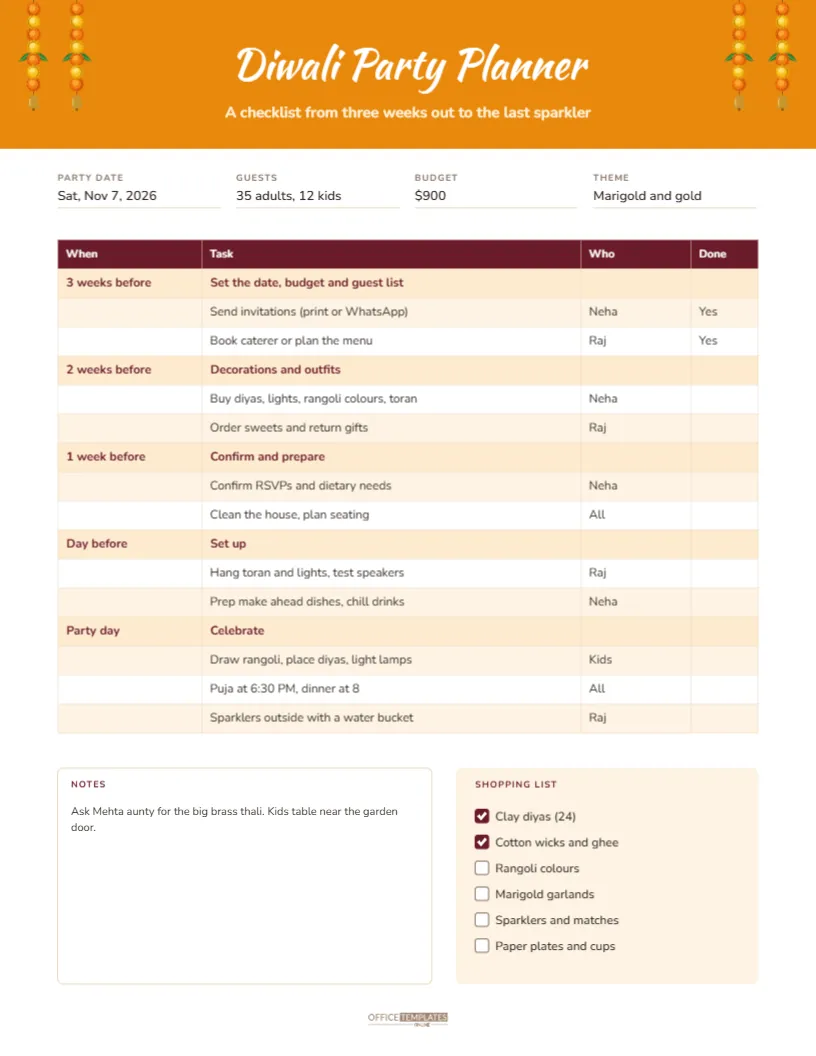
Four fields sit at the top of the planner, under the saffron header with its hanging marigold strands: PARTY DATE, GUESTS, BUDGET and THEME. Filling these in first makes every later decision easier. The sample reads Saturday, November 7, 2026, 35 adults and 12 kids, a $900 budget and a marigold and gold theme. In 2026, Diwali falls on Sunday, November 8, so many families host friends on the Saturday and keep Sunday for puja with close family.
The Task Timeline
The heart of the planner is a real editable table with four columns: When, Task, Who, and Done. Tasks are grouped into five phases, each with a shaded heading row:
| Phase | Focus | Sample tasks |
|---|---|---|
| 3 weeks before | Set the date, budget and guest list | Send invitations, book a caterer or plan the menu |
| 2 weeks before | Decorations and outfits | Buy diyas, lights, rangoli colours and a toran; order sweets and return gifts |
| 1 week before | Confirm and prepare | Confirm RSVPs and dietary needs; clean the house and plan seating |
| Day before | Set up | Hang the toran and lights, test speakers; prep make-ahead dishes |
| Party day | Celebrate | Draw the rangoli and light lamps; puja, dinner, and sparklers |
The Who column assigns each task to a person, and the Done column records progress. The sample shows the first two tasks marked Yes.
Sharing the Work
A Diwali party is a family effort. The Who column is there so that one person does not end up doing everything. Assign tasks by strength: the person who loves shopping buys decorations, the best cook takes the menu, the most organised person handles RSVPs, and the children draw the rangoli and place the diyas. Print a copy for the fridge so everyone can see their tasks, and tick them off together.
Editing the Party Task Table
Double-click the table, or choose Edit Table Data, to type your own tasks. Use + Row to add more. Common additions:
- Arrange parking with neighbours.
- Book a mehndi artist or photographer.
- Prepare a playlist of festive songs.
- Buy batteries for LED candles.
- Set aside a box for guests’ footwear at the door.
- Plan a kids’ activity corner with colouring pages and a word search.
Keep the shaded phase rows as headings by giving new heading rows the same cream background and maroon text in the cell settings.
The Notes Box
A notes box sits at the bottom left for things that do not fit the table: borrowing a big brass thali from a neighbour, where the kids’ table goes, a relative’s food allergy, or which uncle needs a lift. Click the sample note to replace it, or leave it blank on a printed copy to write by hand.
The Shopping List
On the bottom right, a cream panel holds a shopping list with checkboxes. The sample items are clay diyas, cotton wicks and ghee, rangoli colours, marigold garlands, sparklers and matches, and paper plates and cups, with the first two ticked. Click any item to change it. Each checkbox can be filled or emptied by changing the box colour; on a printed copy, simply tick by hand. For a full puja shopping list, the puja samagri checklist in this collection covers every ritual item.
Budgeting Your Diwali Party
The $900 sample budget is just an illustration. A rough way to split a party budget:
- Food and drinks: around half, more if you use a caterer.
- Sweets and return gifts: about a fifth.
- Decorations, diyas and lights: about a sixth, much of which can be reused next year.
- Sparklers, flowers and puja items: the rest.
For tracking gift spending in detail, the gift list and budget tracker in this collection is designed for that.
Safety on Party Day
The last task in the sample table is sparklers outside with a water bucket. Diwali parties involve open flames and crowds, so keep diyas away from curtains and dupattas, never leave lamps unattended, keep children supervised around sparklers and fireworks, and have a bucket of water and a fire extinguisher nearby. Make one adult responsible for fire safety, and write their name in the Who column.
Printing the Party Planner for the Family
Download the planner as a PDF and print on US Letter paper. Print one copy for each person helping, or print one for the fridge and keep the digital version updated. The saffron header uses some ink; if you print many copies, a print shop or laser printer is economical. The page also works as a PNG image shared in a family WhatsApp group, so everyone sees the plan on their phone.
Restyling the Saffron Planner
Change the saffron header to another festive colour by clicking it, and the table header to match. The marigold strands are editable vector art with their own colour swatches. Kaushan Script gives the title a hand-lettered feel; you can change it to a more formal font if you prefer.
Party Planner Questions
Can I use the planner for a Diwali puja without a party?
Yes. Replace party tasks with puja preparations, such as cleaning the puja room, buying a new idol, and preparing prasad.
Can I add more phases?
Yes. Add a heading row such as 1 month before and tasks under it with + Row.
Will it fit on A4?
Printing on A4 with fit to page works with slightly wider side margins.
Plan Early, Celebrate Fully
Fill in the quick facts this weekend, assign the first tasks, and stick the planner on the fridge. By party day, the lamps will be ready, the sweets will be boxed, and you will be free to enjoy Diwali with your guests.