Houses rarely fail suddenly. A blocked gutter becomes a damp wall, a dirty furnace filter becomes a breakdown in January, a forgotten smoke alarm battery becomes a real danger. Most expensive repairs start as small jobs that were skipped. This home maintenance calendar organises those jobs by season, so you always know what to do next. Here is how to use it through the year.
A Blueprint on the Fridge
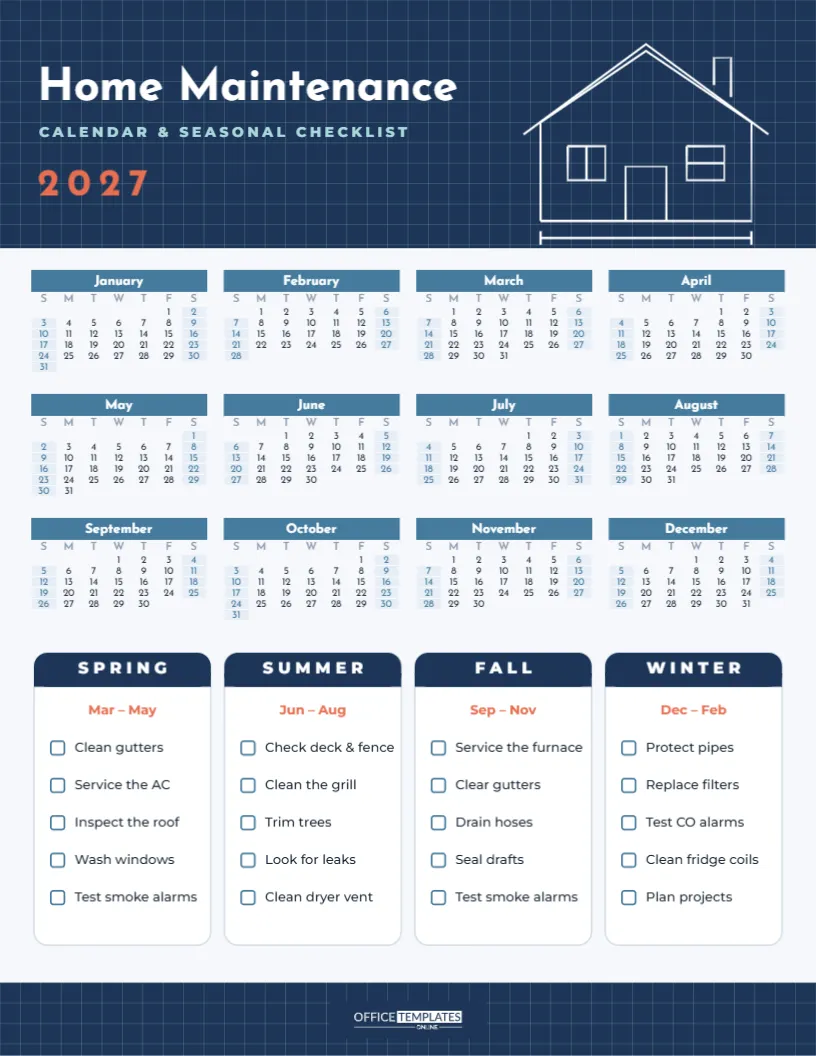
The page is US Letter portrait. The top third looks like an architect’s blueprint: a deep navy panel covered in a fine light-blue grid, with a white line drawing of a house on the right showing the roof, chimney, door, two windows and a dimension line underneath. On the left, Home Maintenance is set in white Josefin Sans, a clean geometric font, with CALENDAR & SEASONAL CHECKLIST in pale aqua capitals and a large coral 2027. A narrower blueprint strip runs along the bottom of the page with the logo in white, echoing the header.
Between them, the full year of 2027 is laid out as twelve mini months with steel-blue month bars, and under the calendar, four white checklist cards, one for each season, each with a navy header, its months in coral and five tick boxes.
Spring (March to May): Recover From Winter
Spring is the time to check what winter did to the house. The checklist covers cleaning gutters, servicing the air conditioning before the first hot day, inspecting the roof for loose or missing shingles, washing windows, and testing smoke alarms. Walk around the outside of the house on a dry weekend in March and look for cracks, peeling paint, and damaged seals. Circle that weekend on the calendar now, so it does not slip.
Summer (June to August): Outdoors and Airflow
Summer jobs focus on the outside and on things that work hard in warm weather. The card lists checking the deck and fence, cleaning the grill, trimming trees and shrubs away from the house, looking for plumbing leaks, and cleaning the dryer vent. Long, light evenings make outdoor tasks easier, and many contractors are easier to book in summer than in the autumn rush.
Fall (September to November): Prepare for the Cold
Autumn is the most important season for preventing winter problems. Service the furnace before you need it, clear the gutters again once the leaves have fallen, drain and store garden hoses so outside taps do not freeze, seal draughts around doors and windows, and test smoke alarms again. Many people link the second smoke alarm test to the end of daylight saving time in November, which is easy to remember.
Winter (December to February): Protect and Plan
Winter jobs are mostly indoors: protecting pipes in cold spaces, replacing heating and air filters, testing carbon monoxide alarms, cleaning fridge coils and planning the next year’s projects. It is also a good time to gather quotes for bigger spring jobs, such as a new roof or repainting, before contractors’ diaries fill up.
Turning the Checklists Into Dates
The checklists tell you what to do; the calendar tells you when. At the start of the year, pick one weekend per season and circle it on the year calendar. For monthly jobs, such as checking filters, choose a fixed day like the first Saturday. A suggested rhythm:
| When | Job | Why |
|---|---|---|
| First Saturday of each month | Check HVAC filters | Cleaner air, lower bills |
| March and November | Test smoke and CO alarms | Safety, linked to clock changes |
| April and October | Clean gutters | Prevent damp and overflow |
| September | Service the furnace | Avoid winter breakdowns |
| January | Plan the year’s projects | Book trades early |
Adjusting for Your Home and Climate
The checklists suit a typical house in a four-season climate. Every item is editable text, so change them to fit your home. In a warm climate, drop the frozen-pipe jobs and add hurricane preparation or pool care. In an apartment, focus on filters, alarms, appliances, and seals. Owners of older homes might add chimney sweeping, checking the sump pump or treating wooden window frames.
Changing the Year and Colours
The year calendar is a single Calendar object in the editor’s Full Year style. Open Calendar Options to change the year, start weeks on Monday, or recolour the month bars and weekends. The blueprint panels and the house drawing are grouped shapes, so you can recolour the navy and the grid, or change the line colour of the house. Fonts are Josefin Sans and Montserrat, both Google Fonts.
Budgeting for Home Maintenance
A common rule of thumb is to set aside around one percent of a home’s value each year for maintenance and repairs, more for older houses. Spreading that money across the seasons makes it easier: small monthly savings into a separate account mean that a furnace service in September or a gutter repair in April is never a shock. Use the margins of the year calendar to note planned costs next to each season’s jobs, and compare them with what you actually spent at the end of the year. Over time, you will know exactly what your home costs to look after.
Jobs to Leave to Professionals
Many checklist items are simple DIY, but some need a qualified person: gas appliance servicing, electrical work, roof repairs at height, and anything structural. The calendar helps here too, because booking a professional in the quiet season is cheaper and easier than calling in an emergency. Write the trade’s name and number next to the job on the page.
Keeping a Maintenance Record
When you tick a job, write the date next to it. Over a few years, these pages become a maintenance history, which is useful for warranties, insurance claims and selling the house; buyers are reassured by a home that has been looked after. Keep the year’s page with receipts and service reports in a home folder.
Printing the Maintenance Page
The navy blueprint sections print best on a colour printer with good ink; on a home printer, choose the high-quality setting. Pin the page inside a utility cupboard, in the garage or by the boiler, where you will see it when you are already thinking about the house. Landlords can give a copy to tenants with the jobs they are responsible for highlighted.
Four seasons, twenty small jobs, and a house that stays in good shape. Start with the spring checklist and work around the year.