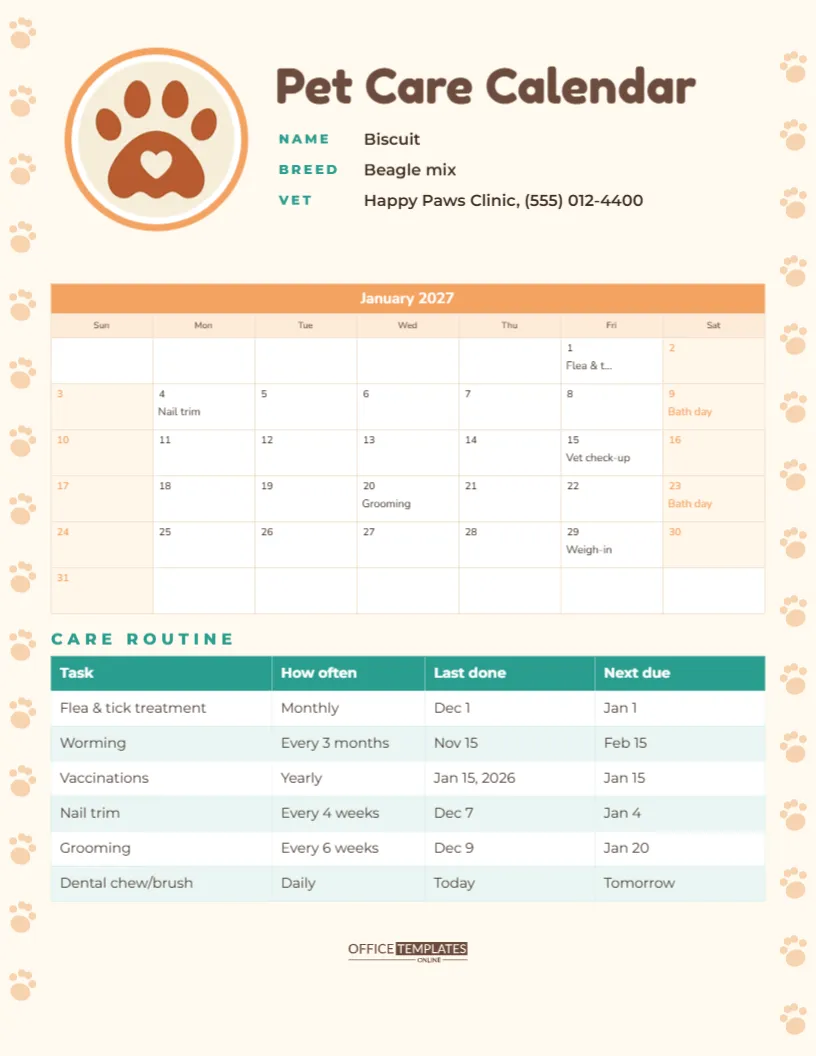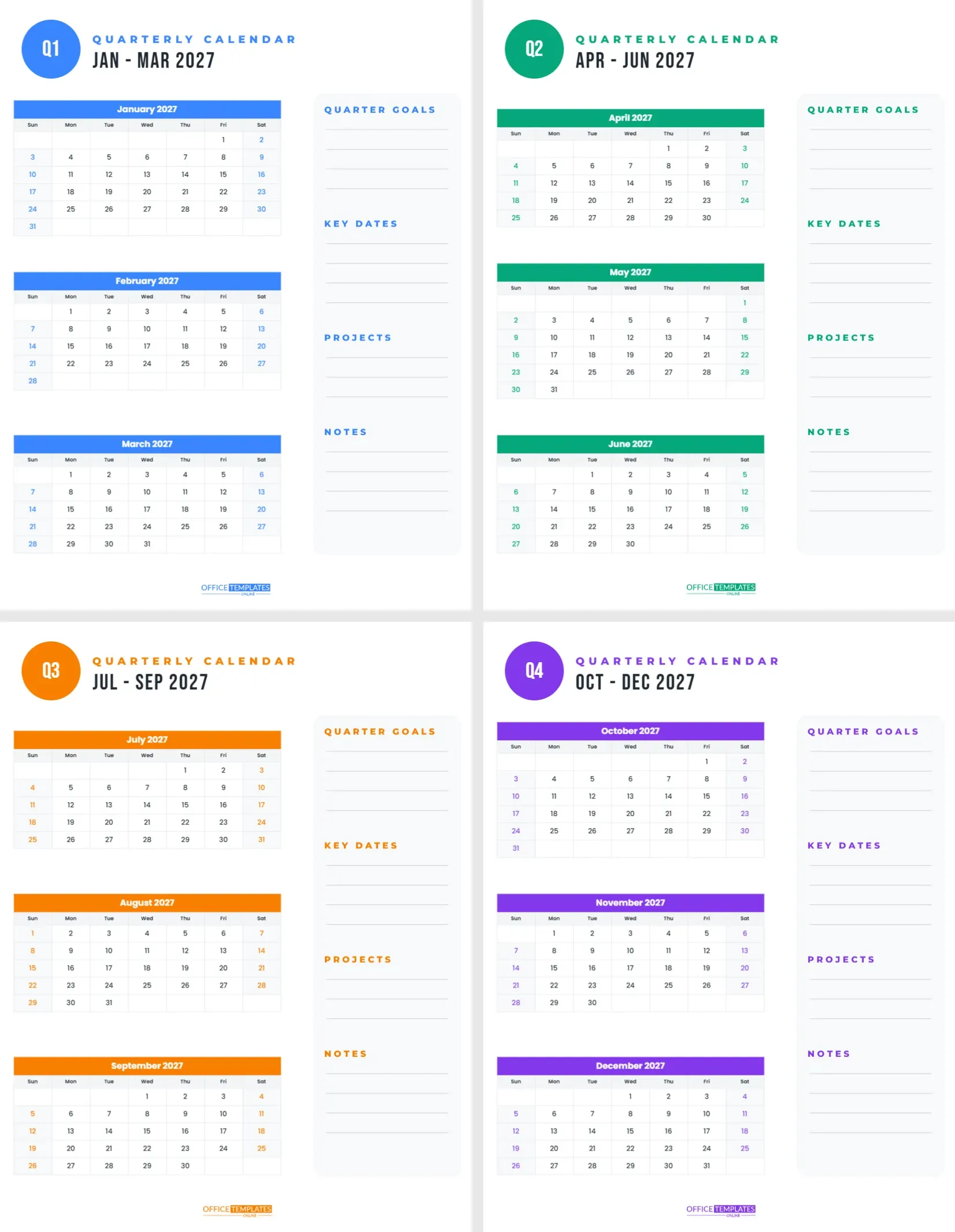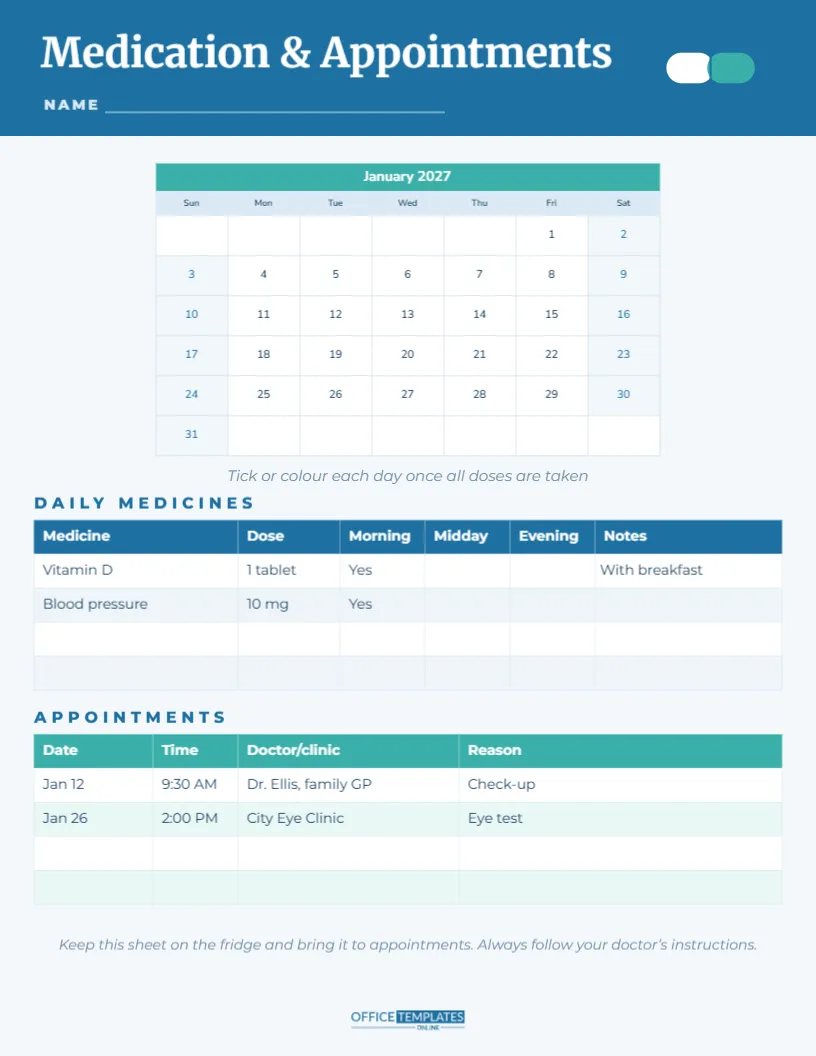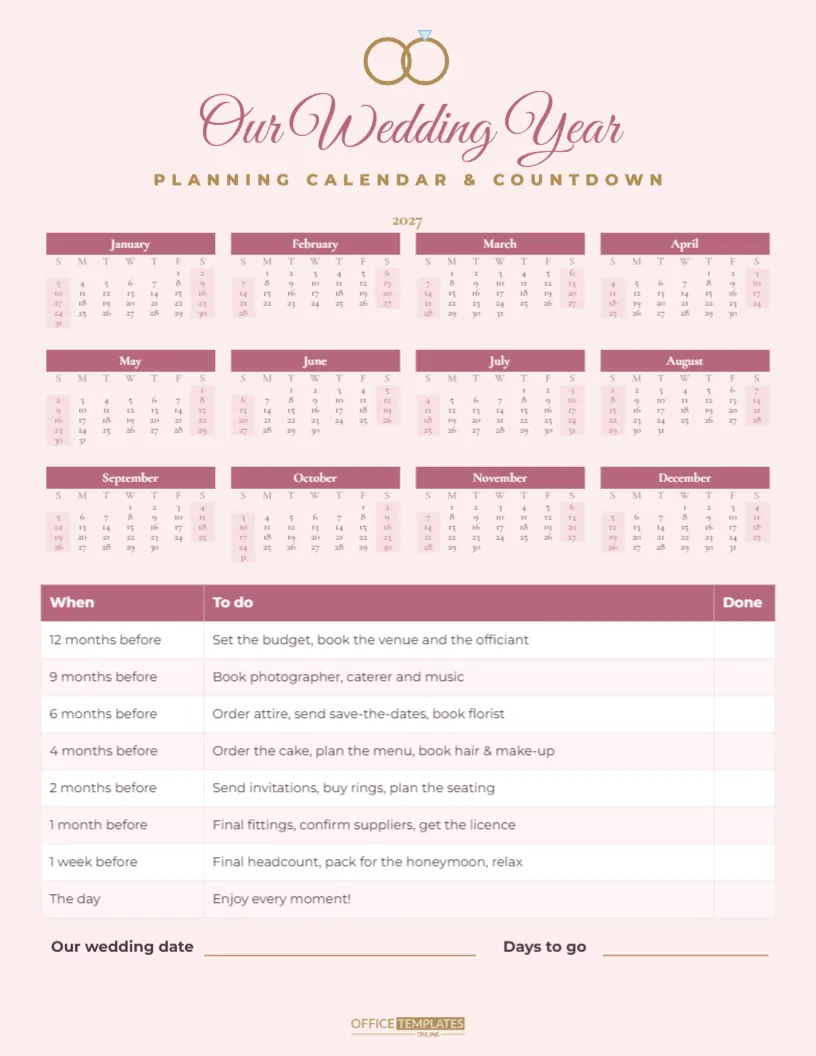
A vegetable garden runs on its own calendar. Seeds go in while snow is still on the ground, seedlings wait for the last frost, and the harvest comes in waves from early summer to late autumn. This printable planting calendar puts the whole growing year on one page, so you always know what to sow, what to plant out, and what to pick. Below, we walk through the year season by season, showing how the page helps at each stage.
What Is on the Garden Calendar Page
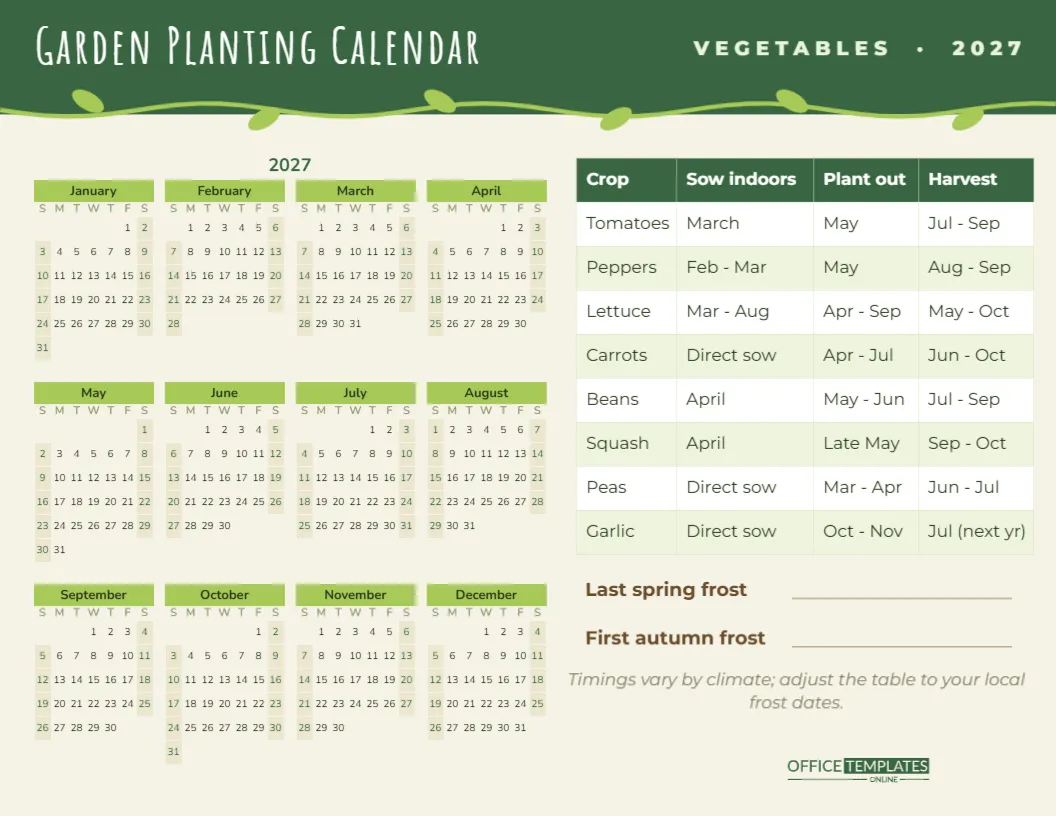
The page is US Letter landscape, 11 x 8.5 inches, on a warm parchment background that feels like an old seed catalogue. A deep garden-green header runs across the top with Garden Planting Calendar in white Amatic SC, a tall, hand-drawn font, and VEGETABLES · 2027 in pale green spaced capitals on the right. Along the bottom edge of the header, a light green vine waves across the page with small leaves alternating up and down.
On the left, the whole of 2027 is laid out as twelve mini months, four across and three down. Each month has a leaf-green name bar, olive weekday initials, and weekends in a soft wheat tone with green numbers. On the right, a crop table lists eight vegetables with columns for Sow indoors, Plant out, and Harvest. Below the table are two lines for your last spring frost and first autumn frost dates, an italic reminder that timings vary by climate, and the OTO logo in green.
Winter Planning: January and February
The garden year starts indoors with a seed catalogue and a cup of tea. January is the month to decide what to grow, order seeds and fill in the crop table. Start by writing your local frost dates on the two lines: they are the anchor for everything else. Your local extension service, allotment society or a gardening website can tell you typical dates for your area.
By February, the first seeds can go in. Peppers need a long season and are sown indoors from February to March, under lights or on a warm windowsill. Circle the date you sow them on the year calendar, so you can track how long they take to germinate and grow. February is also the time to check tools, clean pots, and plan crop rotation, so that tomatoes do not go in the same bed as last year.
Early Spring: March and April
March is busy. Tomatoes are sown indoors, lettuce can be started under cover, and peas go straight into the ground once the soil can be worked. The crop table shows peas planted from March to April. As the days lengthen, seedlings indoors need more light and regular turning so they grow straight.
April brings beans and squash, both sown indoors in pots, and carrots sown directly into fine, stone-free soil. Lettuce can go out under fleece. Keep an eye on the forecast: a late frost can still damage tender plants, which is why the last frost date line matters so much. Mark it boldly on the calendar and count back from it to time your indoor sowings.
Late Spring: May and June
May is the month most gardeners wait for. Once the last frost has passed, tomatoes, peppers, beans, and squash are planted out. Harden them off first: put them outside during the day for a week before planting, so they get used to wind and sun. The crop table notes Late May for squash, which is more sensitive to cold than most.
June is a month of growth and maintenance. Water deeply in dry spells, add supports for tomatoes and beans, and keep on top of weeds. The first harvests arrive: lettuce, early peas and the first baby carrots. Sow more lettuce every two or three weeks so the supply continues all summer.
Summer Harvest: July and August
From July, the harvest gets serious. Tomatoes, beans and peppers start to ripen, garlic planted the previous autumn is ready to lift, and courgettes and summer squash seem to grow overnight. Pick regularly: many vegetables produce more when they are harvested often. Use the year calendar to note your first ripe tomato or your best picking day, which is useful when you plan next year’s garden.
August is also a planting month. Sow lettuce and other quick salads for autumn, and plan where the garlic will go in October. Watering is critical in hot weather; early morning is best, as plants can drink before the heat of the day.
Autumn: September to December
September and October bring the last big harvests: squash for storage, late carrots, the final tomatoes and peppers. Watch for the first autumn frost date you wrote on the page, and pick tender crops before it arrives. Green tomatoes can ripen indoors on a windowsill or in a paper bag.
October and November are the months to plant garlic, which the crop table shows harvested in July of the following year. Clear finished beds, add compost or manure, and cover bare soil to protect it over winter. December is for rest, reflection and seed catalogues, and for printing next year’s planting calendar.
The Crop Table at a Glance
| Crop | Sow indoors | Plant out | Harvest |
|---|---|---|---|
| Tomatoes | March | May | Jul – Sep |
| Peppers | Feb – Mar | May | Aug – Sep |
| Lettuce | Mar – Aug | Apr – Sep | May – Oct |
| Carrots | Direct sow | Apr – Jul | Jun – Oct |
| Beans | April | May – Jun | Jul – Sep |
| Squash | April | Late May | Sep – Oct |
| Peas | Direct sow | Mar – Apr | Jun – Jul |
| Garlic | Direct sow | Oct – Nov | Jul (next yr) |
These timings suit a temperate climate with a last frost in late April or May. Gardeners in warmer regions can move everything earlier, while those in colder areas should move planting out later.
Adapting the Crop Table to Your Garden
The crop table is the editor’s Table object, so every cell can be edited. Replace crops you do not grow with ones you do, such as onions, kale, beetroot, cucumbers, sweetcorn or herbs. Use the Table options to add rows for more crops, or add a column for Variety or Bed so you can record which tomato you grew and where. For a flower or herb garden, simply rename the header to Flower Planting Calendar and change the crops.
Changing the Garden Year
The year calendar on the left is a single Calendar object in the editor’s Full Year style. Open Calendar Options and change the year to 2028 or later; all twelve months rebuild with the correct dates. You can start the week on Monday and recolour the month bars, weekends, and text to suit your style. The rest of the page, including the vine and the crop table, stays exactly as you set it.
Recording Your Gardening Year
A planting calendar becomes much more valuable once it holds real notes. Circle sowing dates in pencil, mark the actual last frost, and jot the first harvest of each crop in the margin. At the end of the season, compare your notes with the table and adjust it for next year. Gardeners who keep a few years of these pages build up a personal guide to their own plot, which is more accurate than any general advice.
Garden Calendar for Schools and Allotments
Teachers running a school garden can use the page to plan lessons around the growing season, with pupils sowing seeds in spring and harvesting before the summer holidays. Allotment and community garden groups can print a copy for each member, fill in the shared frost dates, and pin a master copy in the shed. The parchment colour and hand-drawn title make it friendly for children and adults alike.
Printing the Planting Calendar for the Shed
Download the PDF and print in landscape on sturdy paper or card. Gardeners often put the page in a plastic sleeve and pin it inside the shed door or greenhouse, where it survives damp hands. Others keep it in a garden journal with seed packets taped to the back. A copy on the fridge reminds everyone in the house when the first harvest is due.
Fill in your frost dates, choose your crops, and let the calendar guide you from the first seed to the last harvest.