Make Cross-Border Authority Clear Before an International Transaction Moves Forward
International business can involve companies, banks, customers, suppliers, investors, or other parties located in different countries. When the people involved do not share the same corporate records or registration systems, a simple question can become especially important: Who is actually authorized to represent the company in this transaction?
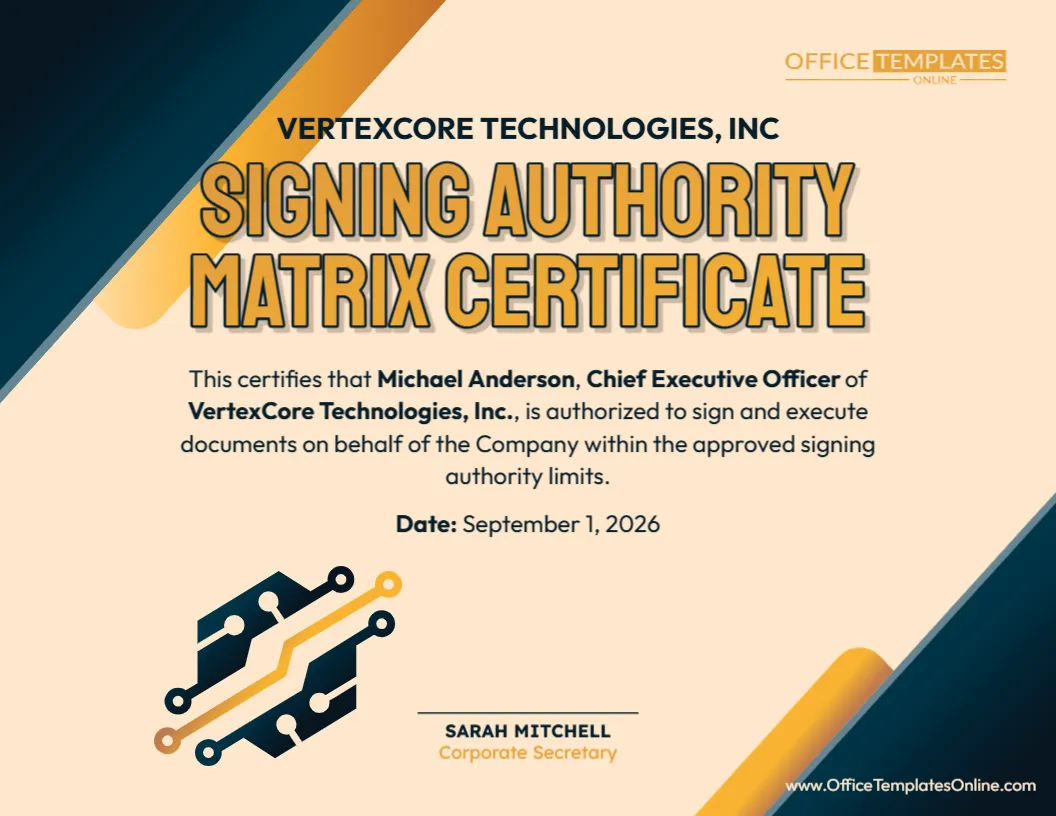
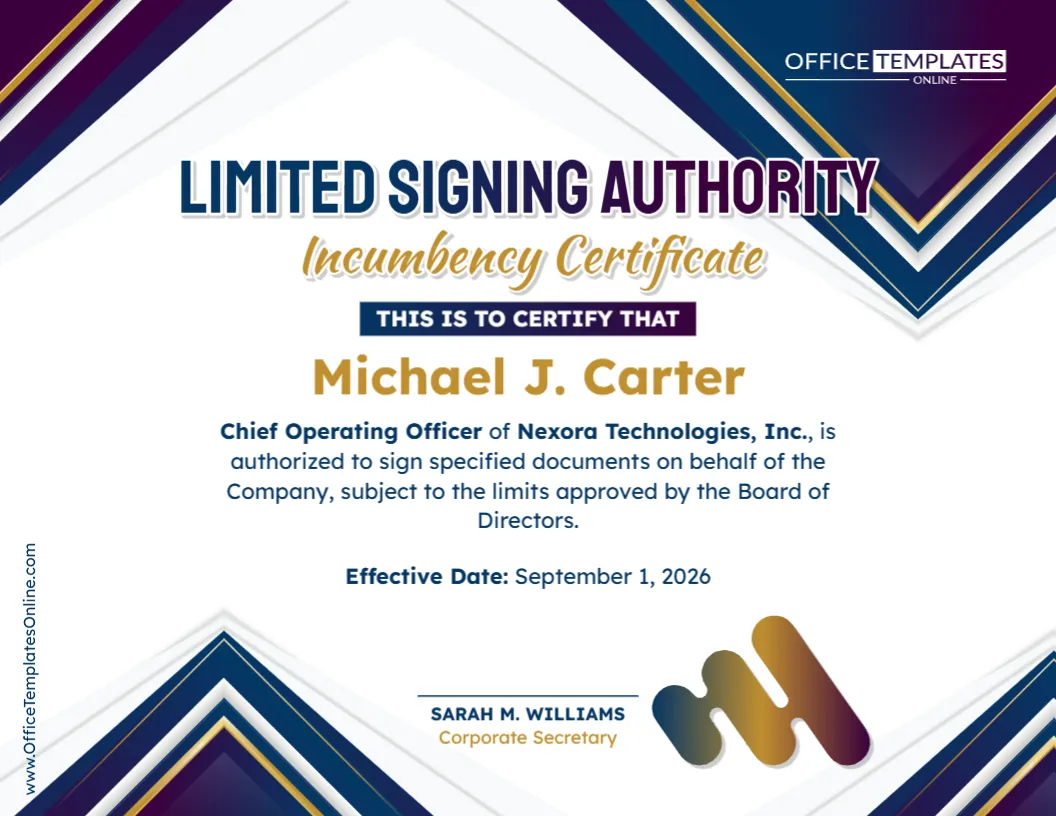
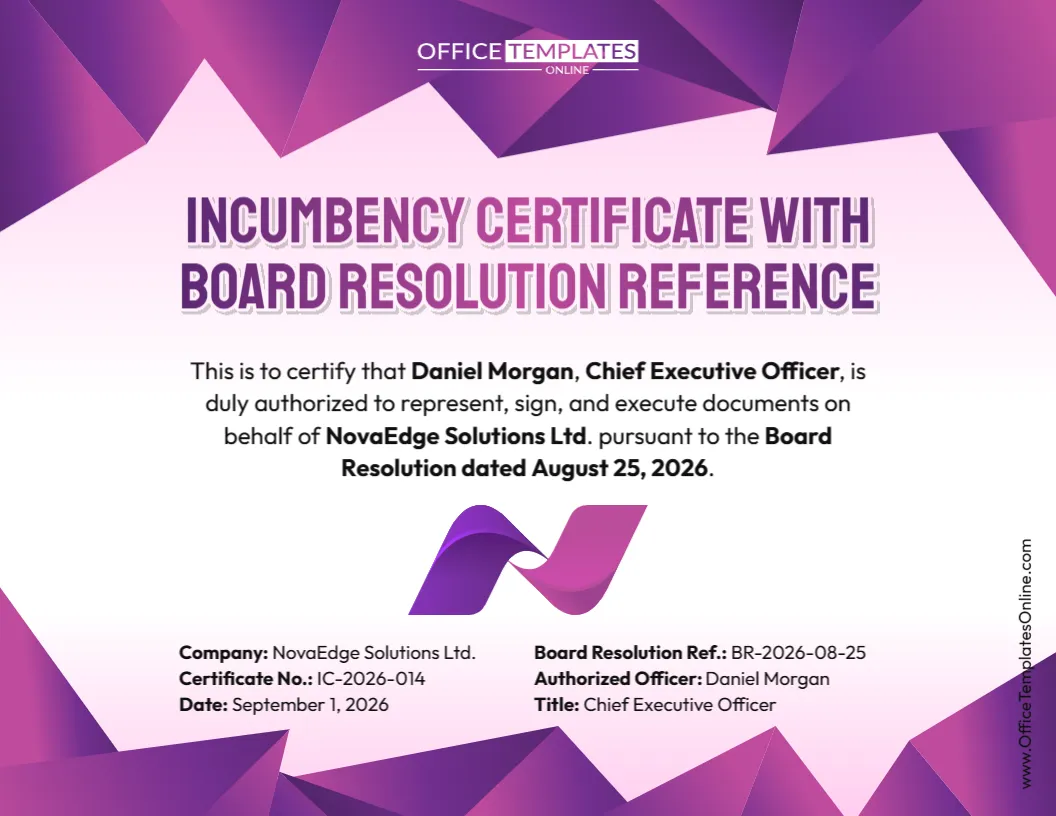
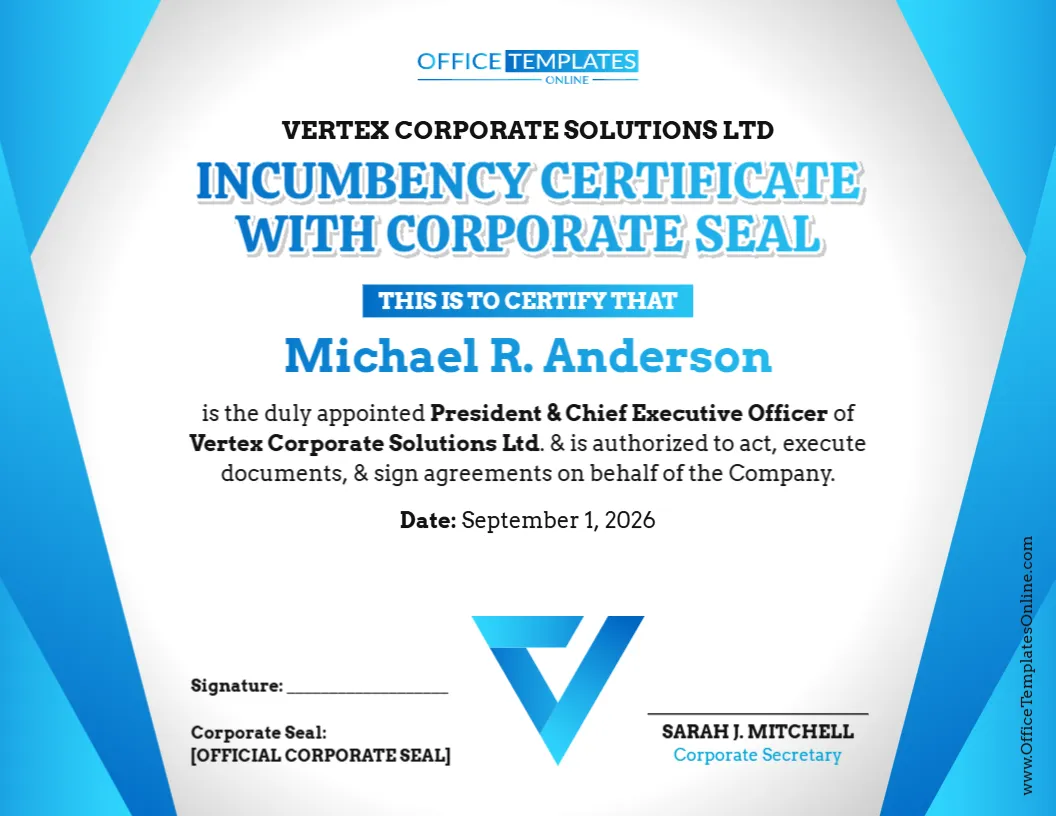
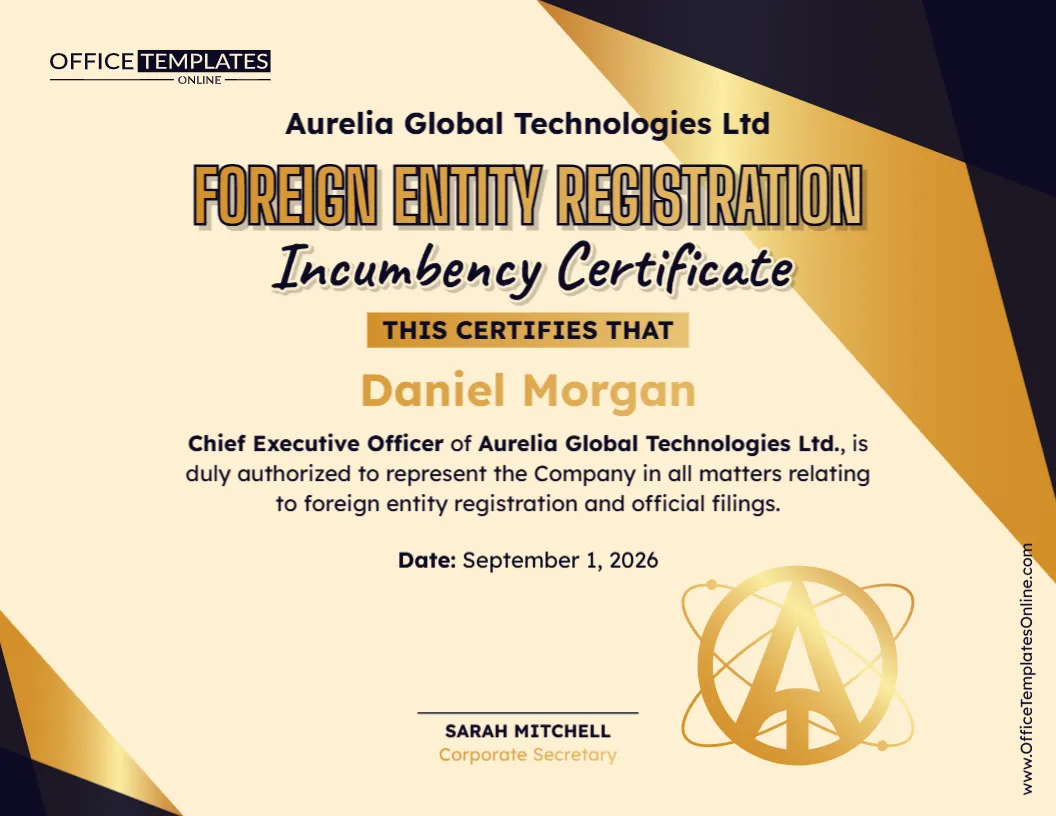
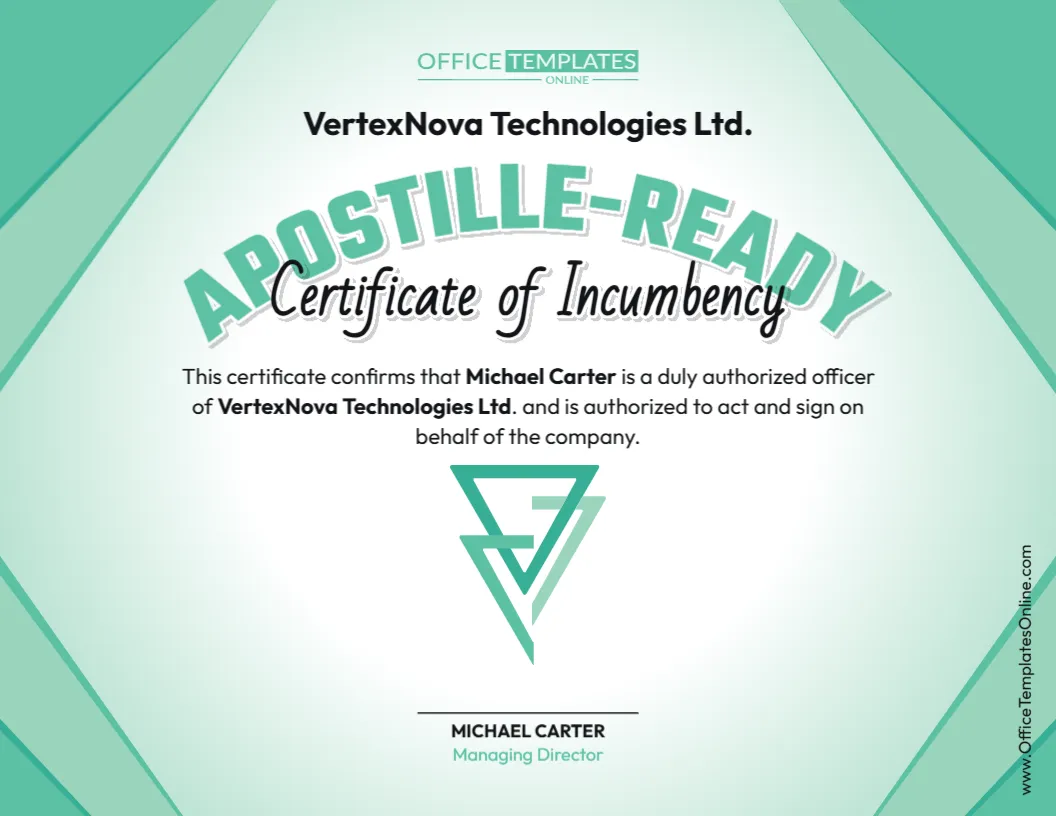
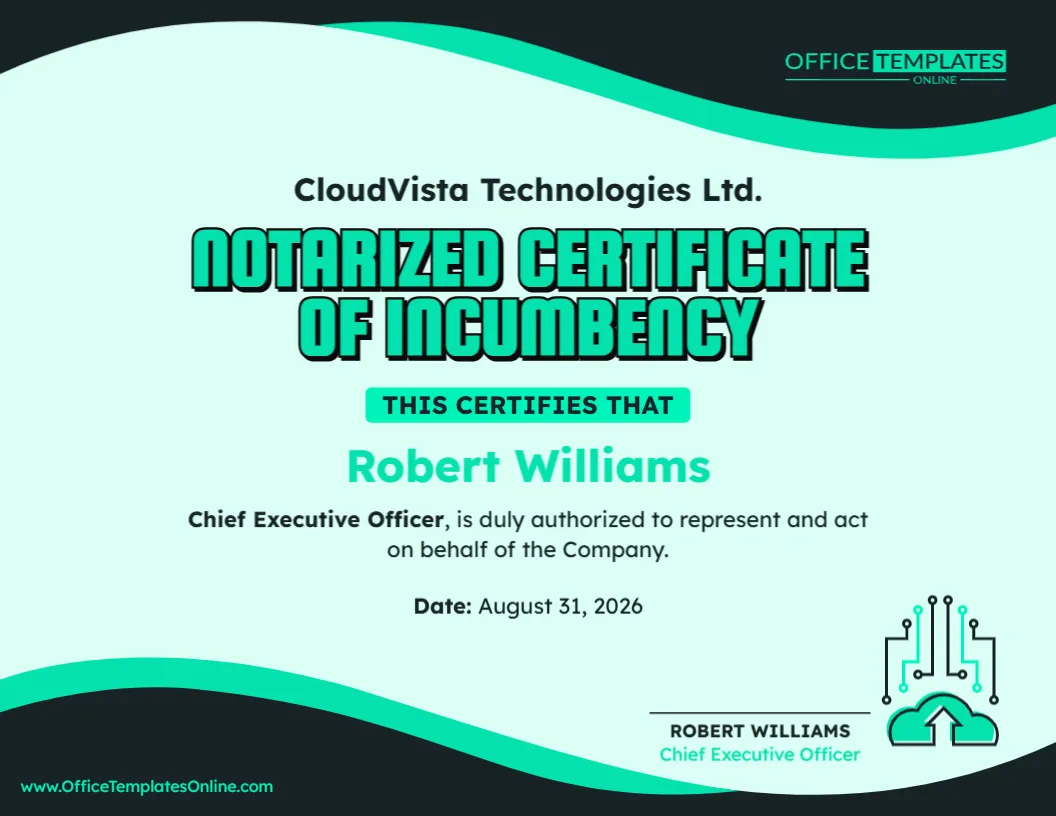
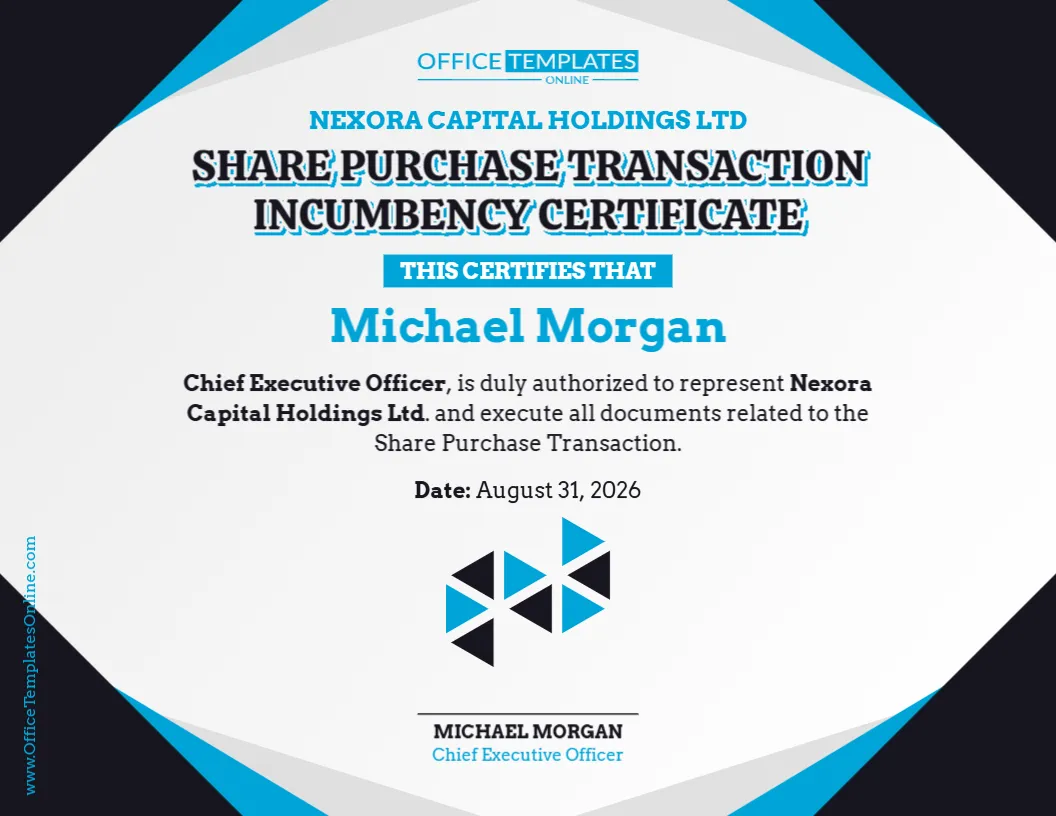
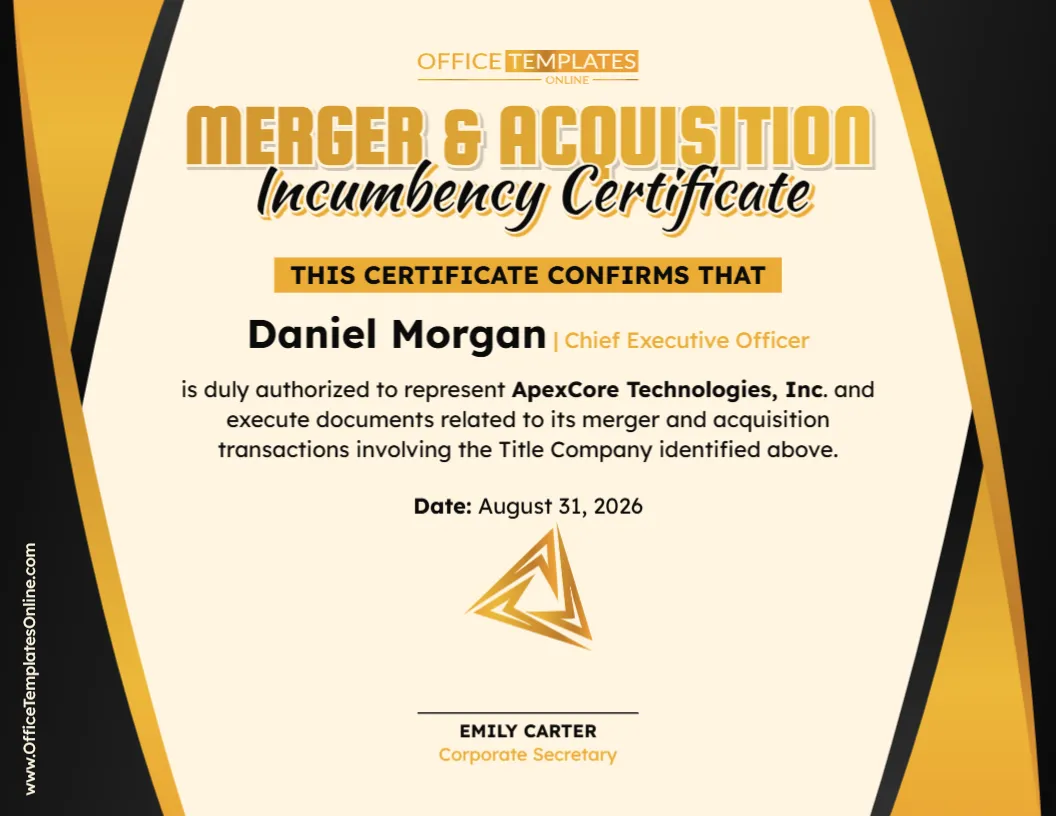
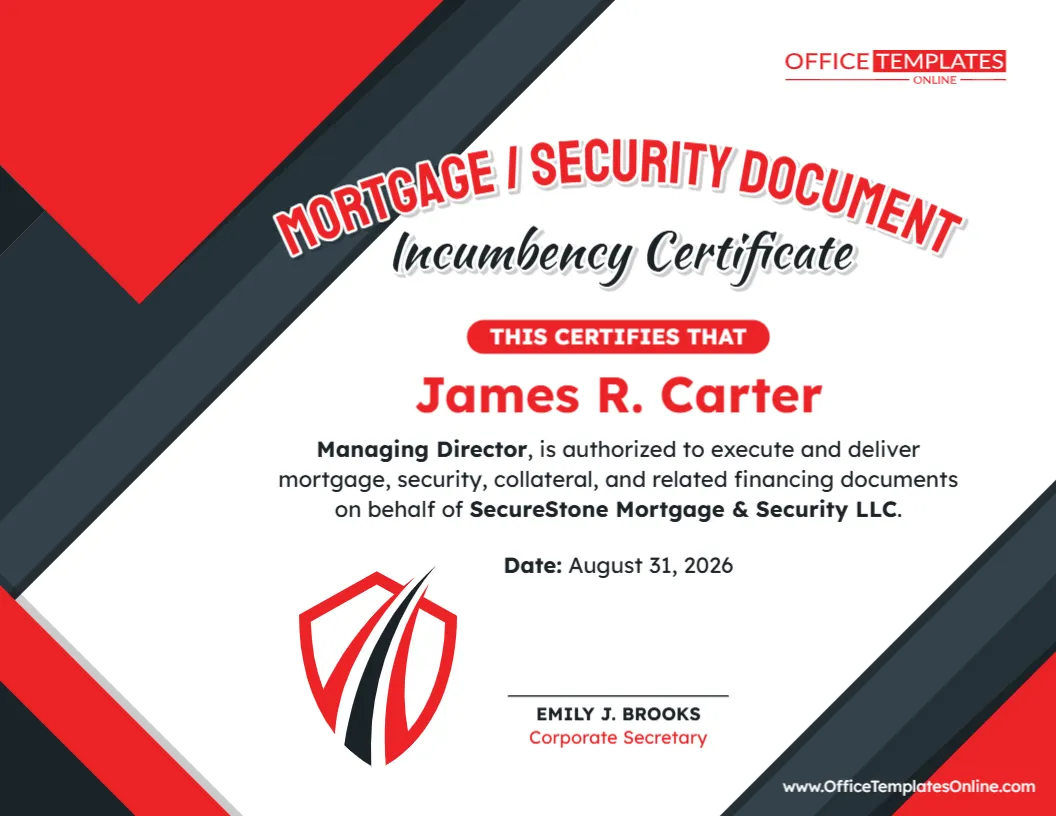
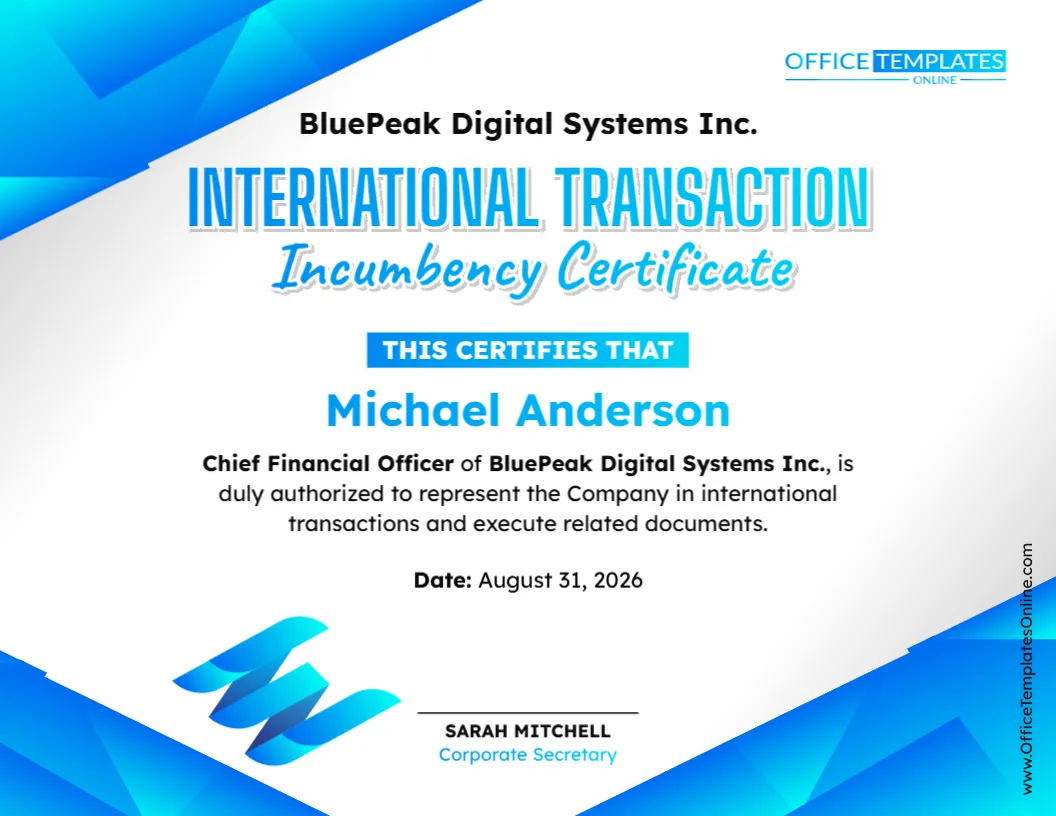
This International Transaction Incumbency Certificate Template provides a professional way to present that information. It is designed to identify a current company officer and state that the individual has authority to represent the organization in international transactions and execute related documents.
The template can be customized online directly in your browser, with no login required. Replace the sample company name, officer, position, authority statement, date, and certification details with your own information. Once everything is ready, download your completed certificate as a PDF, PNG, or JPG.
What Is an International Transaction Incumbency Certificate?
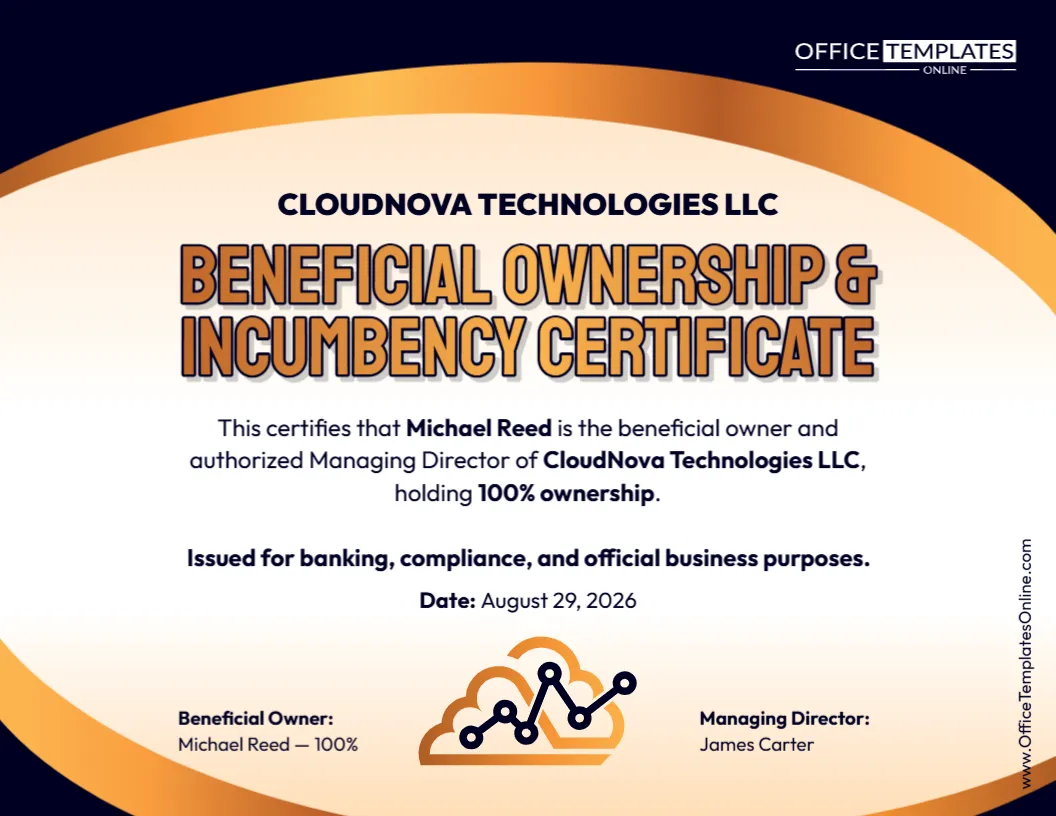
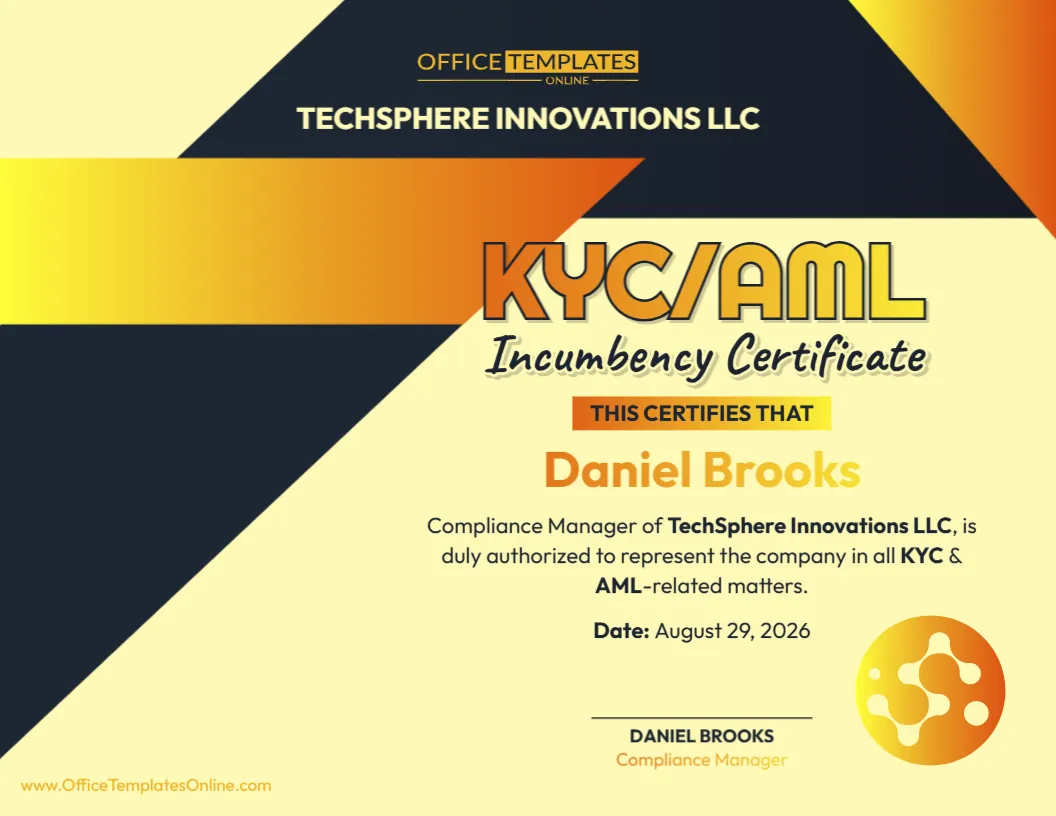
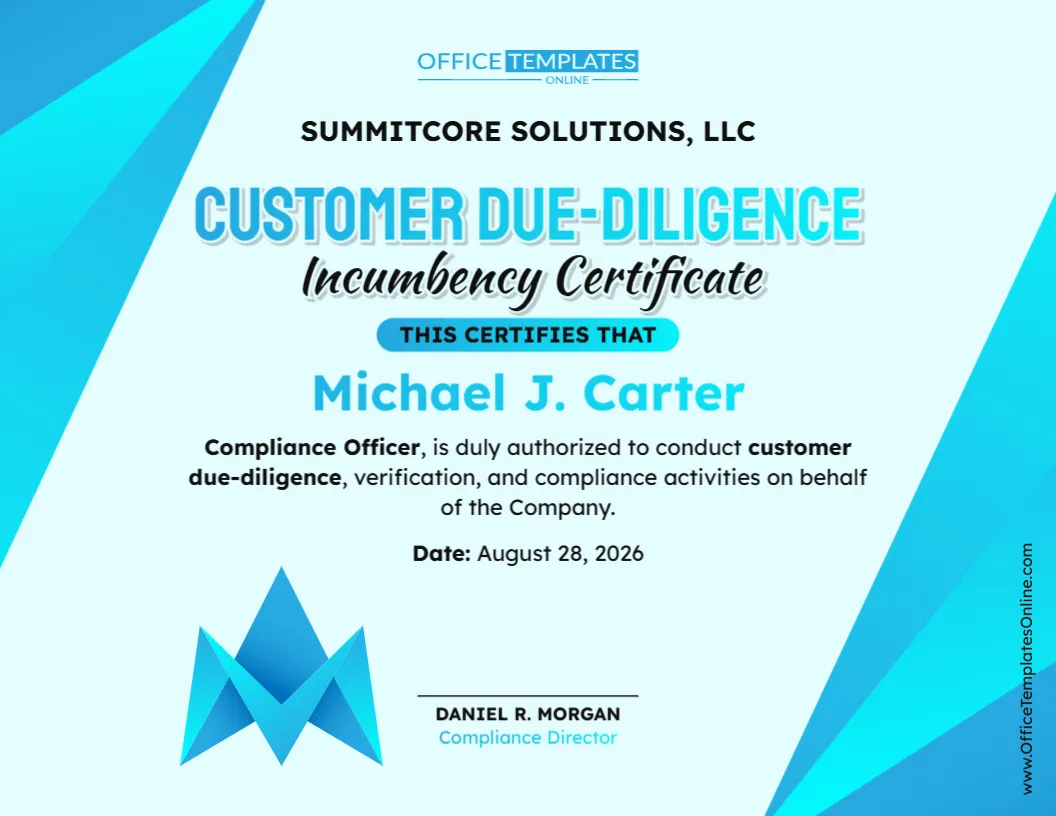
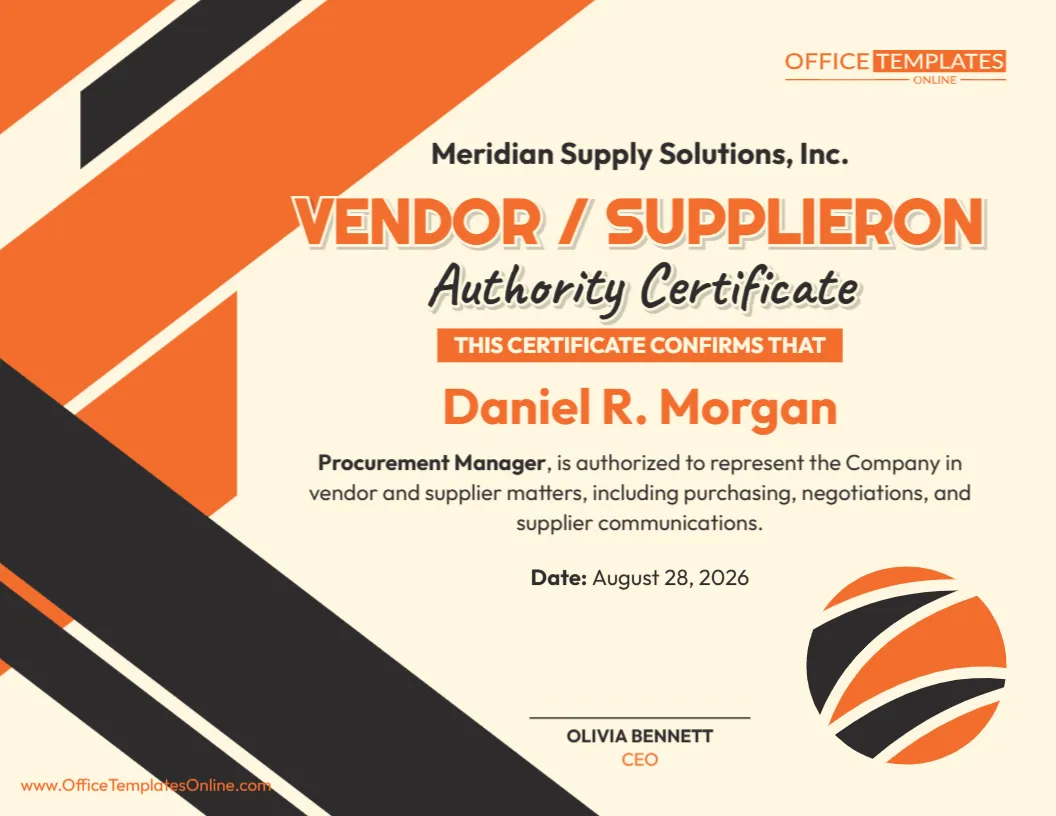
A Certificate of Incumbency is a company-issued document commonly used to identify current corporate officers, directors, managers, or other authorized representatives and confirm their positions or authority. Such certificates can be useful when third parties need evidence that the person dealing with them is actually authorized to act for the business.
An International Transaction Incumbency Certificate applies that idea specifically to cross-border business.
For example, the certificate can identify an officer and state that the individual is authorized to represent the company in an international transaction and execute documents related to it.
This can give an overseas counterparty a concise corporate record connecting three important facts:
the individual’s identity ? their current corporate position ? their stated transaction authority
The certificate does not create that authority by itself. It documents authority that should already exist under the organization’s applicable corporate records and approvals.
What You Can Record in This Template
The design keeps the certificate intentionally focused. Rather than filling the page with unnecessary information, it places the details most relevant to the authorized representative in prominent positions.
You can customize the template to include:
- Legal name of the company
- Full name of the incumbent officer
- Officer’s current position or title
- Confirmation of the individual’s incumbency
- Statement of authority for international transactions
- Authority to execute related documents, where applicable
- Date of the certificate
- Name of the person certifying the information
- Certifying person’s corporate title
- Additional transaction-specific wording, if required
The example content is there to demonstrate how the completed certificate may look. Replace it with information that accurately reflects your company and the intended transaction.
Built for a Single Authorized Representative
Some incumbency certificates contain long tables listing every officer or director in an organization. This template takes a different approach.
It focuses on one individual.
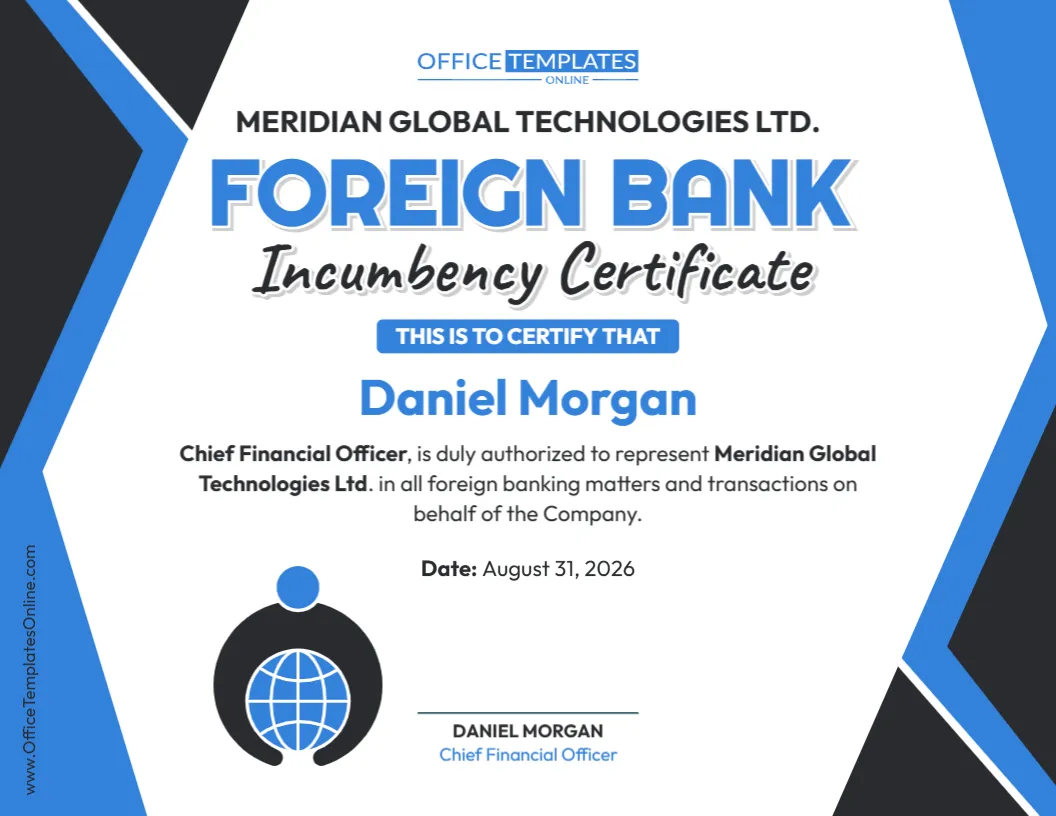
The authorized officer’s name appears prominently in the center of the certificate. Directly underneath, there is space to state the individual’s corporate title, company, and international transaction authority.
This makes the template particularly useful when the receiving party is primarily concerned with the person responsible for a specific transaction rather than the organization’s entire management structure.
If your transaction requires multiple authorized signatories, however, you may need to adapt the wording or use a certificate format that accommodates all required individuals.
Why Incumbency Can Matter More in Cross-Border Business
When two companies operate in the same jurisdiction, corporate information may sometimes be relatively easy for the parties to check through familiar records or procedures.
International transactions can be different.
An overseas customer, lender, investor, bank, supplier, lawyer, or business partner may not be familiar with the other company’s organizational structure. It may therefore request formal documentation confirming the identity and authority of the person who will act or sign for that company.
Certificates of Incumbency are commonly associated with verification of corporate authority and can be requested in international transactions as well as banking, contracts, financing, and other business matters.
A well-prepared certificate can provide a clear starting point for that verification.
“International Transaction” Can Cover Many Business Activities
There is no single type of transaction that this certificate must be limited to.
Depending on the company and the authority granted to its officer, international business activity could involve commercial contracts, purchases or sales, financing, investments, service arrangements, distribution relationships, licensing matters, overseas banking, or other cross-border dealings.
This flexibility is one reason the authority statement should be customized carefully.
If the officer is authorized only for one particular transaction, you may want the certificate to identify that transaction more specifically.
If the person has broader authority to handle a category of international business matters, the wording can reflect that broader scope—provided the company’s actual authorization supports it.
Customize the Authority Instead of Assuming It
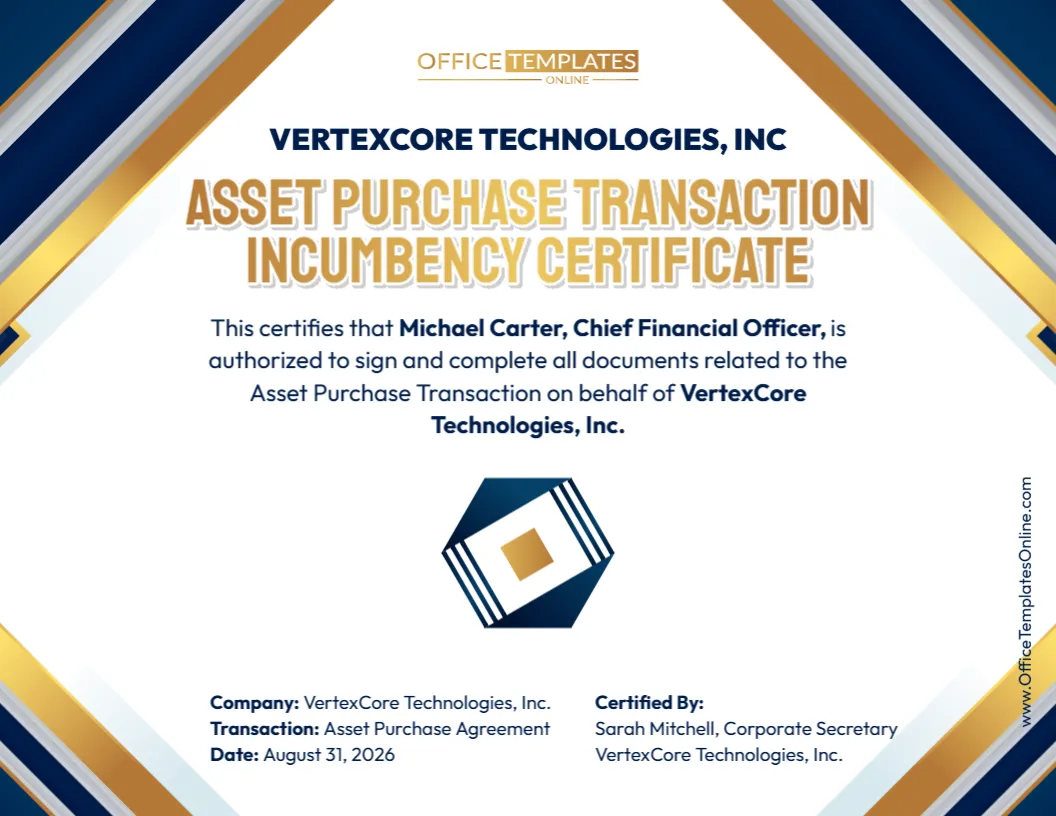
The sample certificate states that the named Chief Financial Officer is authorized to represent the company in international transactions and execute related documents.
That is sample language, not a statement that automatically applies to every Chief Financial Officer.
A corporate title does not necessarily mean that the individual has unlimited power to bind the organization.
Signing authority may be subject to monetary thresholds, joint-signature requirements, board approval, transaction-specific resolutions, geographic limitations, or other restrictions. Incumbency documentation can therefore include limitations on an officer’s authority where appropriate.
If limitations apply, make them clear rather than using wording that suggests unrestricted authority.
A Useful Distinction: Position vs. Authority
When preparing the certificate, think of position and authority as two separate pieces of information.
Suppose an individual is the company’s Chief Financial Officer.
That establishes the person’s corporate position.
But whether that CFO can execute a particular international agreement is a separate question. The answer may depend on the company’s bylaws, board resolutions, delegation policies, transaction approvals, or other governing records.
An incumbency certificate can bring these pieces together by confirming both the individual’s current position and the authority relevant to the intended transaction.
This distinction can make the certificate more accurate and more useful to the recipient.
Edit the Entire Certificate Online—No Account Needed
You do not need to build a corporate certificate from scratch or install complicated design software.
Open this template in the online editor and customize it directly from your browser. No login is required to start editing.
You can prepare your certificate in a straightforward sequence:
- Replace the sample company with its correct legal name.
- Enter the authorized officer’s full name.
- Add the individual’s current corporate title.
- Edit the international transaction authority statement.
- Add transaction-specific information if necessary.
- Enter the correct certificate date.
- Replace the sample certifying officer’s information.
- Review the document for accuracy and consistency.
- Download the completed certificate in your preferred format.
The professional layout is already in place, allowing you to concentrate on the information that needs to be certified.
Make the Company Name Match Your Official Documents
International transactions can involve extensive document checking, so consistency is valuable.
Use the company’s proper legal name, including the correct entity designation where applicable. For example, make sure terms such as Inc., Corp., Corporation, Ltd., LLC, Limited, or another legal suffix are shown correctly.
The name on the certificate may be compared with incorporation documents, registry records, contracts, banking records, resolutions, or other supporting documents.
If the company commonly operates under a brand or trade name, do not automatically use that name in place of the legal entity name unless doing so is appropriate for the intended purpose.
Consider Identifying the Specific Transaction
For some uses, a general statement about international transaction authority may be enough.
For others, greater specificity may be preferable.
If the certificate is being prepared solely for one deal, you might adapt the wording to identify the agreement, counterparty, project, transaction date, or another useful reference.
Doing so can make it clear that the certificate relates to a particular matter rather than providing a broad statement of authority for every international transaction the company may undertake.
Whether this is appropriate will depend on the company’s authorization structure and the recipient’s requirements.
Who Should Certify the Information?
The sample design provides a certification area for a Corporate Secretary.
This is a common and logical role for corporate records, but it should not be treated as a rule that applies universally. Certificates of Incumbency may be prepared or certified by a secretary or another duly authorized corporate officer, depending on the organization and applicable requirements.
Use the appropriate certifying person for your company.
Also check whether the recipient expects a handwritten or electronic signature, corporate seal, specimen signature, board resolution, or another supporting element.
International Use May Require More Than the Certificate
A completed Incumbency Certificate may be only one part of the documentation requested for a cross-border transaction.
Depending on the country, recipient, and type of transaction, additional documents might be requested to establish the company’s existence, ownership, officer authority, or ability to enter into the transaction.
The receiving party may also require the certificate or related documents to be signed, notarized, certified, apostilled, legalized, or translated.
Do not assume that these additional steps are automatically required, but do not assume that the certificate alone will always be sufficient either.
Ask the receiving party what it needs before completing formal signatures or authentication procedures.
Notarization and Apostille Are Separate Processes
If this certificate is intended for use in another country, you may encounter requests for notarization or an apostille.
These are not features created by the template itself.
Downloading a PDF does not make the certificate notarized. Likewise, placing a seal graphic on the document does not give it an apostille.
If notarization, apostille, legalization, or another authentication process is required, it must be completed separately according to the applicable rules.
This distinction is especially important for international transactions because document-authentication requirements can vary significantly between jurisdictions and recipients.
Check Whether a Board Resolution Supports the Transaction
For significant international transactions, the officer’s authority may be based partly or entirely on a board resolution or another formal corporate approval.
If so, check that document before completing the certificate.
Make sure the resolution covers the relevant officer, transaction, and actions described in the incumbency certificate. If it places limits on the officer’s authority, your certificate should not contradict those limits.
The receiving party may also request a copy of the underlying resolution.
An Incumbency Certificate can help summarize or confirm authority, but it should not be used to invent authority that the organization has never granted.
The Date Matters More Than It May Seem
The date on an incumbency certificate tells the reader when the information is being certified.
That matters because corporate positions and signing authority can change.
An officer might resign, move into another role, or have their authority modified after a certificate is prepared. Some transactions can also take weeks or months to complete, and a recipient may request updated evidence of incumbency before closing.
Use current information when preparing the certificate and check whether the recipient has any requirement concerning how recently it must have been issued.
Download in PDF, PNG, or JPG Format
Once your certificate has been customized and checked, you can download the finished design as a PDF, PNG, or JPG.
A PDF is generally convenient for printing, emailing, storing with transaction records, or including with other business documentation.
PNG and JPG give you image versions when those formats are more suitable for your intended workflow.
If the certificate will be uploaded to an online transaction portal, bank, government system, or document-management platform, check the recipient’s accepted file formats and upload requirements first.
Before Sending It Overseas, Run a Final Check
Cross-border transactions can involve several parties reviewing the same corporate documents, so small inconsistencies can create unnecessary delays.
Before using the certificate, confirm:
- The legal company name is correct.
- The officer’s full name is spelled correctly.
- The person currently holds the stated corporate position.
- The authority statement reflects actual corporate authority.
- Any signing limits or conditions have been addressed where necessary.
- The certificate date is correct.
- The certifying person’s name and title are accurate.
- The recipient does not require additional wording or information.
- Any required signing, notarization, apostille, legalization, or translation process is understood.
It is also worth comparing the completed certificate with the transaction agreement and any supporting corporate resolution to make sure the documents do not conflict.
Give International Counterparties a Clear Record of Who Can Act
When a company is entering a cross-border transaction, clearly identifying its authorized representative can help other parties understand who is acting for the organization and in what capacity. This International Transaction Incumbency Certificate Template gives you an easy-to-read format for presenting that information without designing a certificate from the beginning.
Customize it online without logging in, replace the sample information with accurate corporate details, tailor the authority statement to the transaction, and download your finished certificate as a PDF, PNG, or JPG.
The template provides the document structure and editable design; it does not itself grant corporate authority or replace any resolution, signature, notarization, authentication, or supporting documentation required for the particular international transaction.