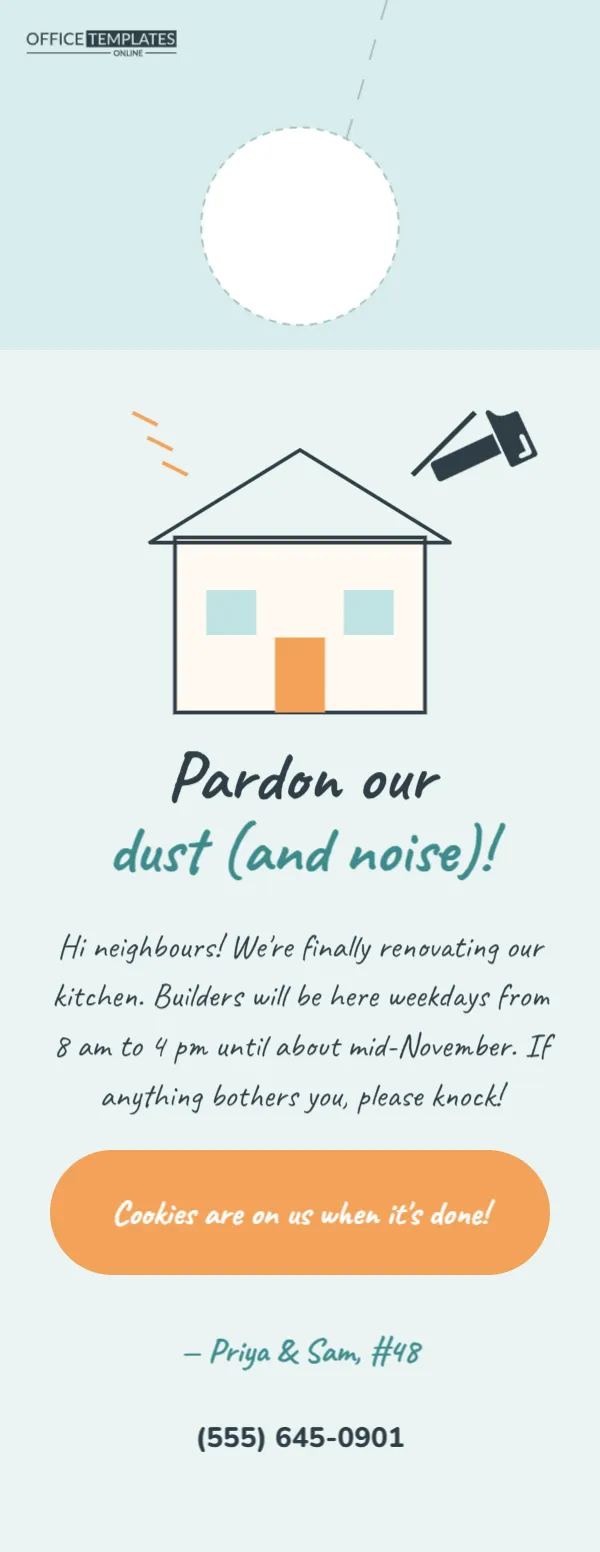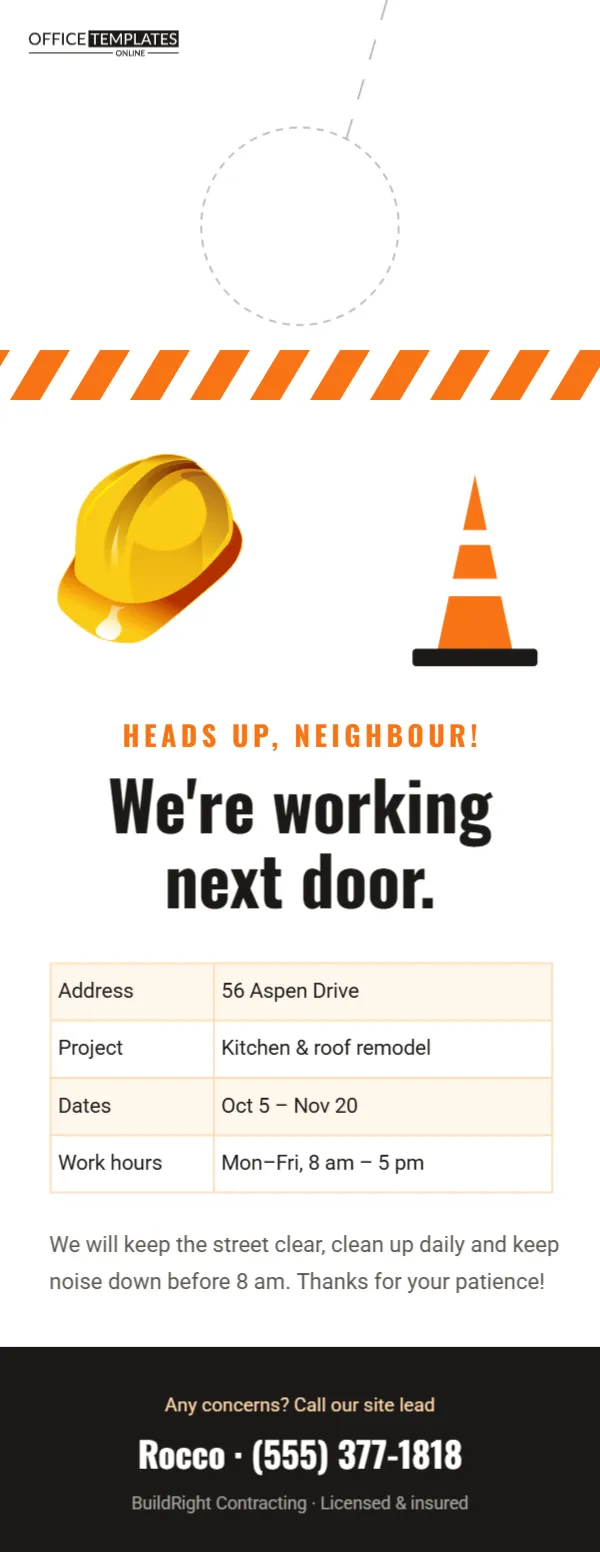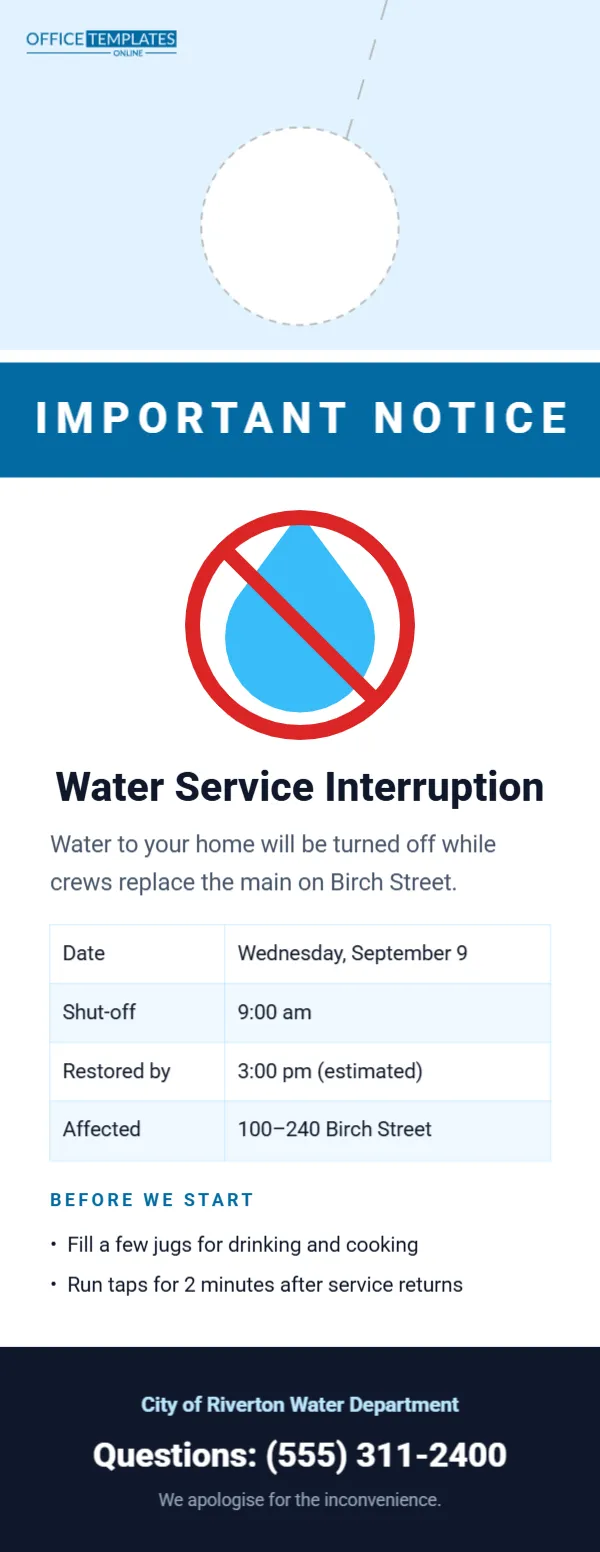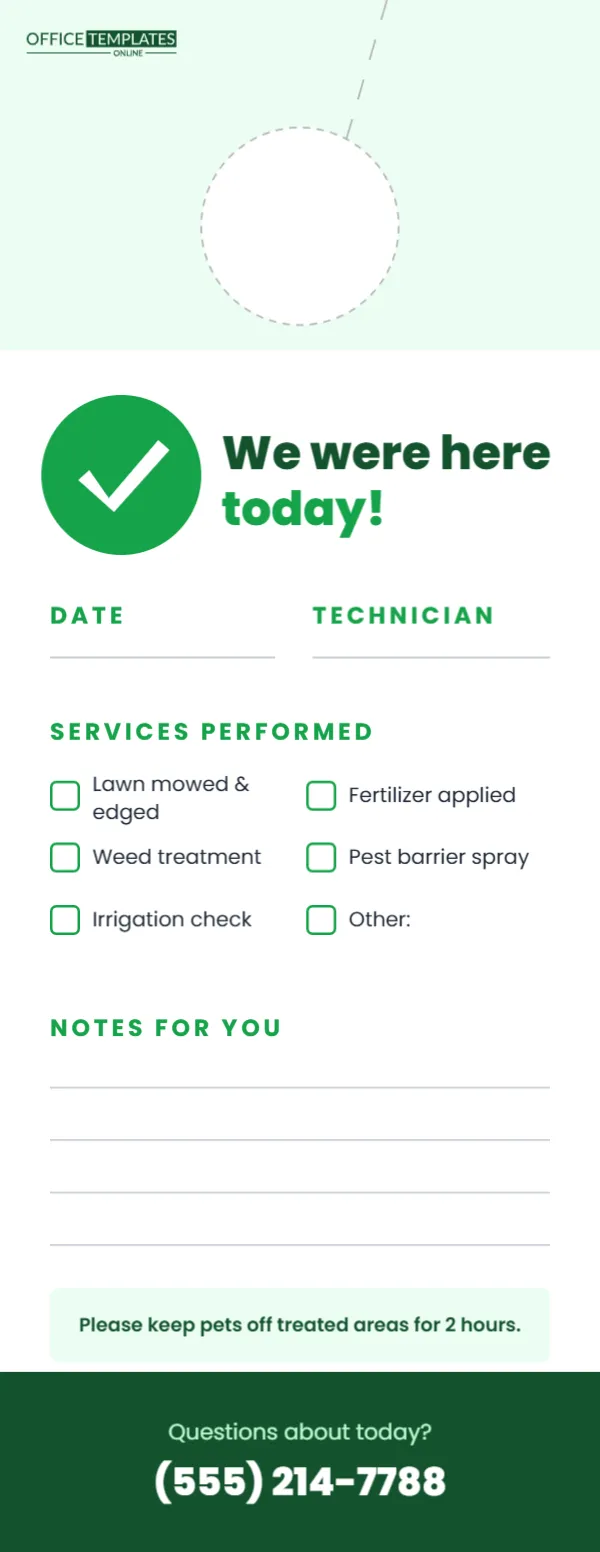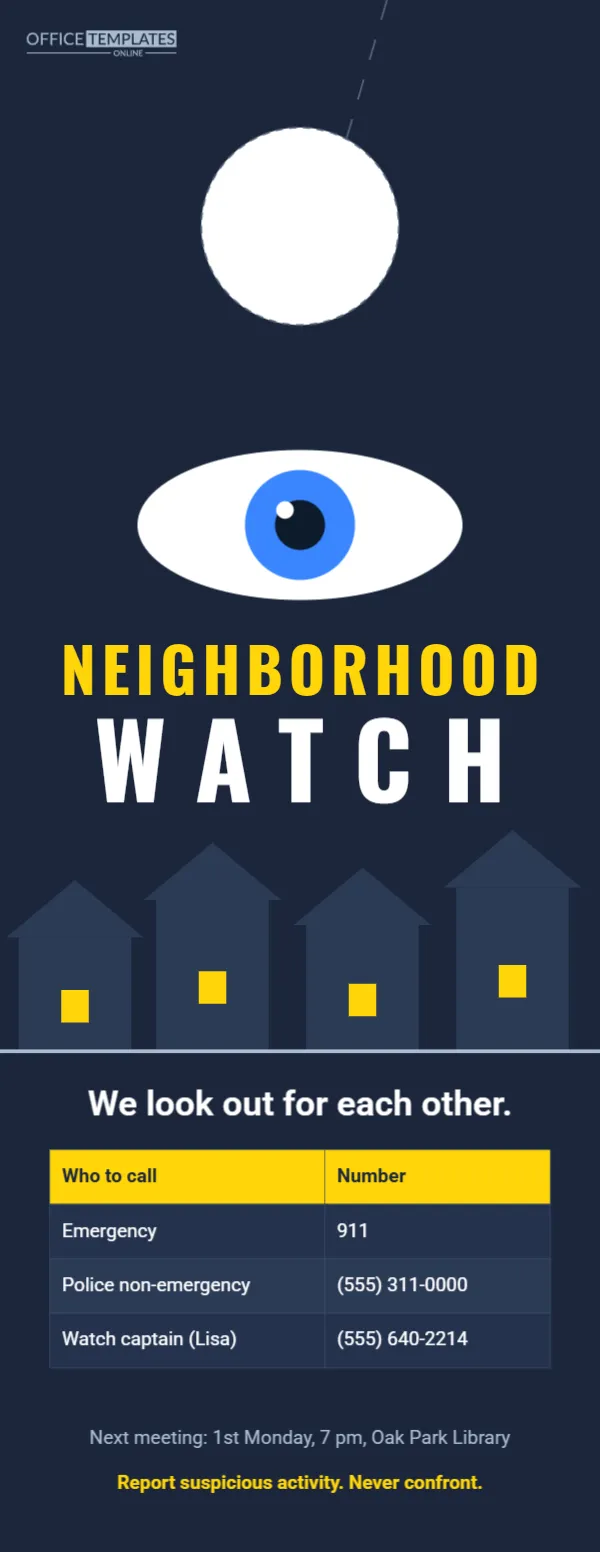
Neighbourhood watch programmes are built on a simple idea: neighbours who know each other and pay attention make a safer street. They depend on participation, clear information and calm, responsible reporting. A door hanger is a friendly way to launch or refresh a watch group, share emergency numbers and invite neighbours to the next meeting. This design is unmistakable: a big watchful eye above the words Neighborhood Watch, a row of houses with warm lit windows, and a clear table telling residents who to call.
The Watchful Eye and Lit Windows
This single-sided hanger measures 4.25 x 11 inches. The background is deep night navy. Under the door hole, a large almond-shaped white eye with a bright blue iris, dark pupil, and white highlight looks out from the card. Below it, Neighborhood is set in yellow Oswald and Watch in widely spaced white capitals. A row of four simple house silhouettes in slate blue stands on a light line, each with a glowing yellow window, a symbol of neighbours at home looking out for each other. We look out for each other. is written underneath.
Who to Call: The Emergency Table
A table with a yellow header lists three numbers: emergency (911 in the United States), the police non-emergency line, and the watch captain’s phone. Underneath, a line gives the next meeting time and place, and a final line in yellow reminds residents to report suspicious activity and never confront. That last instruction is important: watch members observe and report; they do not intervene.
Editing the Contact Numbers
The numbers are in a real table. Select it and choose Edit Table Data to enter your local police non-emergency number and your watch captain’s name and phone. Add rows with Add Row for animal control, the local council’s hotline, or a block captain for each street. Always double-check numbers before printing; wrong numbers on a safety card are worse than none.
Useful Numbers for a Watch Group
| Contact | When to use it |
|---|---|
| Emergency services | Crime in progress, fire, medical emergency |
| Police non-emergency line | Suspicious activity, past incidents, noise |
| Watch captain | Group updates, meeting questions, new members |
| Animal control | Loose or dangerous animals |
| City services hotline | Broken streetlights, graffiti, potholes |
Responsible Watching
A good watch programme makes everyone feel safer, including neighbours who are new or different. Encourage members to report specific behaviour, not people’s appearance, and to work with local police, who often provide training and materials for watch groups. Clear, respectful guidelines keep the programme trusted by the whole community.
Inviting Neighbours to Meetings
The meeting line is an invitation. Hold meetings somewhere public and accessible, such as a library or community room, and keep them short and practical: recent incidents, safety tips, and introductions. Invite a local police community officer occasionally; residents value hearing directly from them.
Recolouring Night and Light
The navy and yellow combination evokes night and warm windows. You can change the yellow to orange or white, or the navy to dark green. The eye is a group of ellipses and circles; recolour the iris to match your group’s colours. The houses are another group that you can recolour or extend.
Practical Safety Tips to Add
If you have space on a second page, safety tips are helpful: lock cars and remove valuables, use timers on lights when away, ask a neighbour to collect packages, trim bushes near windows, and write down descriptions and licence plates rather than following anyone. Add a page in the editor for a tips list if you want a two-sided version.
The Hole Guide on a Navy Hanger
At the top, a dashed circle marks where to cut the doorknob hole, and a dashed slit marks the cut to the edge. Print shops die-cut these; watch volunteers can cut small batches with a punch and scissors.
Printing a Safety Hanger
Download as a PDF with bleed and crop marks for a print shop so the navy reaches the edges. A 14 pt coated card keeps the navy rich. Many police departments help watch groups with printing costs or materials; ask your community officer.
Distribution and Sign-Ups
Deliver hangers to every home on the streets your group covers. Include a way to join: a sign-up email, a group chat link, or a simple sign-up sheet at the first meeting. Personal invitations, a knock and a hello, work best alongside the hanger.
Staying in Touch Between Meetings
Many watch groups use a messaging app or email list to share alerts and lost-pet notices. Mention it on the hanger if you have one. Set clear rules for the group chat, such as sharing verified information only and keeping posts respectful, so it stays useful rather than alarming.
Signs and Stickers
Neighbourhood watch signs on lamp posts and window stickers complement the hangers and remind passers-by that residents are paying attention. Keep the same eye and colours on all materials for a consistent, recognisable identity.
Welcoming New Residents Into the Watch
New neighbours are often the people who would most like to know who lives around them. Deliver a hanger with a personal welcome note to every new household, and invite them to the next meeting. A watch group that welcomes newcomers builds the trust and familiarity that keep a street safe, far more than cameras or signs alone.
Neighborhood Watch FAQ
Can I use this for a block captain introduction?
Yes. Change the headline line and add the block captain’s name and number to the table.
Is the eye illustration editable?
Yes. It is made of simple shapes you can recolour.
What size is the hanger?
4.25 x 11 inches, single-sided.
Can I add a QR code to join the group chat?
Yes. Place a small QR code image beside the meeting line.
Should I list my home address?
No. Share a phone number or email for the captain, and meet in a public place.
Can I print a Spanish version?
Yes. Duplicate the design and translate the text; Vigilancia del vecindario is a common Spanish name for a watch group.