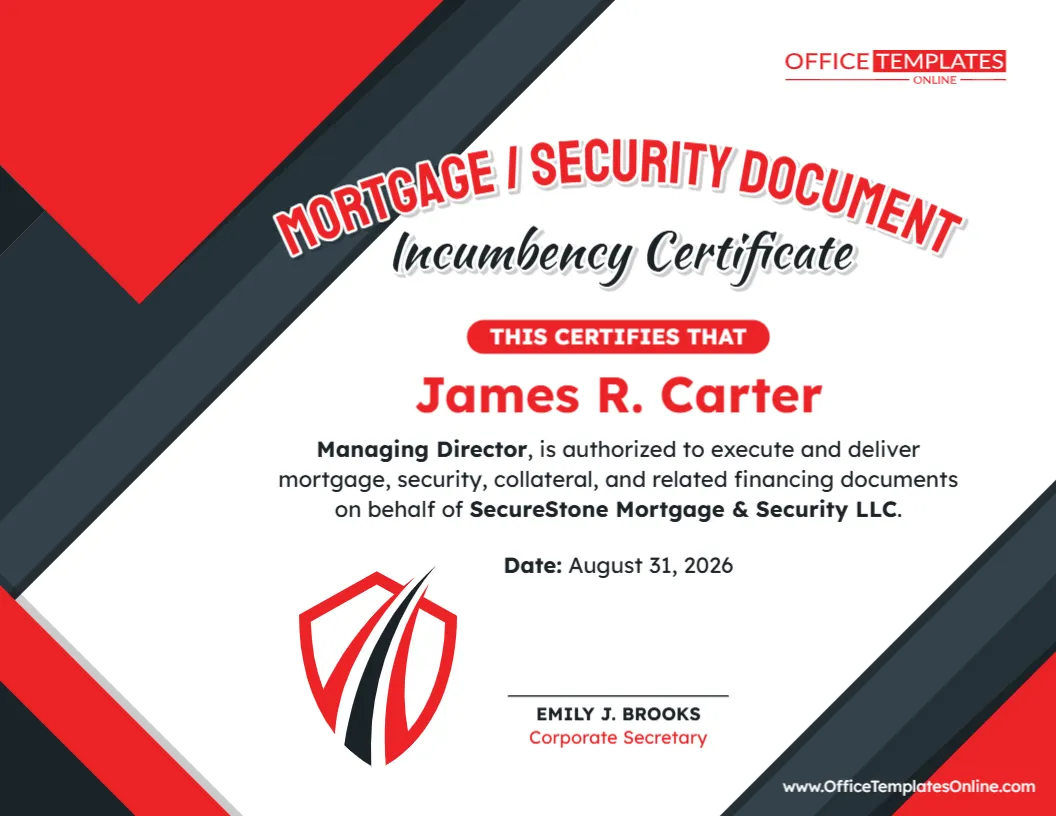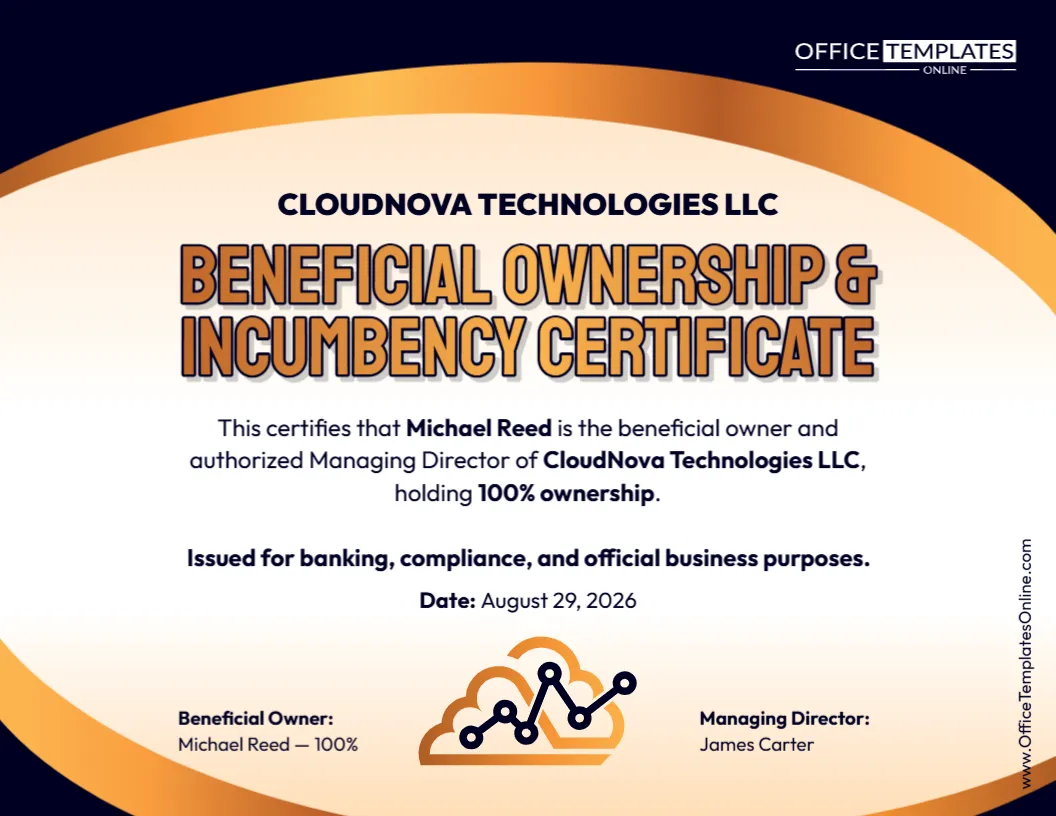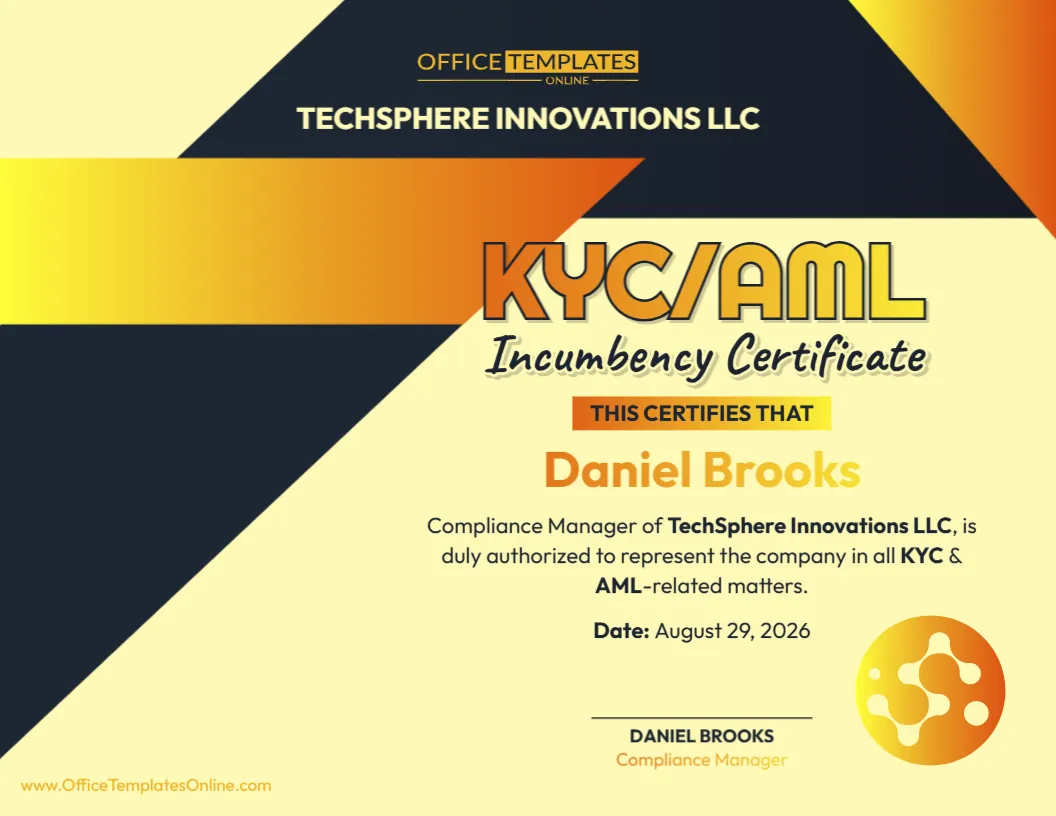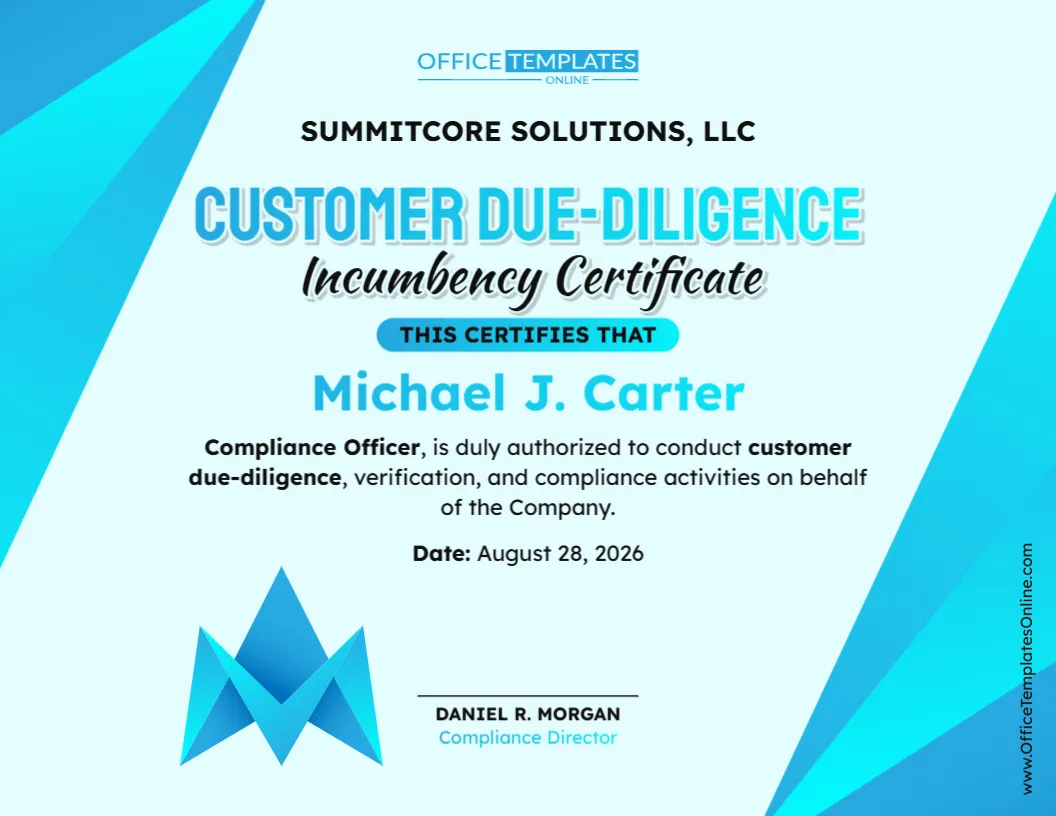
Give Investors and Funding Parties a Clear Record of Who Is Authorized to Act
Fundraising can involve many documents, decisions, signatures, and conversations. Whether a company is discussing an investment, preparing financing documents, or completing another fundraising transaction, the parties involved may need to know which company officer currently has authority to represent the business and execute relevant documents.
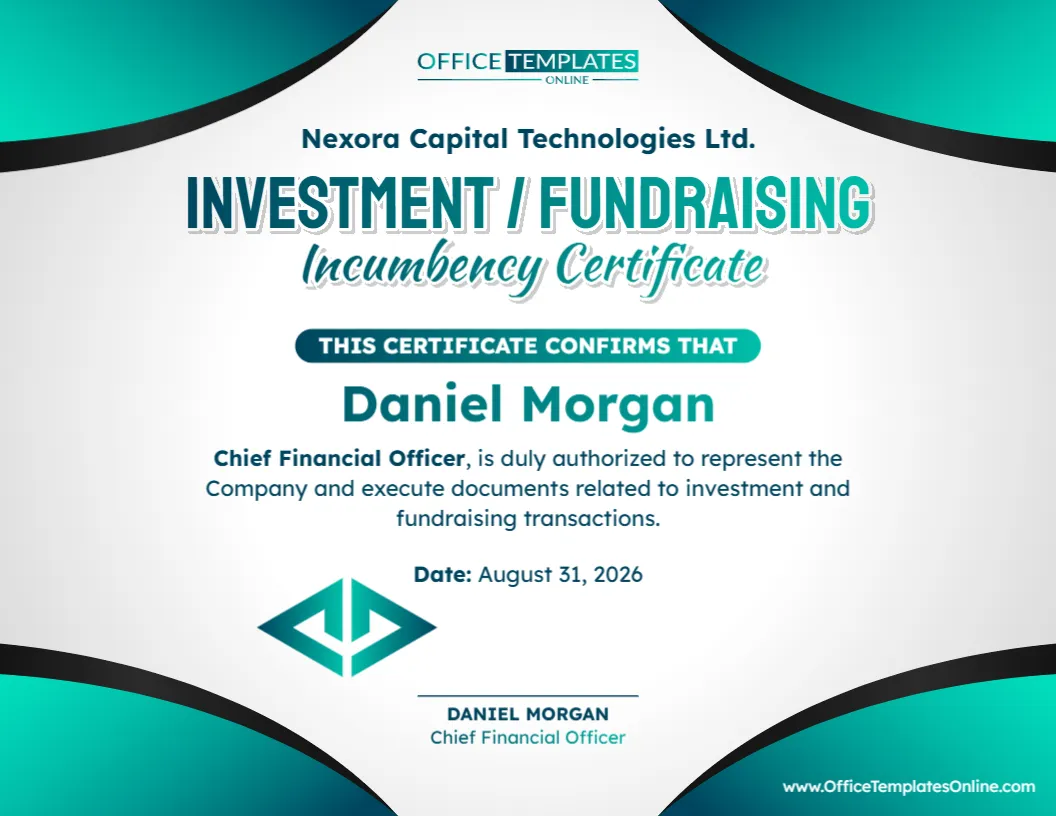
This Investment/Fundraising Incumbency Certificate Template provides a focused way to present that information. It is designed to identify a current officer, show their corporate position, and state their authority in connection with investment and fundraising transactions.
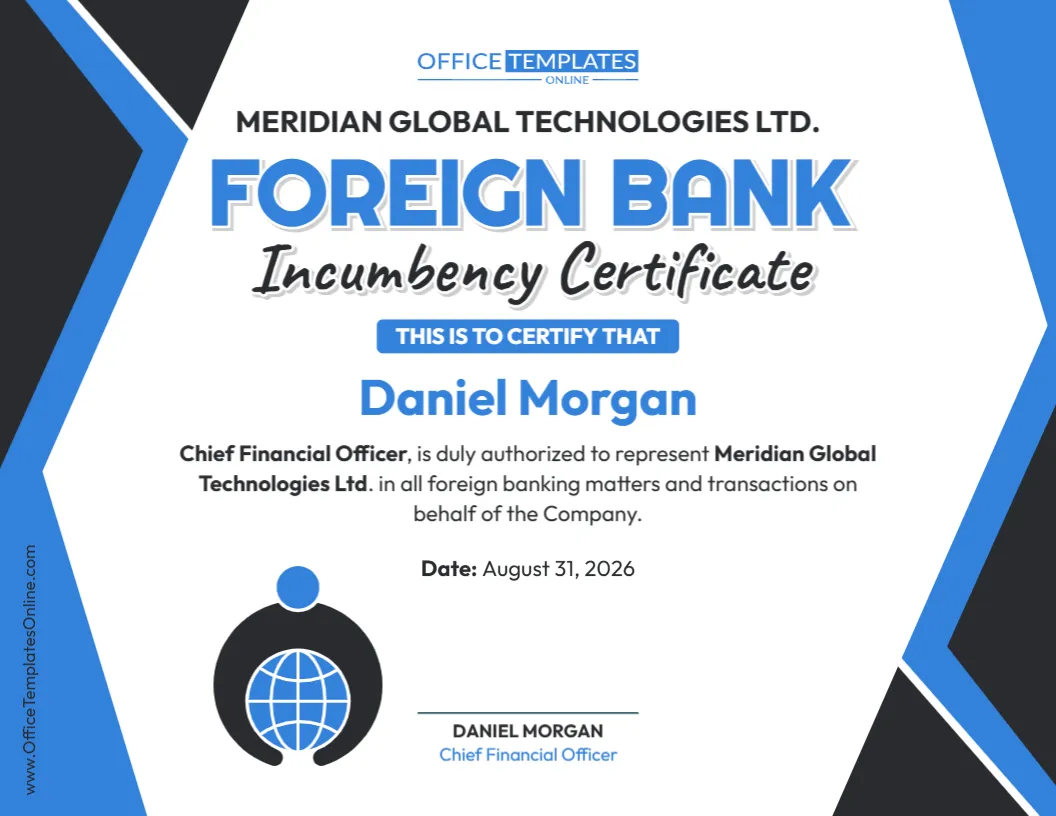
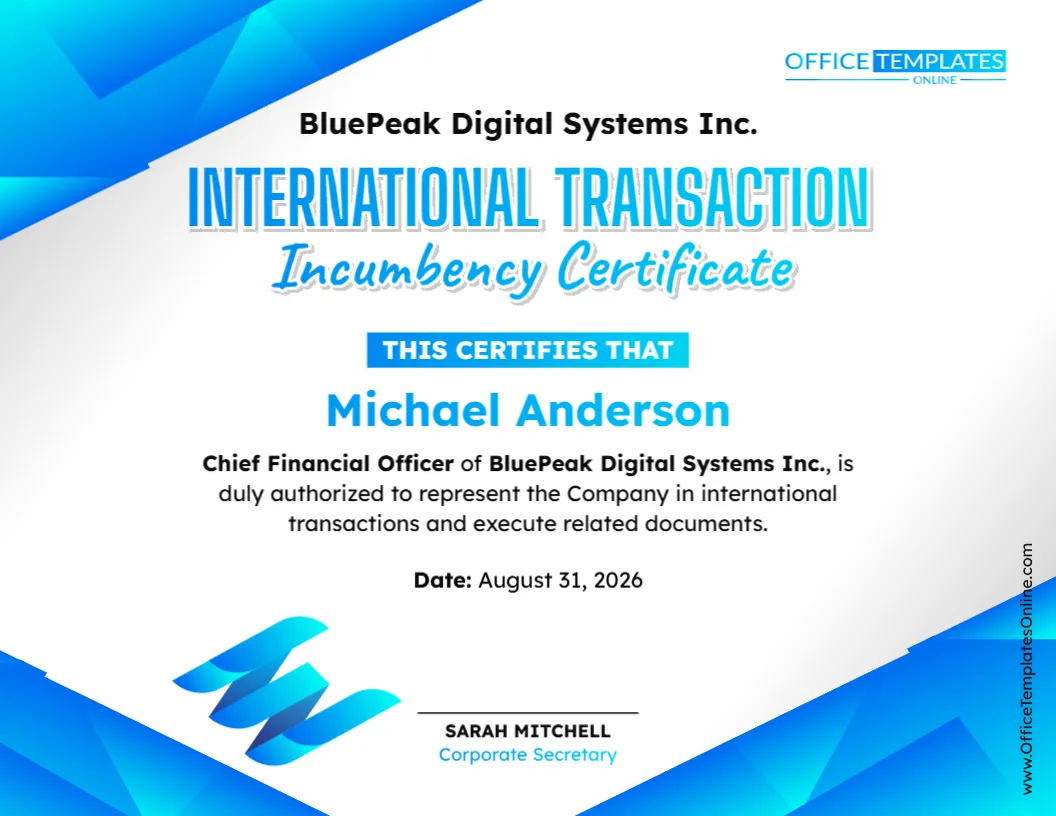
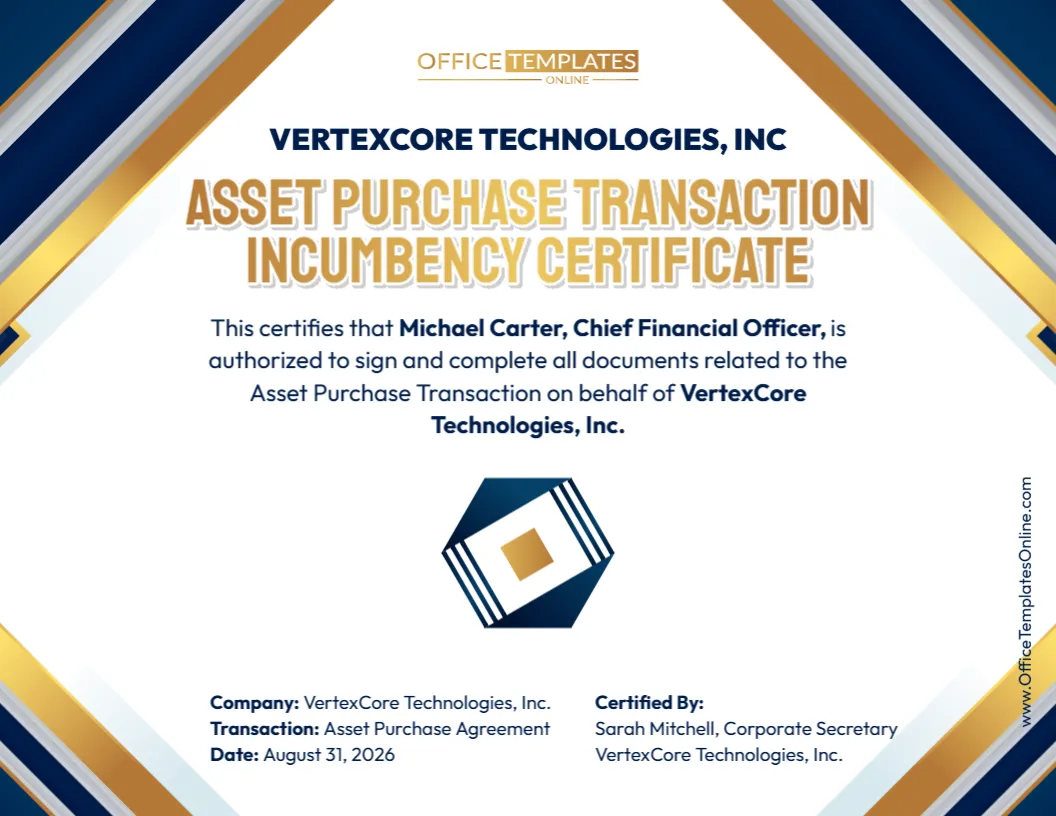
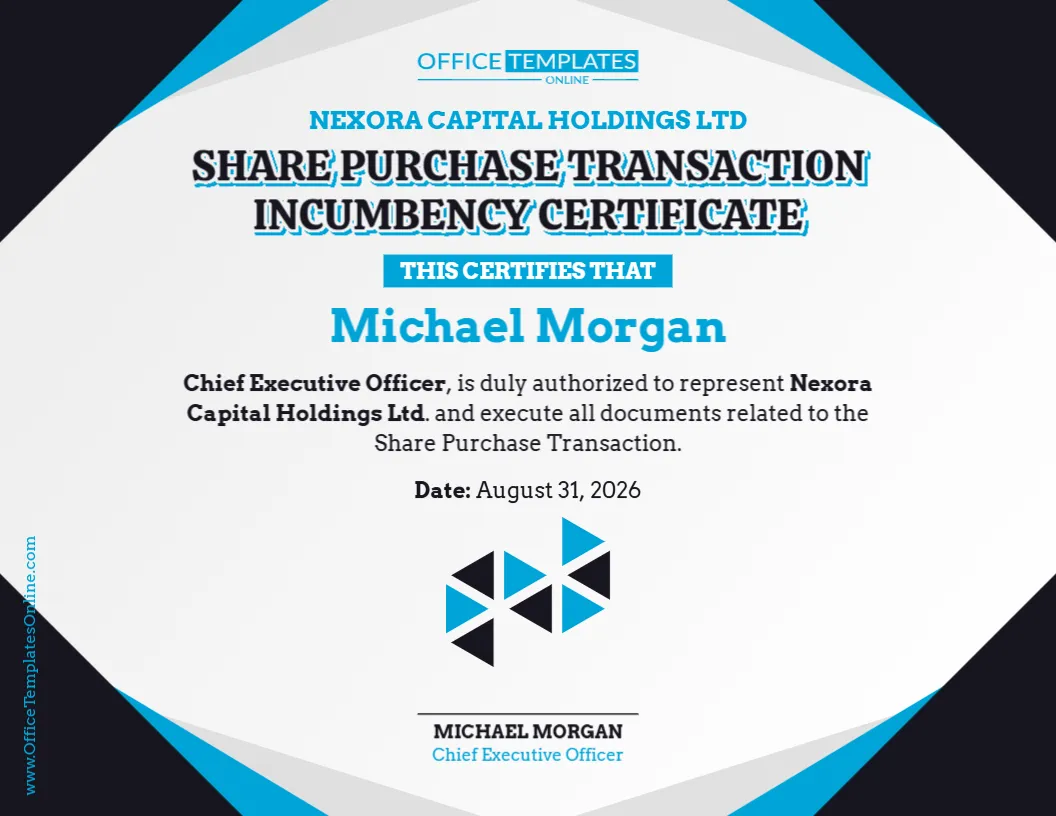
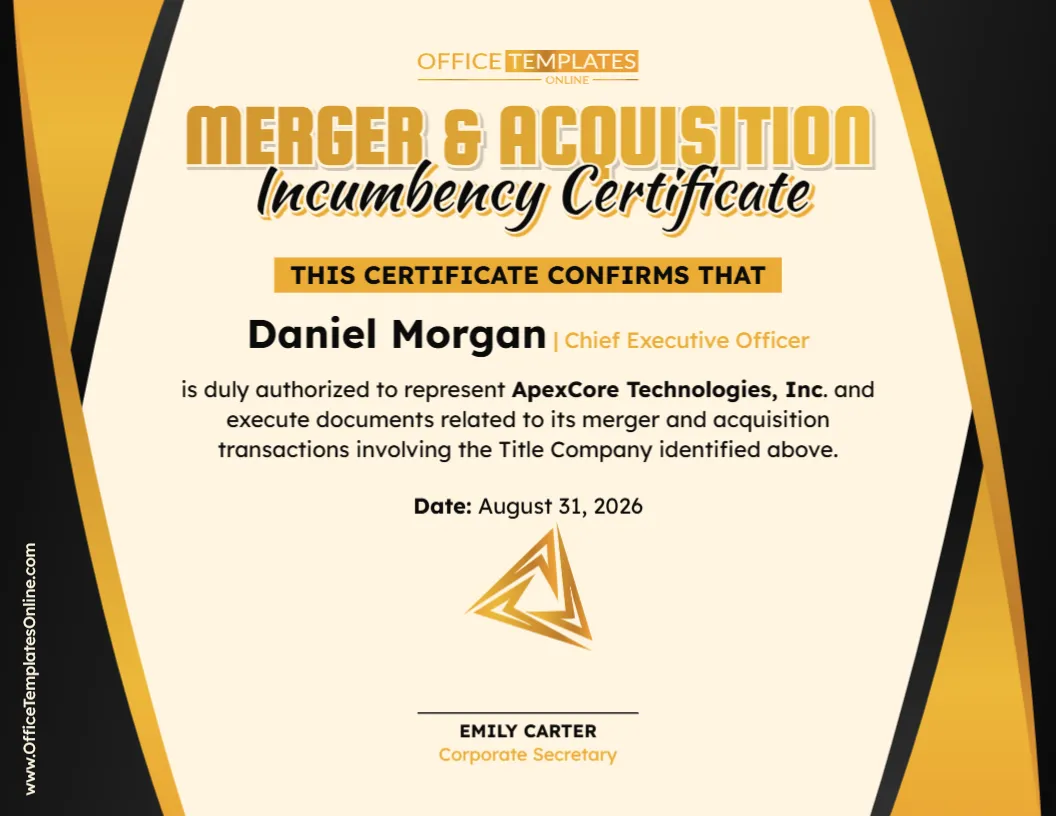
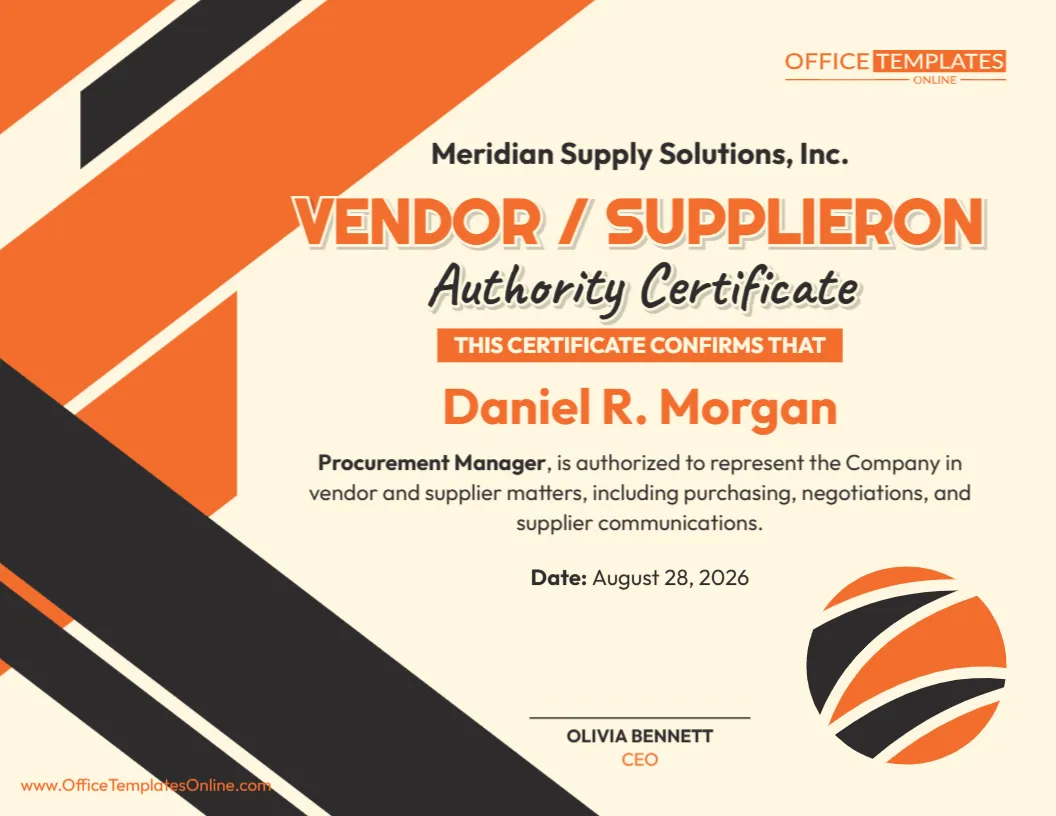
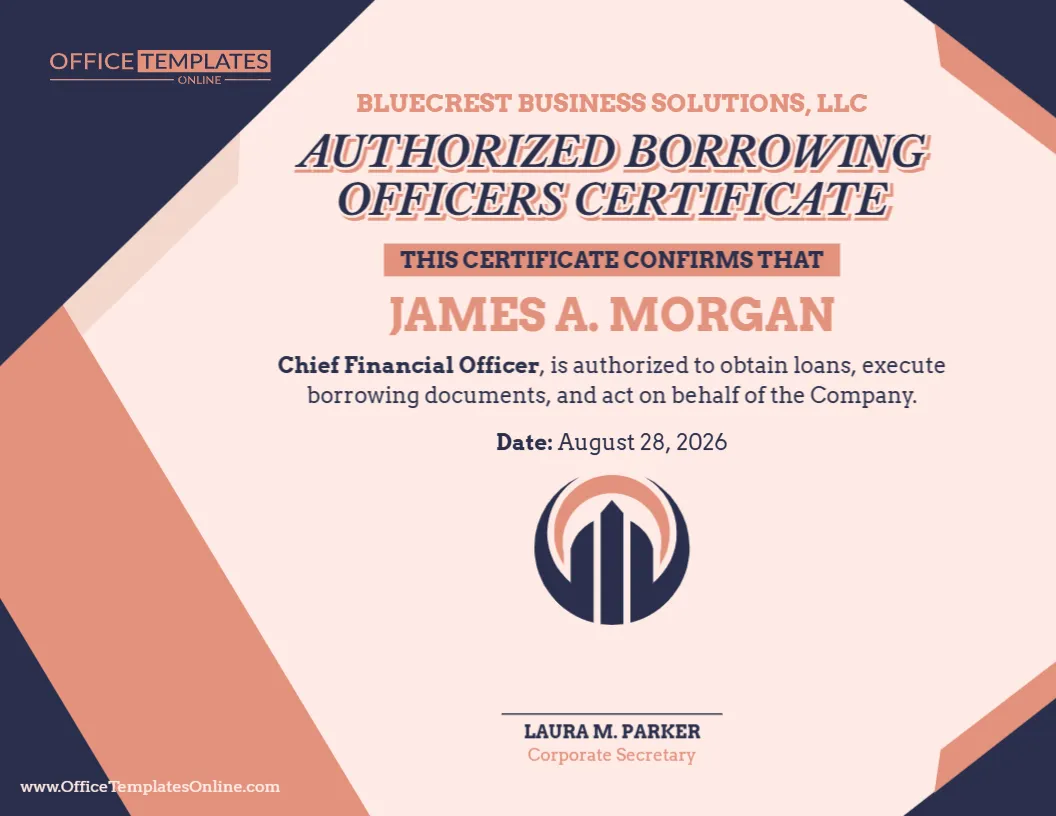
The sample design features a Chief Financial Officer, but you can replace the name, position, company, date, and authorization statement with details that match your organization.
Everything can be customized online in your browser without logging in. Once you have reviewed the certificate, download the completed design as a PDF, PNG, or JPG.
A Certificate Designed Around Funding-Related Authority
A general Certificate of Incumbency may identify a company’s current officers and the authority associated with their positions. Incumbency certificates are commonly used when investors, lenders, banks, and other counterparties need confirmation of who can act for an organization.
This template narrows that idea to an investment and fundraising context.
Its sample certification states that the named officer is authorized to represent the company and execute documents related to investment and fundraising transactions.
That makes the document easy to understand at a glance:
Who is the officer?
The certificate identifies the individual by name.
What position does the person hold?
The officer’s corporate title is clearly stated.
What is the relevant authority?
The certificate describes authority connected with investment and fundraising matters.
When was this information certified?
A dedicated date appears on the certificate.
This straightforward structure can be useful when a recipient needs concise evidence of current corporate authority.
What You Can Customize in This Template
The example shown in the design uses sample information. It is meant to demonstrate the appearance of a completed certificate rather than provide ready-to-use corporate facts.
Before using the certificate, replace the sample content with accurate information from your organization.
You can edit elements such as:
- Company’s full legal name
- Authorized officer’s full name
- Officer’s current corporate title
- Incumbency confirmation
- Investment or fundraising authority statement
- Authority to execute related documents
- Certificate date
- Name shown in the lower certification area
- Corporate position shown with that name
- Additional wording required for a particular transaction
You can also narrow the authorization language if the certificate relates to one specific financing or investment rather than fundraising activity generally.
Why Incumbency Can Be Relevant During Fundraising
Investors and other funding parties are dealing with the company as a legal entity, not simply with the individual who happens to be negotiating with them.
That creates an important practical question: does the person communicating, approving terms, or signing documents actually have the authority to act for the company?
An incumbency certificate can help answer part of that question by documenting the individual’s current corporate position and stated authority. Investor-facing incumbency documentation is commonly used as evidence that specified people are authorized to act for a company.
For a fundraising transaction, this may help connect the person signing or handling documents with the corporate role and authorization behind them.
Investment Authority and Fundraising Authority Can Vary
“Investment” and “fundraising” are broad terms, so avoid treating the sample wording as universal.
A company may raise capital through different arrangements, and the officer responsible for one transaction may not necessarily have authority for every other financing activity.
Similarly, a company can place restrictions on an officer’s signing powers.
Authority may be limited according to:
- Transaction value
- Type of financing
- Particular agreement
- Specific investor or funding round
- Board approval
- Shareholder approval
- Joint-signature requirements
- Internal delegation rules
- Other corporate conditions
Modern incumbency documentation can expressly state authority limits, approval requirements, and joint-signature conditions rather than implying unlimited powers.
If any such limitations apply to your officer, adjust the certificate wording accordingly.
Corporate Title Alone Is Not Enough
The template prominently displays the officer’s title because that information is an important part of incumbency.
But title and authority should not automatically be treated as identical.
For example, the sample certificate identifies a Chief Financial Officer. A CFO may play an important role in a fundraising transaction, but the title alone does not establish that every CFO can execute every investment document on behalf of every company.
Actual authority may come from the company’s governing documents, board resolutions, appointment records, delegations, transaction approvals, or other corporate records.
Before completing the certificate, confirm both facts separately:
1. Does this individual currently hold the stated position?
2. Does this individual actually have the investment or fundraising authority described?
Only use the statement when both pieces of information are accurate.
One Officer, One Clear Purpose
The visual structure of this template is intentionally different from a traditional multi-officer incumbency table.
It centers on one authorized representative.
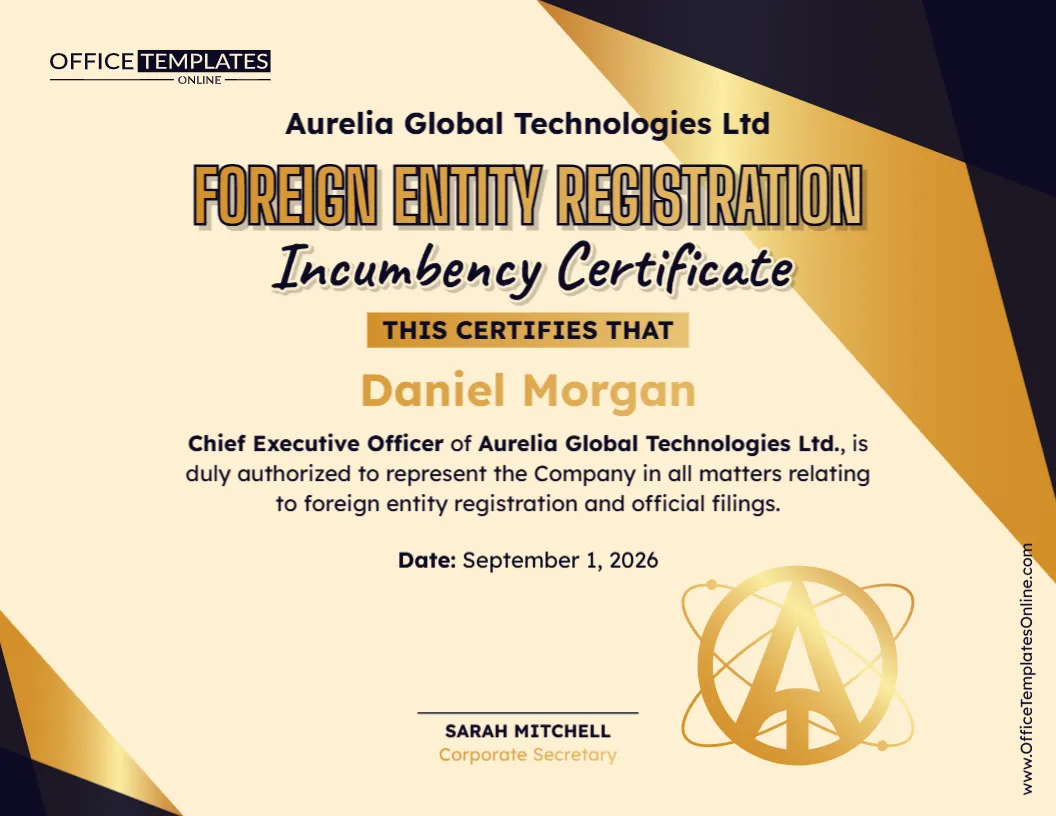
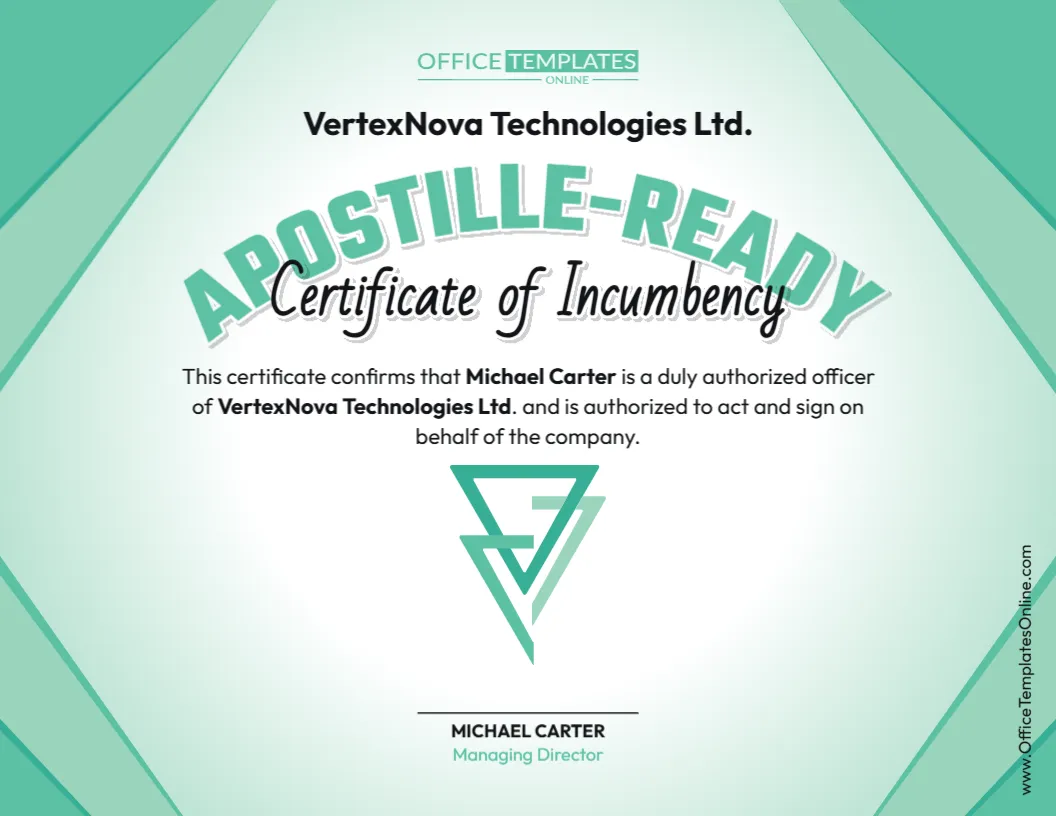
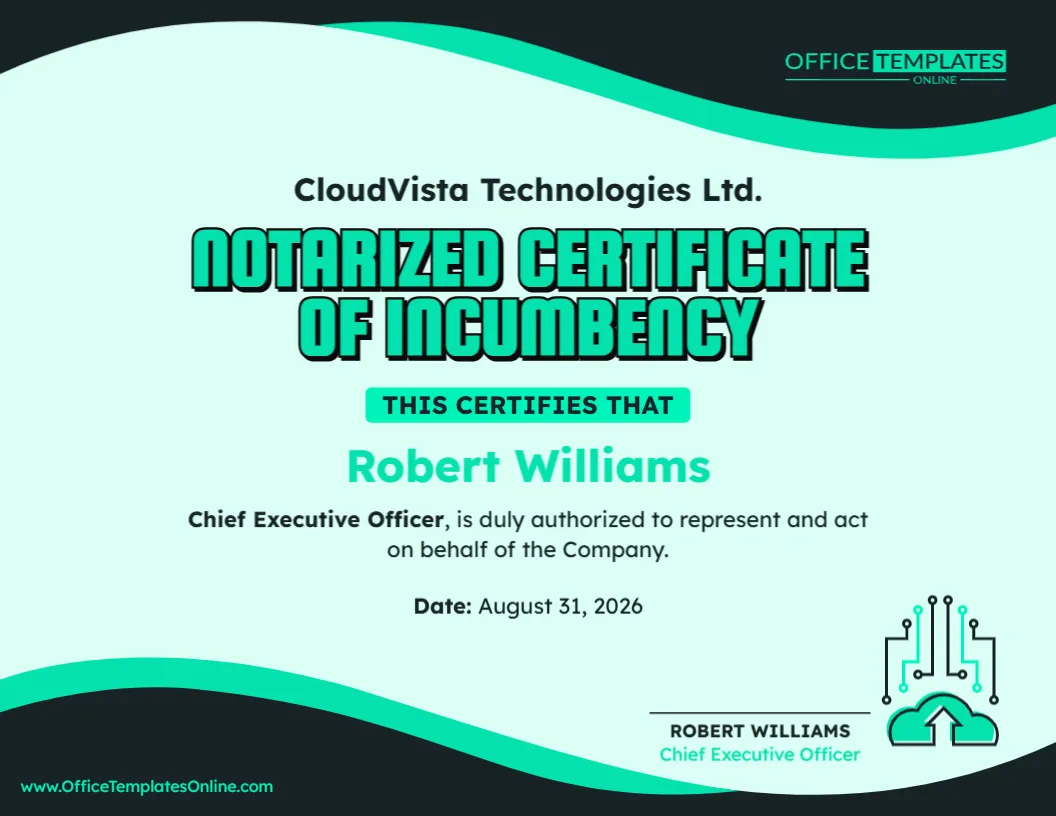
The company name appears at the top. The large Investment/Fundraising Incumbency Certificate heading establishes the purpose of the document immediately. The officer’s name then receives strong visual emphasis, followed by the corporate title and authorization statement.
The date and officer information complete the lower portion of the certificate.
This single-person format works well when you need a certificate concerning one key representative for a funding-related matter.
If the transaction requires several authorized officers or multiple specimen signatures, a multi-officer certificate may be more suitable.
Edit It Online in Your Browser
There is no need to recreate this layout in a word processor or spend time designing a certificate from an empty page.
Open the template in the online editor and personalize the existing design.
No login is required.
You can move through the certificate one piece of information at a time:
- Change the sample company name.
- Enter the authorized officer’s full name.
- Update the corporate position.
- Review the investment/fundraising authority statement.
- Narrow or expand the wording only where supported by actual authority.
- Replace the sample date.
- Update the name and title in the lower certificate area.
- Add other required information where appropriate.
- Proofread the entire certificate.
- Download your completed version.
This gives you a ready-made professional appearance while keeping the important company information editable.
Use the Exact Legal Company Name
Fundraising documentation often contains repeated references to the company across agreements, resolutions, due diligence records, and supporting certificates.
For consistency, enter the organization’s correct legal entity name in the template.
Pay attention to small details such as punctuation and the legal suffix. If the official name includes “Inc.,” “Ltd.,” “LLC,” “Corporation,” or another entity designation, make sure it is represented correctly where required.
Avoid automatically substituting a product name, shortened brand, or trading name for the legal company name.
A certificate is more useful when its information can be matched easily with the company’s other transaction records.
Match the Officer’s Name to Your Corporate Records
The same care should be applied to the officer’s name.
Use the individual’s full name as appropriate for the transaction and make sure it is consistent with the corporate records supporting the certificate.
If an investor, lawyer, lender, or another party is comparing several documents, inconsistent names can create questions even when the difference is accidental.
Also confirm that the person still holds the position shown.
Incumbency is about current status. If an officer has resigned, been replaced, or moved to another role, an old certificate should not simply be reused.
Consider Making the Certificate Transaction-Specific
A broad certificate can state that an officer is authorized in connection with investment and fundraising transactions generally.
For some situations, however, a more specific certificate may be preferable.
You could adapt the authority statement to refer to a particular funding transaction, agreement, financing round, or other identifiable matter when appropriate.
For example, rather than suggesting that the officer has authority over every future fundraising activity, the wording could be limited to documents relating to a specified transaction.
Transaction-specific officer certificates often identify the underlying deal and confirm that the relevant approvals have been obtained.
The correct level of detail depends on the actual authority and what the recipient has requested.
Does This Replace a Board Resolution?
Not necessarily.
An incumbency certificate and a board resolution can perform different functions.
The incumbency certificate helps confirm who currently holds a position and can state the authority associated with that person.
A board resolution records a decision or authorization approved by the board, such as approval of a financing transaction or authorization of particular officers to execute documents.
For a significant fundraising transaction, an investor or another party may request both. Corporate transaction documentation frequently uses resolutions or other corporate approvals alongside evidence of officer incumbency and signing authority.
Do not assume this template replaces a required board consent, shareholder approval, financing resolution, or other corporate action.
Do Not Overstate the Power to “Execute Documents”
The phrase “execute documents” can carry significant meaning in a transaction.
If you include it, be confident that the named officer actually has the necessary signing authority.
An individual may be allowed to negotiate with potential investors without having authority to sign final agreements. Another person might be authorized to sign only after the board approves the transaction. In some organizations, two officers may need to sign together.
Where authority has a monetary threshold or other limitation, consider whether the certificate should reflect it.
A precise statement is more useful than a broad statement that does not match the company’s real approval structure.
A Helpful Supporting Document During Due Diligence
Fundraising can involve due diligence, during which investors or their advisers review information about the company.
The scope of due diligence varies considerably depending on the type, size, and stage of the transaction. Corporate records, governing documents, ownership information, resolutions, contracts, financial information, and officer authority may all become relevant in different situations.
An incumbency certificate can form one piece of that broader documentation by providing a current statement about the person authorized to represent the company.
It should not be presented as a substitute for every other document the investor requests.
Who Should Certify the Officer Information?
The correct certifying person depends on the organization and the requirements of the transaction.
Certificates of Incumbency are often prepared or signed by a corporate secretary, president, or another authorized corporate representative.
This particular design includes an officer name and title in the lower portion of the certificate. Customize that area according to how your organization intends to execute or certify the document.
If an investor, lawyer, lender, or transaction adviser has provided specific instructions about who must sign, follow those instructions.
Do not simply use the sample officer’s title because it appears in the design.
Check Whether a Separate Signature Is Needed
The visual template contains a lower certification area, but actual execution requirements can differ.
A recipient may expect a handwritten signature, electronic signature, specimen signature, corporate secretary certification, or another form of execution.
In some transactions, additional formalities may also be requested.
Determine the required signature procedure before treating the certificate as complete. If you need to modify the design to provide an additional signature line or certification statement, do so before downloading the final version.
What About Notarization?
A Certificate of Incumbency is not automatically notarized.
Whether notarization is required depends on the circumstances, jurisdiction, and requesting party. Some recipients may accept a properly executed corporate certificate without notarization, while others may request additional verification.
If notarization is required, it must be completed through the appropriate notarial process.
Simply adding a notary-style graphic, typed name, seal image, or the word “notarized” does not make a certificate notarized.
Check the requirements before signing if the applicable notarial procedure affects how or when the signature must be made.
Keep the Certificate Date Current
The date displayed on this template is not merely decorative.
It helps show when the officer’s incumbency and authority are being confirmed.
This matters because corporate roles change. An officer can resign, be replaced, or receive different signing powers. A board can also modify previously granted authority.
Prepare the certificate using current corporate information and enter the appropriate date.
If a fundraising process lasts for an extended period, the investor or another transaction party may ask for updated confirmation closer to signing or closing.
PDF, PNG, or JPG—Download the Format You Need
After editing and reviewing the certificate, you can download your personalized design in PDF, PNG, or JPG format.
Choose PDF when you want a conventional document format suitable for printing, sharing, or maintaining with transaction records.
Choose PNG or JPG when an image version is more convenient for your workflow.
The available download formats do not determine whether a recipient will accept the document. If the certificate is being uploaded to an investor portal, financing platform, data room, or another system, check its file requirements first.
Five Questions Worth Asking Before You Use the Certificate
Instead of simply replacing the sample names and downloading the file, check the substance of the certificate.
Is the named person currently an officer?
Confirm their present position from current company records.
Does that officer have fundraising or investment authority?
Review the relevant resolutions, governing documents, or delegations.
Is the authority general or transaction-specific?
Use wording that reflects the real scope.
Does someone else need to certify the officer’s incumbency?
Determine the appropriate certifying person.
Has the investor or funding party requested its own form?
If the recipient provides mandatory wording or a specific certificate format, follow those requirements.
These checks help turn a visually polished template into a document that more accurately reflects the underlying corporate facts.
Prepare a Professional Certificate Without Starting from Scratch
This Investment/Fundraising Incumbency Certificate Template is designed for businesses that want a clear way to identify an officer and describe that person’s authority in connection with investment or fundraising activity.
Its focused single-officer layout keeps the essential information easy to see: company name, authorized representative, corporate title, funding-related authority, date, and officer information.
Customize the template online with no login required, replace every sample detail with accurate information, and adjust the authority statement to match your company’s actual approvals. When finished, download your certificate as a PDF, PNG, or JPG.
The template provides an editable format for documenting incumbency and stated authority. It does not itself appoint the officer, authorize a fundraising transaction, grant signing power, or replace board/shareholder approvals and other transaction documents that may be required.