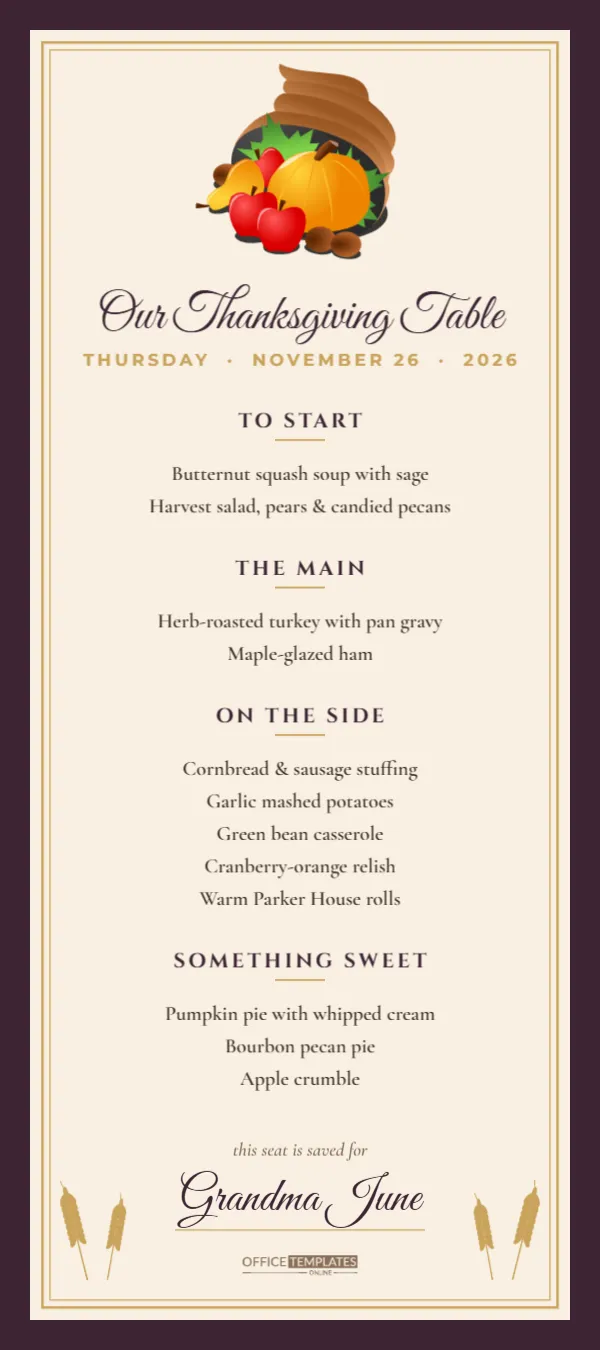
A printed menu on each plate turns a family dinner into an occasion. It tells guests what is coming, gives the cook some well-earned credit, and doubles as a place card when you write each person’s name at the bottom. This tall Thanksgiving dinner menu card is made for exactly that: one card per setting, standing on the plate or tucked into a folded napkin.
Is a Plate Menu Card Right for Your Table?
Before you print a stack, it helps to know which kind of menu suits your dinner. Here is how a per-plate card compares with the other common options.
| Menu type | Best for | Trade-off |
|---|---|---|
| One 4 x 9 card per plate (this template) | Seated dinners of 6 to 20 guests | One print per guest |
| A single framed menu on the sideboard | Buffets and casual gatherings | Guests have to walk over to read it |
| A chalkboard by the kitchen | Very large or drop-in parties | Hard to read from the table |
| No menu at all | Very small, very relaxed dinners | Guests miss the details of what you made |
If you are planning a sit-down meal where everyone has a set place, the plate card is the most personal choice, and it saves you making separate place cards.
Inside the Plum and Gold Design
The card is 4 x 9 inches, the standard tall menu size used by restaurants and wedding planners because it fits neatly on a dinner plate or inside a folded napkin. The outer edge is a deep plum colour. A cream panel fills almost the whole card, framed by two fine gold rules set close together, like an engraved invitation.
At the top sits a full-colour cornucopia: a woven horn of plenty spilling pumpkins, apples, pears, gourds, nuts and green leaves. It is editable vector artwork, so you can resize it or adjust its colours from its swatches. Under it, “Our Thanksgiving Table” is written in plum Great Vibes script, followed by the date in spaced gold capitals.
The menu is split into four sections, each headed in Cinzel capitals with a short gold rule beneath:
- TO START: butternut squash soup with sage; a harvest salad with pears and candied pecans.
- THE MAIN: herb-roasted turkey with pan gravy; maple-glazed ham.
- ON THE SIDE: cornbread and sausage stuffing, garlic mashed potatoes, green bean casserole, cranberry-orange relish and warm Parker House rolls.
- SOMETHING SWEET: pumpkin pie with whipped cream, bourbon pecan pie and apple crumble.
Dishes are set in Cormorant Garamond, an elegant old-style serif that reads well at small sizes. At the foot, an italic line says “this seat is saved for” above a guest name in large script (“Grandma June” in the sample), underlined in gold. A pair of golden wheat stalks stands in each bottom corner, and the brand mark sits small and muted between them.
Writing Your Own Menu
Menu writing has a few simple rules that make any home-cooked dinner sound special without being pretentious:
- Name one or two key ingredients: “butternut squash soup with sage” says more than “soup.”
- Credit the cooks where it matters: “Aunt Dot’s sweet potato pie” makes Aunt Dot’s day.
- Keep each dish to one line on this card. Long descriptions wrap and crowd the section below.
- Group dishes the way they will be served, not the way you cooked them.
- Leave out anything that might not happen. If the rolls are a maybe, skip them.
Turning the Menu into a Place Card
The guest name at the bottom is what makes this card personal. Type the first guest’s name, download, then change the name and download again. Repeat for each seat. It takes a few minutes for a table of twelve, and the result is a full set of named menus that also tell people where to sit.
For a faster route, leave the name line blank and hand-letter names with a gold or plum pen after printing. Calligraphy-style handwriting suits the script font, and children love being asked to write their own name.
Changing the Plum Menu Palette
Plum and gold give a rich, candlelit look. For a lighter, rustic table, change the outer colour to sage and the gold rules to a soft brown. For a modern table with white plates and black cutlery, try charcoal outside and cream inside with brass-coloured rules. The wheat stalks in the corners are grouped shapes; select one pair to recolour both stalks together.
Printing Tall Menu Cards
Two 4 x 9 menus fit side by side on a Letter sheet in landscape orientation, or on a Legal sheet with a little more margin. Print on a heavy matte card (100 to 130 lb cover) so the card stands up on the plate without curling. The plum edge looks best with a clean trim; if you are cutting at home, use a paper trimmer rather than scissors.
A small detail that makes a big difference: tie each card to a rolled napkin with a piece of twine or ribbon. It keeps the card in place and makes the table look styled with almost no extra effort.
Menu Card Questions from Hosts
Can I fit a vegetarian main?
Yes. Replace the maple-glazed ham with a vegetarian dish, or add a third line under THE MAIN and reduce the gap before ON THE SIDE.
Can I use this for a Friendsgiving or a restaurant?
Both work. Change the script heading to “Friendsgiving” or the restaurant’s name, and the name line to a table number.
What if my menu is longer?
Shorten descriptions first. If you still need space, remove the guest name block and move SOMETHING SWEET down.
Does the cornucopia print well in grey?
It prints, but much of its charm is colour. If you are printing in black and white, swap it for a simpler icon from the Elements panel.
A menu at every place is a small luxury that costs a few sheets of card. Write your dishes, add each guest’s name, and let the table tell everyone they were expected.