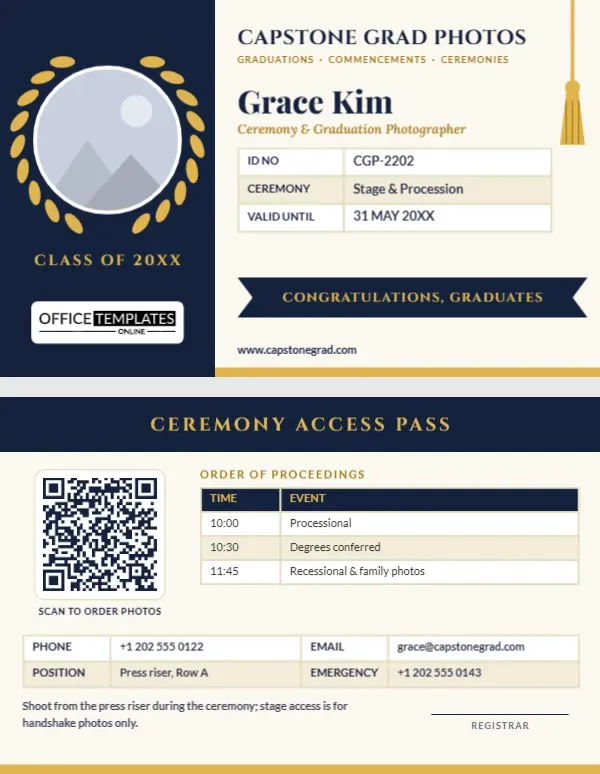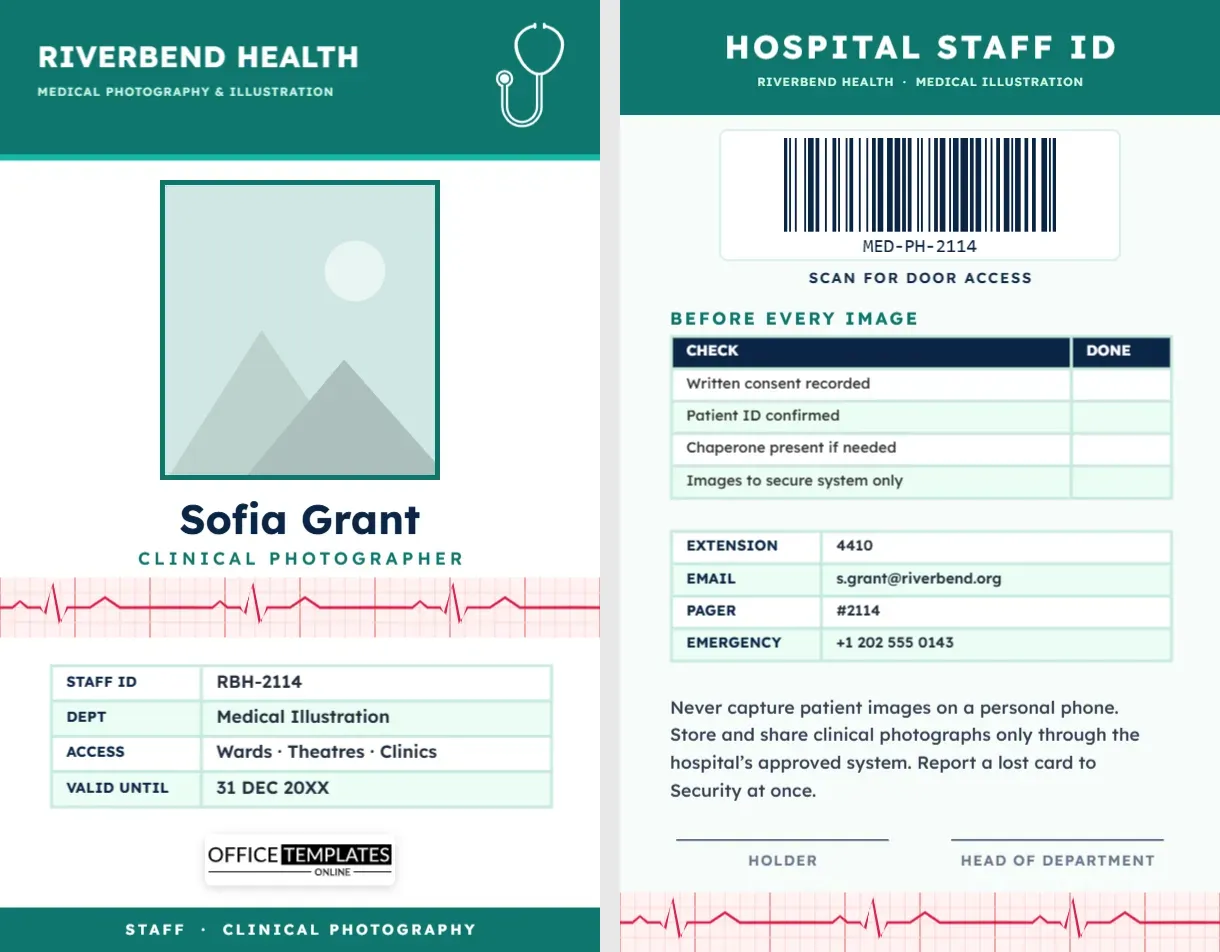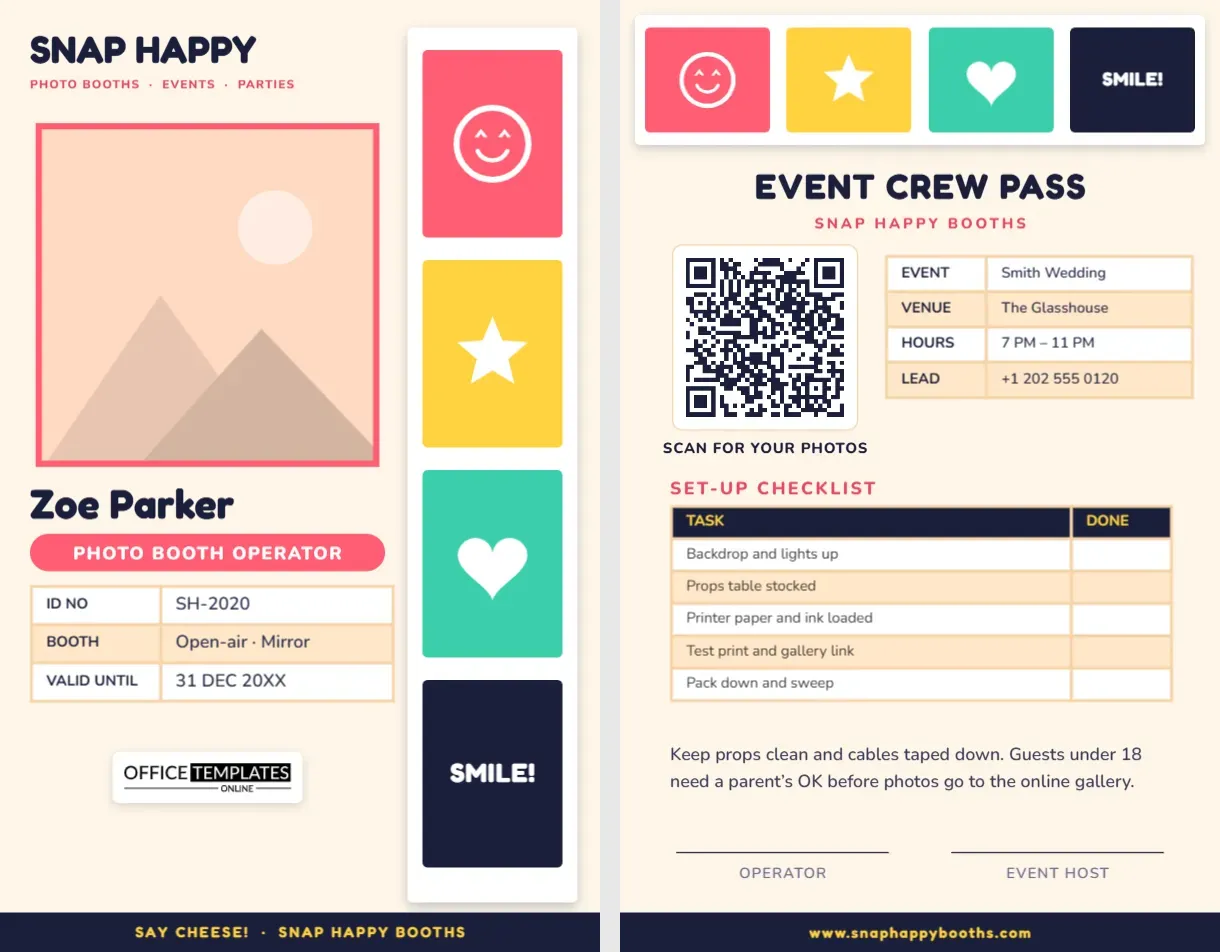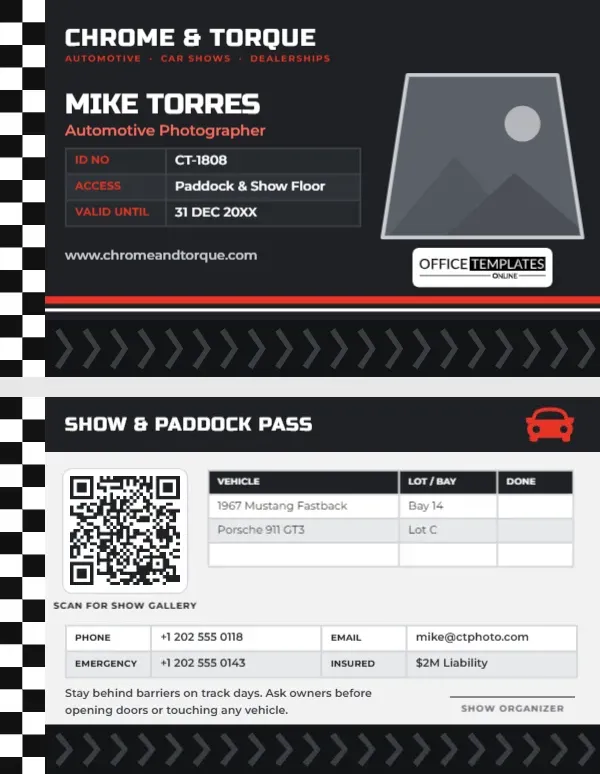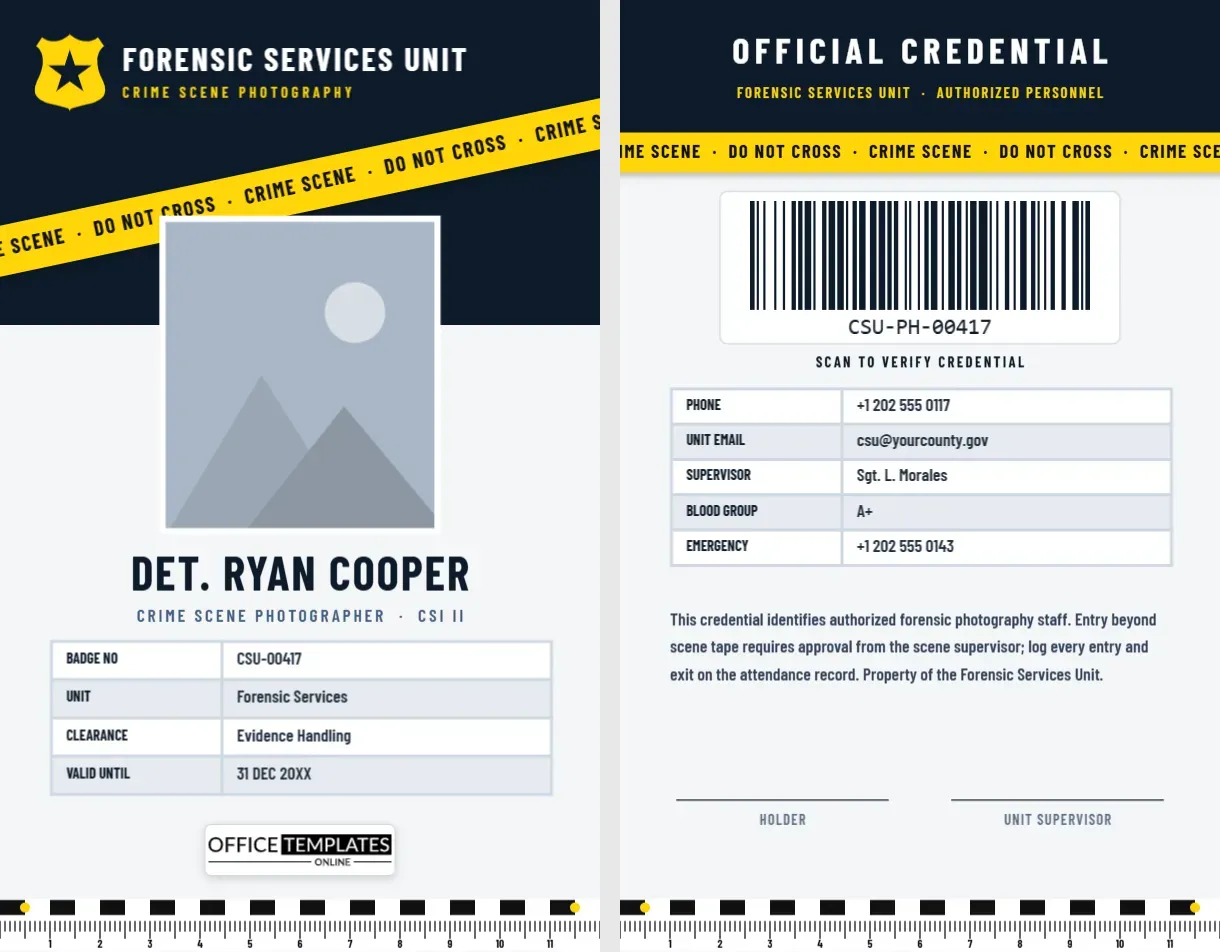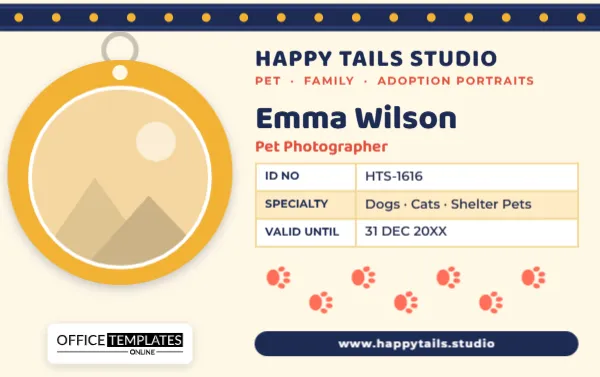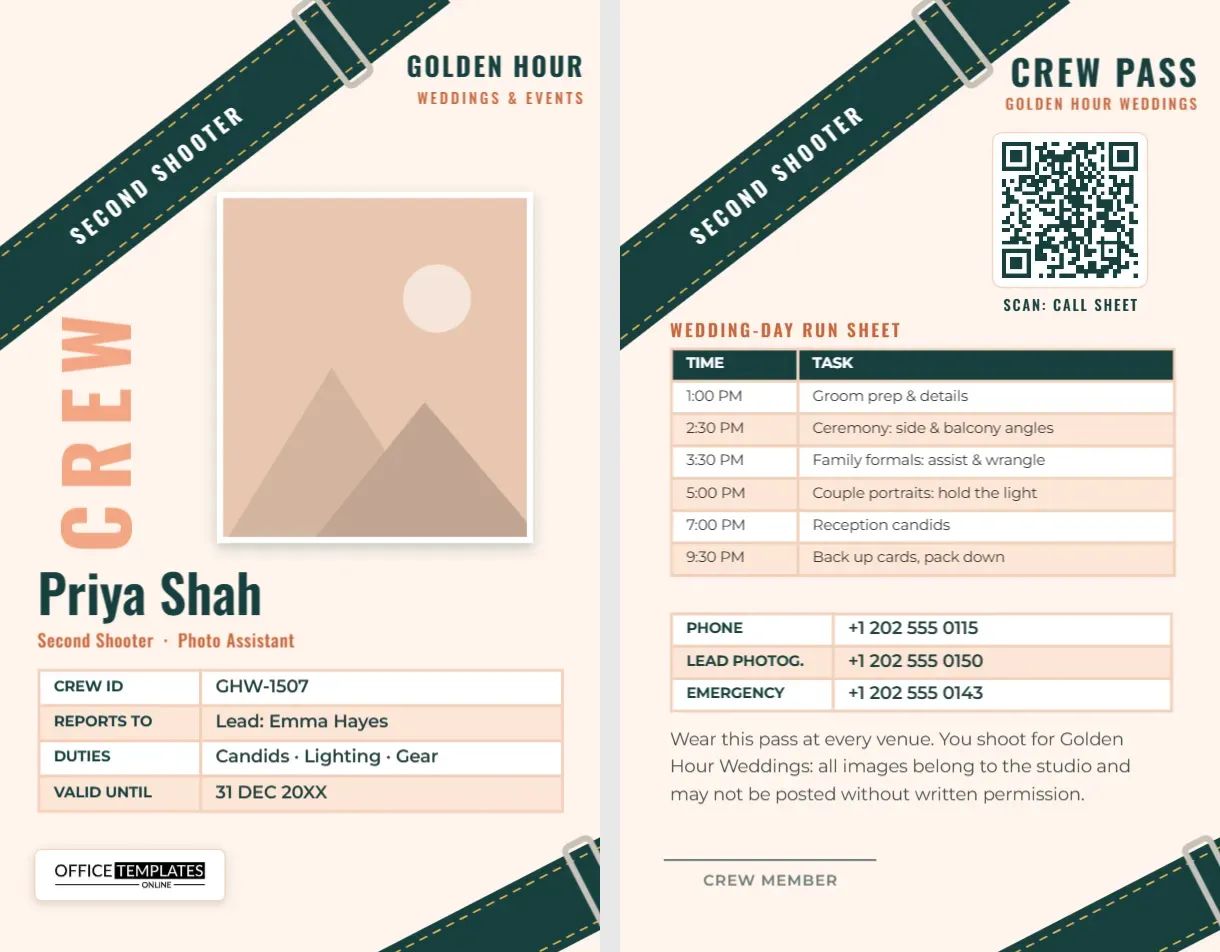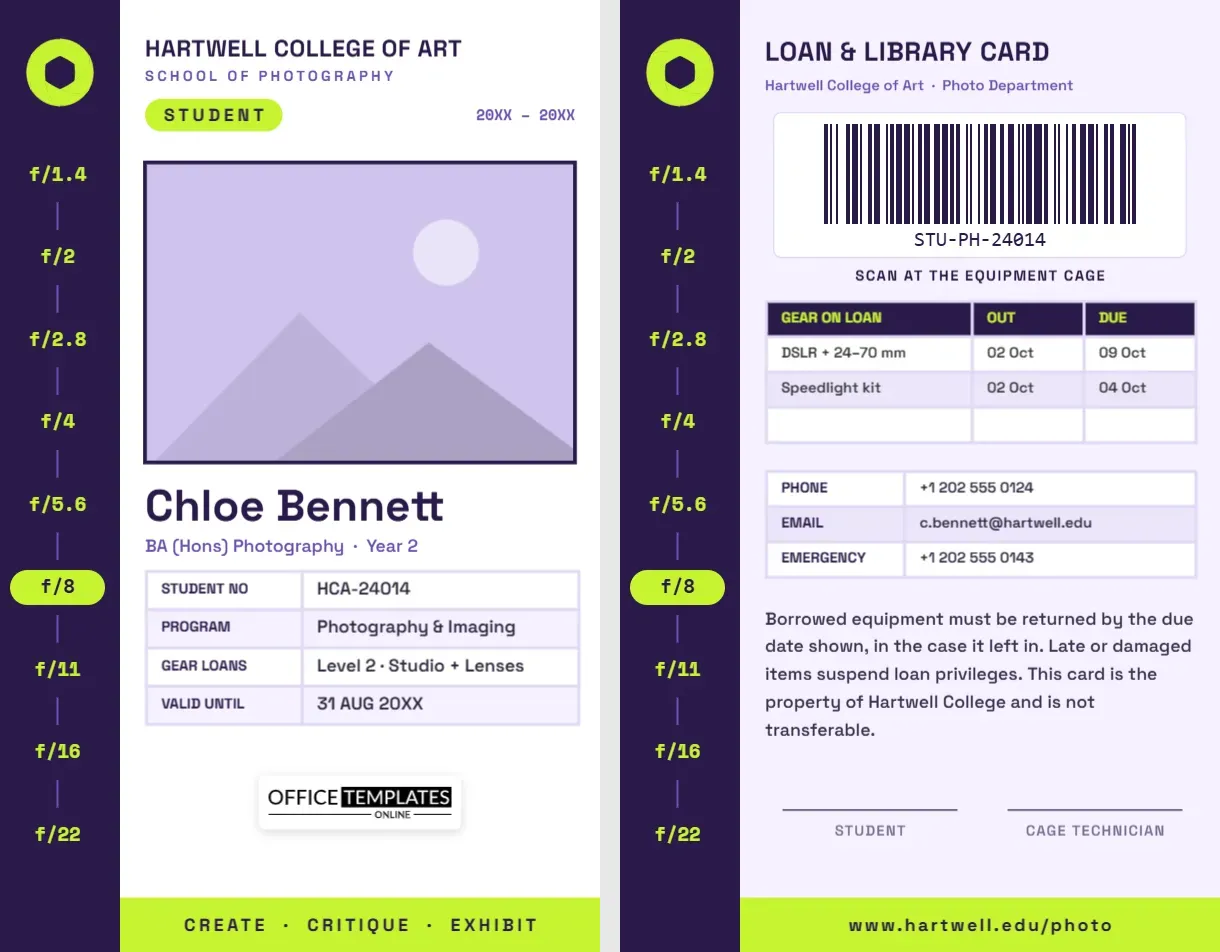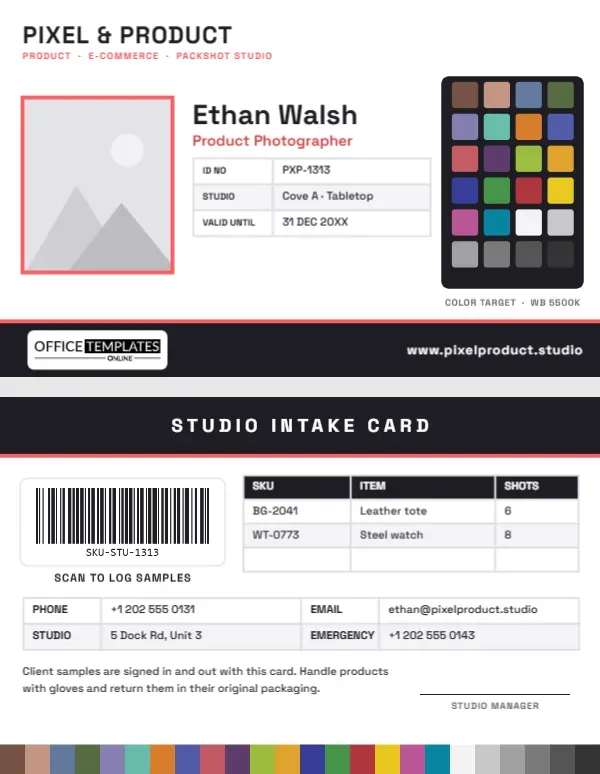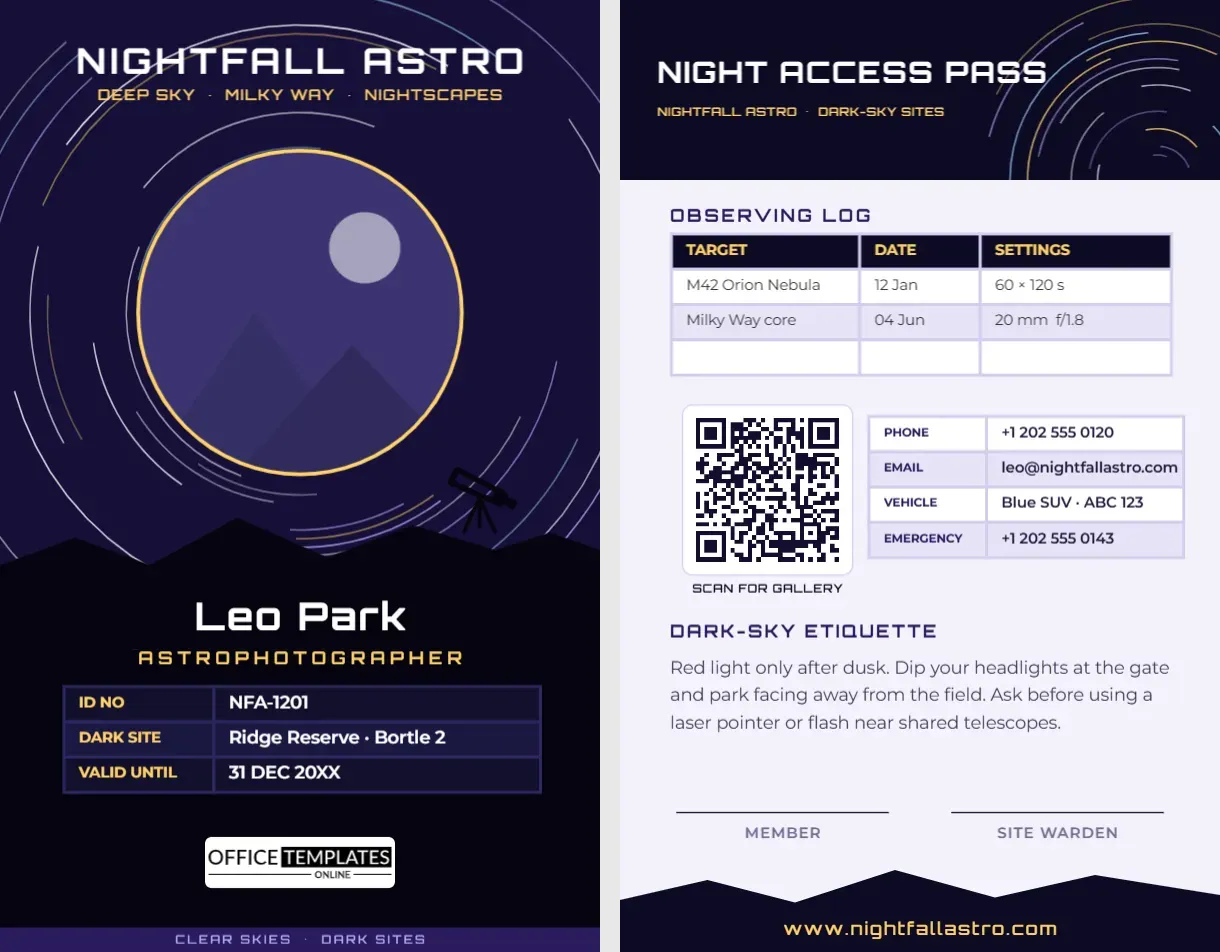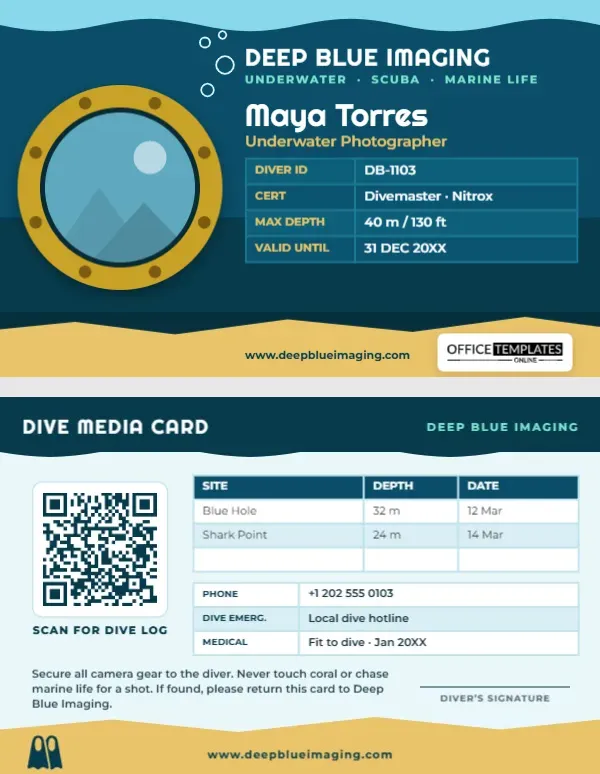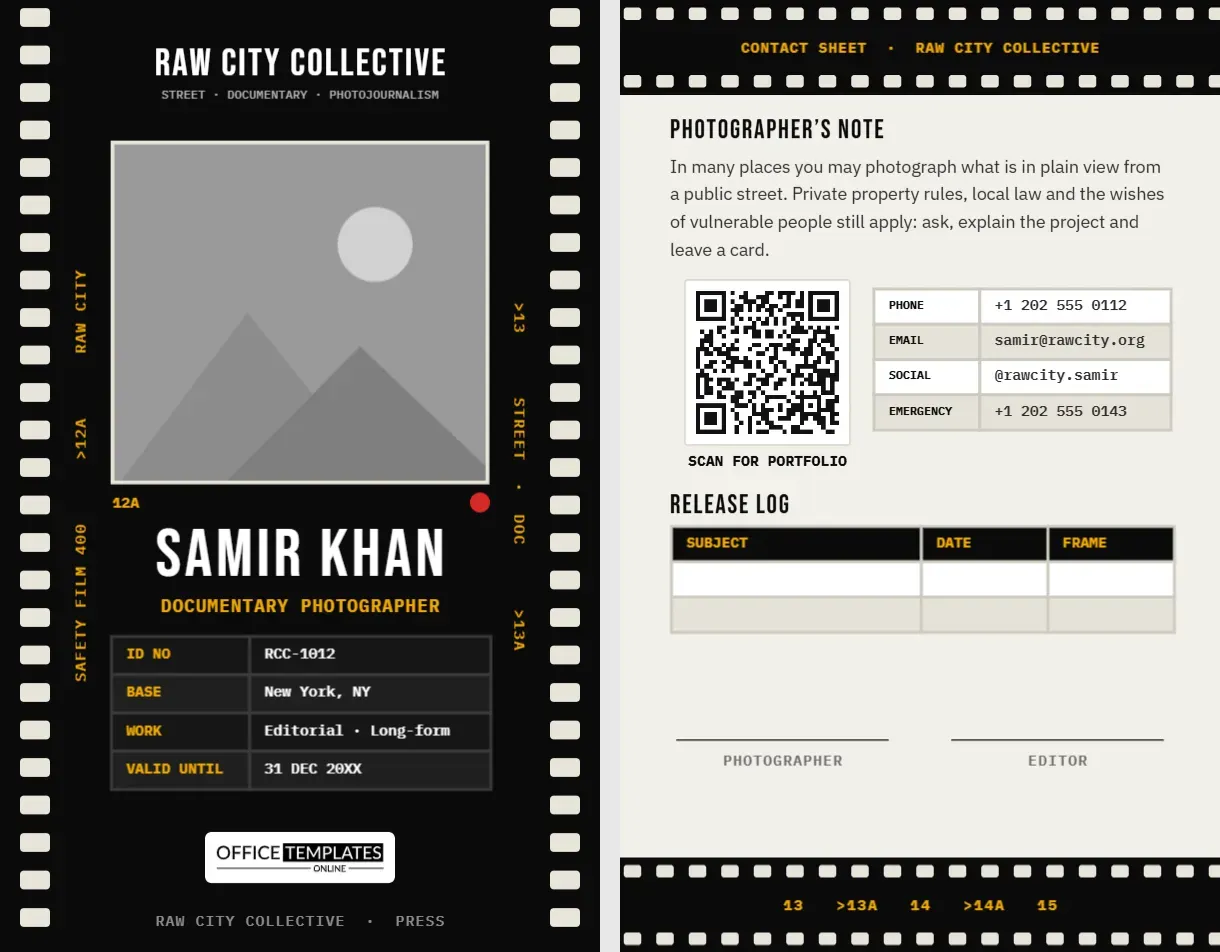
On a film set, everyone has a place and a moment. The stills photographer’s place is usually just beside the camera, and the moment is the take itself, when the whole crew is silent and the actors are in character. It is a privileged position, and crews guard it carefully. Stills photographers who look and act like part of the unit get the best access. This Film Set Stills Photographer ID Card is made for unit stills photographers, special stills photographers, behind-the-scenes shooters, and students on short film productions. It is built like the most famous object on any set: the clapperboard.
Sticks at the Top, Slate Below
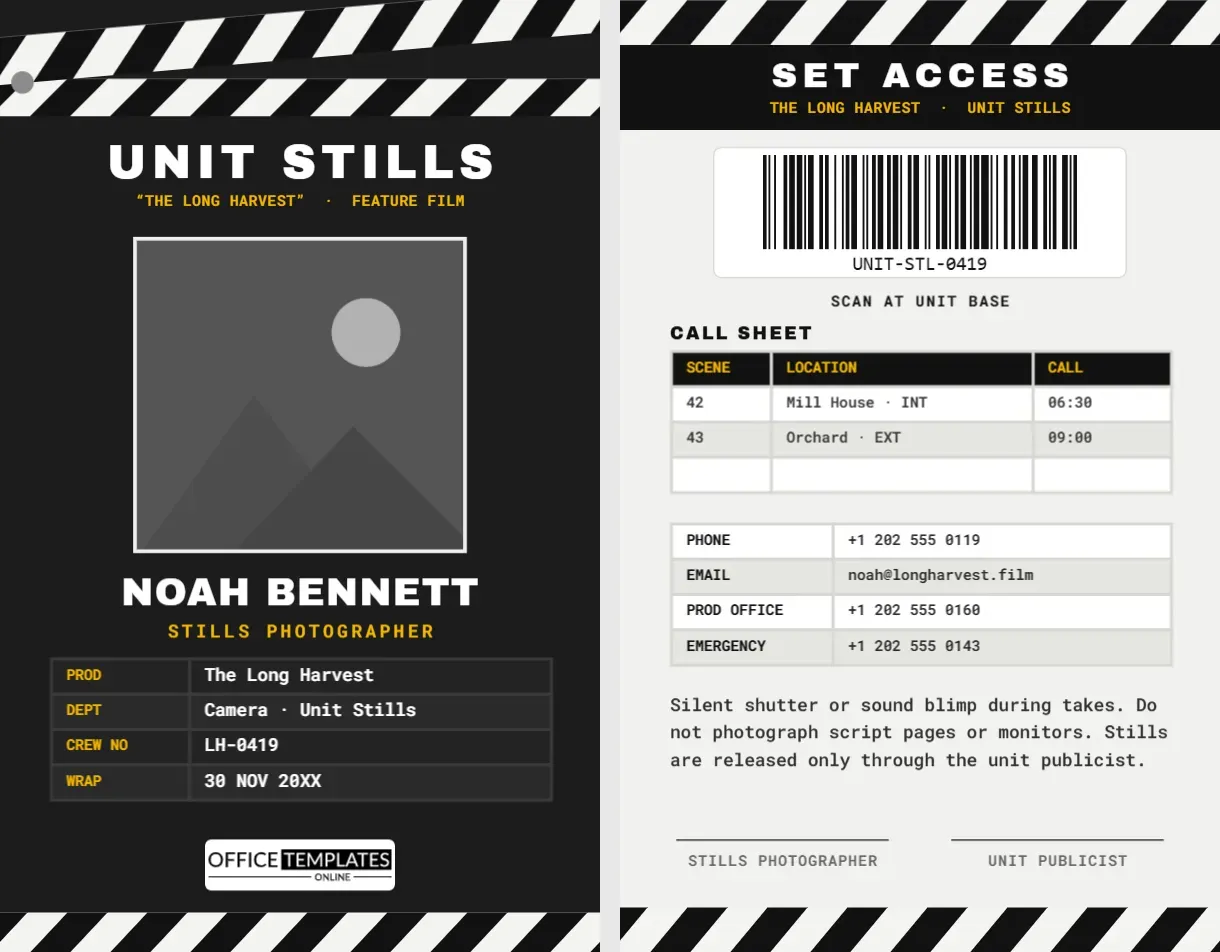
The whole front of the card is a clapperboard. Across the top, two striped sticks in black and white diagonal bands sit one above the other, the upper stick tilted open as if the second assistant camera were about to call mark. A small grey hinge pin holds them at the left edge. Below them, the card turns into the slate itself, a charcoal board with the production’s details written on it.
UNIT STILLS is printed across the slate in bold white Archivo Black, with the production name, The Long Harvest · Feature Film, in amber Roboto Mono beneath, like chalk or marker on a real slate. Your photo sits in the centre with a thin white border. Your name, NOAH BENNETT on the sample, follows in white capitals and STILLS PHOTOGRAPHER in widely spaced amber mono letters. Instead of the usual ID fields, the table borrows the language of the slate: PROD, DEPT, CREW NO and WRAP date, in amber labels and white values. Our logo sits on a white plate, and a second striped stick closes the bottom edge.
The card is a portrait CR80, 2.125 inches by 3.375 inches, sized for the standard vertical holders that productions hand out with lanyards.
Set Access on the Reverse
The back is a pale grey like a call sheet page, with a striped stick at the top and bottom. Under the top stick, a black band reads SET ACCESS with the production and department in amber. A large barcode, Scan at unit base, can connect to your production’s crew check-in. Then comes a small call sheet: scene, location, and call time for two sample scenes, 42 at Mill House (interior) at 06:30 and 43 in the Orchard (exterior) at 09:00, with a spare row. A contact table lists your phone, email, the production office, and an emergency number, and a note sets the ground rules: silent shutter or sound blimp during takes, no photographs of script pages or monitors, and stills released only through the unit publicist. Signature lines for the stills photographer and the unit publicist finish the card.
Unit Stills or Special Stills?
| Detail | Unit stills | Special stills |
|---|---|---|
| When | During shooting days, often the whole schedule | A few booked days, sometimes before or after the shoot |
| What | Scenes as they are filmed, behind the scenes, crew at work | Posed key art for posters, press kits, and campaigns |
| Where | Beside the camera, in the wings of the set | A dedicated studio or a set dressed for the shoot |
| Key skill | Silence and anticipation | Lighting and directing talent |
Change the front of the card to SPECIAL STILLS or BEHIND THE SCENES to match your role.
Working Silently Beside the Camera
The single most important rule for stills on set is sound. A shutter click during a take can ruin it, which is why most productions ask for a mirrorless camera in silent mode or a sound blimp, a padded housing that muffles the camera. Know the sound department’s preference before day one. Stand where the director of photography and the first assistant director tell you, keep out of the actors’ eyelines, and never step into the lighting. Many stills photographers shoot the rehearsal, then quietly repeat key frames during a take only if they are completely silent. After the shoot, images go to the unit publicist or the studio, never to social media, which is exactly what the note on the back of this card reminds everyone.
Editing the Slate
- Photo: click the white-bordered frame and choose Replace Image.
- Production title: retype the film name and format, for example Series · Episode 104 or Commercial · Two-day shoot.
- Slate table: select it, click Edit Data, and fill in your production, department, crew number, and wrap date.
- Call sheet: update scenes and call times on the back, or add rows with + Row.
- Barcode: enter your crew number in the Barcodes & QR panel.
- Clapper sticks: each striped stick is one group. Recolour the stripes, for example red and white for a commercial or yellow and black for a stunt unit.
Beyond Feature Films
The clapperboard design works for any production crew that needs a stills or content photographer: television series, commercials, music videos, documentary shoots, theatre filming, student and film-school productions, and corporate video shoots. It also works well as a generic crew pass: change UNIT STILLS to CAMERA DEPT, ART DEPT, or LOCATIONS and give each crew member their own card.
Printing Crew Passes
Productions often print a small batch on PVC so passes survive weeks of outdoor locations. For a short film, laminated cardstock is perfectly fine. The design uses a lot of dark charcoal, so print a test first and make sure the stripes stay crisp and the amber text stays legible. Punch the lanyard slot in the black part of the slate just below the sticks, so the stripes stay complete.
Questions From the Set
Can I use the card as a behind-the-scenes content creator?
Yes. Change UNIT STILLS to BTS CONTENT and add the platforms you deliver for in the department row.
Should I print the real production name?
Only if the production allows it. Many shoots use a working title for security; use that instead.
Is the clapperboard one image?
No. The sticks, stripes, and hinge are shapes, so everything stays editable and sharp at any size.
Open the template, write your production on the slate, and walk onto set with a pass that looks like part of the unit.