Free Attendance Sheet Generator
Whether you’re managing a classroom, supervising employees, organizing a training session, or coordinating an event, maintaining accurate attendance records is essential for staying organized and accountable. A well-structured attendance sheet provides a simple way to document participation, monitor absences, and maintain reliable records that can be referenced whenever needed.
Our Free Attendance Sheet Generator makes the process quick and effortless. Instead of formatting spreadsheets or editing templates manually, you can create a clean, professional attendance sheet in just a few steps. Customize the layout to suit your needs, preview the finished document, and download a printable version that’s ready for everyday use. Whether you’re tracking students, employees, volunteers, or event attendees, our generator helps you create organized records in minutes.
What Is an Attendance Sheet?
An attendance sheet is a structured document used to record whether individuals are present, absent, late, excused, or participating during a specific period. It provides a clear and organized record that can be used for reporting, planning, payroll, academic administration, compliance, and historical reference.
Attendance sheets are widely used across schools, colleges, businesses, healthcare organizations, government agencies, nonprofit groups, sports clubs, training providers, and event management. Regardless of the industry, they serve the same purpose—creating an accurate record of participation that can be reviewed whenever needed.
Depending on the situation, an attendance sheet may track a single meeting, an entire workweek, a school term, or an ongoing project. Some organizations maintain simple daily registers, while others use detailed records that include arrival times, departure times, leave status, overtime, signatures, or additional notes.
Although many businesses now use workforce management software and educational institutions rely on student information systems, printable attendance sheets remain an efficient solution for day-to-day recordkeeping. They’re easy to complete, simple to distribute, and can be stored digitally or on paper for future reference.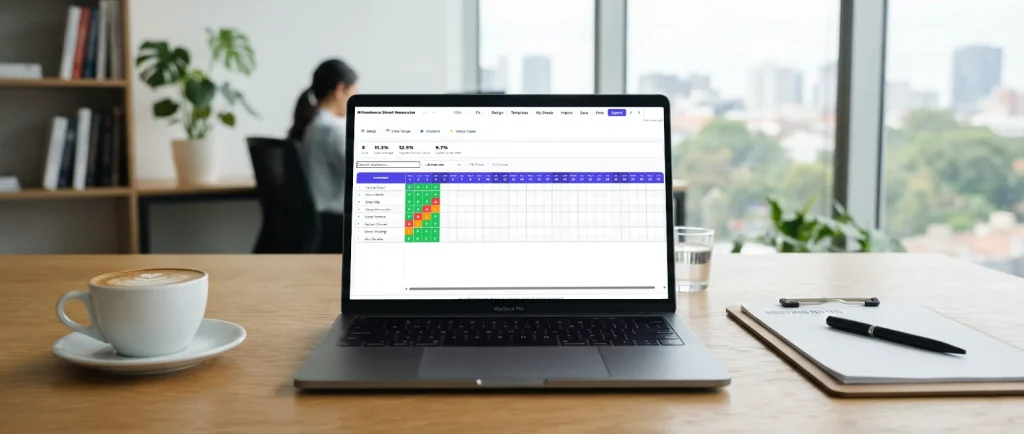
Why Attendance Tracking Matters
Keeping accurate attendance records benefits far more than administrative reporting. It provides valuable information that helps organizations make informed decisions, improve accountability, and identify patterns that may otherwise go unnoticed.
For employers, attendance data supports workforce planning, payroll preparation, shift scheduling, leave management, and performance reviews. Managers can identify recurring absences, monitor punctuality, and ensure adequate staffing levels across departments.
Within schools and universities, attendance records help teachers monitor student engagement and identify learners who may need additional academic support. Many educational institutions also require documented attendance for reporting, funding, examinations, and graduation eligibility.
Training providers, conference organizers, volunteer coordinators, and community organizations also rely on participation records to verify attendance, issue certificates, manage registrations, and evaluate event success.
Whether you’re tracking five people or five hundred, maintaining organized records creates transparency, improves communication, and simplifies future reporting.
Who Uses Attendance Sheets?
Attendance sheets are one of the most versatile recordkeeping tools available because they can be adapted for almost any environment where participation needs to be documented.
Schools and Educational Institutions
Teachers, lecturers, tutors, and school administrators use attendance records to monitor classroom participation, maintain student records, identify attendance trends, and support academic reporting throughout the school year.
Businesses and Employers
Organizations use attendance records to document employee workdays, monitor punctuality, manage shift rotations, support payroll processing, and maintain accurate HR documentation. Reliable records also help managers identify attendance trends and improve workforce planning.
Training Providers
Professional training companies, certification programs, workshops, and corporate learning teams use attendance registers to verify participation and maintain records for compliance, certification, or internal reporting.
Events and Conferences
Attendance sheets are commonly used during conferences, seminars, networking events, annual meetings, and workshops to record participant attendance, verify registrations, and maintain organized event documentation.
Sports Teams and Clubs
Coaches, instructors, and club administrators use participation records to monitor training sessions, practices, competitions, and member engagement throughout a season.
Volunteer and Community Organizations
Charities, nonprofit organizations, religious groups, and community associations often document volunteer participation to recognize contributions, report volunteer hours, and maintain organizational records.
Common Types of Attendance Sheets
Different situations require different formats. Selecting the appropriate layout helps ensure information is recorded accurately while making reports easier to prepare later.
Daily Attendance Sheet
Designed for recording attendance during a single day, this format is ideal for classrooms, meetings, workshops, conferences, interviews, healthcare appointments, and one-time events.
Weekly Attendance Sheet
Weekly registers provide a convenient overview of attendance across multiple days. They are frequently used by schools, childcare centers, gyms, businesses, and sports clubs where participation is monitored throughout the week.
Monthly Attendance Sheet
A monthly format allows organizations to monitor attendance over a longer period. Employers often use monthly records to support payroll calculations, while schools use them to evaluate student attendance throughout the academic term.
Employee Attendance Sheet
Employee registers typically include names, departments, work schedules, attendance status, overtime, leave, arrival times, departure times, and supervisor notes. These records help HR teams maintain accurate workforce documentation while supporting payroll and operational planning.
Student Attendance Sheet
Designed specifically for educational settings, student registers allow teachers to monitor classroom participation, identify attendance patterns, and maintain accurate academic records.
Event Attendance Sheet
Event organizers often require attendees to sign in during conferences, workshops, seminars, networking events, community programs, and training sessions. These records help verify participation, manage registrations, and prepare post-event reports.
Volunteer Attendance Sheet
Volunteer organizations frequently document participation to track service hours, recognize volunteer contributions, and maintain records for grants, reporting, or organizational planning.
Key Features of an Effective Attendance Sheet
A well-designed attendance sheet should do more than record who was present. It should provide a clear, organized format that makes information easy to capture, review, and reference over time. Whether you’re managing a classroom, workplace, or event, a consistent layout helps reduce errors and improves recordkeeping.
Most attendance sheets include the names of participants, the date or reporting period, and a column for recording attendance status. Depending on the purpose, additional fields such as arrival and departure times, signatures, departments, class names, or notes may also be included.
An effective attendance sheet should be:
- Easy to read and complete
- Suitable for both print and digital use
- Flexible enough for different industries and organizations
- Organized with clearly labeled rows and columns
- Consistent in formatting for easier reporting
- Customizable to suit specific tracking requirements
Using a standardized format ensures information is recorded consistently, making it easier to compare records across days, weeks, or months.
Benefits of Maintaining Organized Attendance Records
Accurate attendance records provide valuable insights that extend well beyond documenting daily participation. They support better planning, improve accountability, and create a reliable source of information for future reference.
For employers, organized records simplify payroll preparation, leave management, and workforce scheduling. Managers can identify recurring patterns such as absenteeism or lateness, helping them make informed staffing decisions.
Educational institutions rely on attendance records to monitor student participation, identify learners who may need additional support, and satisfy administrative reporting requirements. Similar benefits apply to training providers, volunteer organizations, and community groups, where participation records are often needed for reporting, certification, or program evaluation.
Maintaining complete records also reduces administrative work by ensuring important information can be located quickly whenever it is needed.
Common Attendance Status Codes
Many schools, businesses, and organizations use standardized status codes to make attendance records easier to read and analyze. While the exact codes may vary, using consistent abbreviations helps improve reporting and reduces confusion.
Some of the most commonly used attendance codes include:
- P – Present
- A – Absent
- L – Late
- E – Excused
- SL – Sick Leave
- AL – Annual Leave
- HD – Half Day
- WFH – Working From Home
- R – Remote
- OT – Overtime
Before implementing attendance codes, ensure everyone responsible for recording attendance understands what each abbreviation represents. A standardized approach improves consistency across departments, classrooms, or project teams.
Why Use Our Free Attendance Sheet Generator?
Creating professional attendance sheets doesn’t have to involve complicated spreadsheets or time-consuming formatting. Our generator is designed to simplify the entire process, allowing you to create organized, ready-to-use documents in just a few minutes.
Whether you’re preparing records for a classroom, workplace, training session, volunteer program, or community event, the generator provides a clean, structured layout that can be customized to suit your requirements.
Key benefits include:
- Create professional attendance sheets in minutes.
- Customize layouts for different organizations and use cases.
- Generate documents that are ready to print or save digitally.
- Eliminate manual spreadsheet formatting.
- Produce consistent records for ongoing documentation.
- Suitable for schools, businesses, nonprofits, clubs, and events.
The generator is designed to save time while helping you maintain clear, accurate, and well-organized records.
Who Benefits from Using an Attendance Sheet Generator?
Attendance records are useful in almost every industry where participation needs to be documented. Because every organization has different requirements, a flexible generator can be adapted for a wide variety of situations.
Common users include:
Teachers and Schools
Teachers can quickly prepare class registers for daily lessons, exams, extracurricular activities, and parent meetings. Organized records make it easier to monitor student participation and prepare administrative reports.
HR Professionals
Human resource teams use attendance records to support payroll processing, leave management, workforce planning, and compliance with company policies. Consistent documentation also helps identify attendance trends and staffing requirements.
Business Owners and Managers
Small businesses and larger organizations benefit from maintaining accurate employee records for scheduling, performance reviews, and operational planning.
Event Organizers
Conferences, workshops, seminars, and community events often require participant records to verify attendance, manage registrations, and evaluate event success.
Coaches and Club Leaders
Sports clubs, fitness instructors, and community organizations use attendance records to monitor participation, encourage engagement, and maintain historical records throughout a season.
Create Your Attendance Sheet Today
Accurate attendance records support better organization, improve accountability, and simplify administrative tasks across a wide range of industries. From schools and universities to businesses, healthcare providers, sports clubs, and community organizations, maintaining reliable records makes day-to-day management more efficient.
Use our Free Attendance Sheet Generator to create a professional document that’s tailored to your needs. Simply customize the details, generate your attendance sheet, and download a polished, printable record that’s ready to use immediately.
Frequently Asked Questions
Have questions about creating or using an attendance sheet? Below are answers to some of the most common questions about attendance tracking, recordkeeping, customization, and downloading your completed document.
What is an attendance sheet?
An attendance sheet is a document used to record whether individuals are present, absent, late, excused, or participating during a specific period. It provides an organized record that can be used for classrooms, workplaces, training sessions, meetings, events, and many other activities.
How do I create an attendance sheet?
You can create a professional attendance sheet using our free Attendance Sheet Generator. Simply enter your details, customize the layout, preview the document, and download a ready-to-use version for printing or digital storage.
Is this attendance sheet generator free?
Yes. Our Attendance Sheet Generator is completely free to use. You can create, customize, and download professional attendance sheets without paying any subscription or licensing fees.
Can I print my attendance sheet?
Yes. Every attendance sheet generated by the tool is designed to be printer-friendly, making it suitable for classrooms, offices, meetings, workshops, events, and other in-person activities.
Can I download my attendance sheet?
Yes. After generating your document, you can download it for future use, print it immediately, or store it digitally as part of your records.
Can businesses use this attendance sheet generator?
Absolutely. Businesses can use the generator to create employee attendance records for daily operations, shift management, payroll support, workforce planning, and HR documentation.
Is this generator suitable for teachers?
Yes. Teachers, lecturers, tutors, and school administrators can use the generator to prepare classroom registers for daily lessons, examinations, extracurricular activities, and academic reporting.
Can I create a monthly attendance sheet?
Yes. You can generate daily, weekly, monthly, or custom attendance sheets depending on how frequently attendance needs to be recorded.
What’s the difference between an attendance sheet and an attendance register?
An attendance sheet is usually created for a specific class, meeting, work shift, or event. An attendance register generally refers to a collection of attendance records maintained over an extended period, such as an academic year or ongoing employment.
What’s the difference between an attendance sheet and a sign-in sheet?
An attendance sheet is typically completed by a teacher, supervisor, or organizer to record attendance status. A sign-in sheet is completed by participants themselves and often includes signatures, arrival times, and contact information.
What information should an attendance sheet include?
Most attendance sheets include the organization or class name, date, participant names, attendance status, and a space for comments or signatures. Additional fields such as departments, employee IDs, arrival times, or notes can also be included depending on your requirements.
Can I customize my attendance sheet?
Yes. The generator allows you to customize your attendance sheet to suit different organizations, classrooms, events, teams, and reporting requirements.
Can I use this generator for events?
Yes. It’s suitable for conferences, workshops, seminars, volunteer programs, training sessions, club meetings, religious gatherings, and community events where participant records are required.
Can I edit my attendance sheet later?
If you save the downloaded file in an editable format, you can update participant information, dates, or other details whenever needed. Many users also generate a new attendance sheet whenever a fresh register is required.
Why is maintaining attendance records important?
Accurate attendance records help improve accountability, support payroll processing, monitor student participation, simplify reporting, identify attendance trends, and maintain organized documentation for future reference.
You may also like