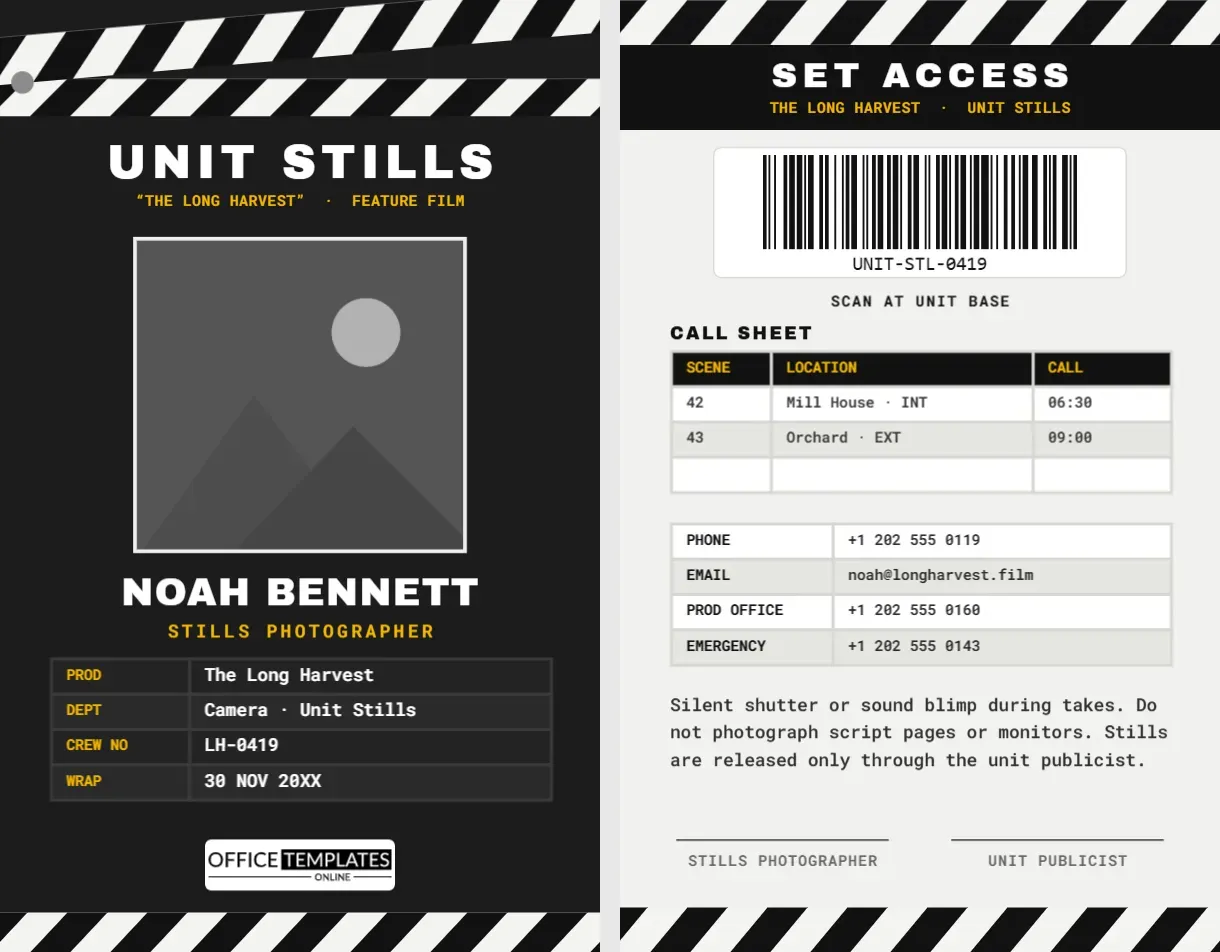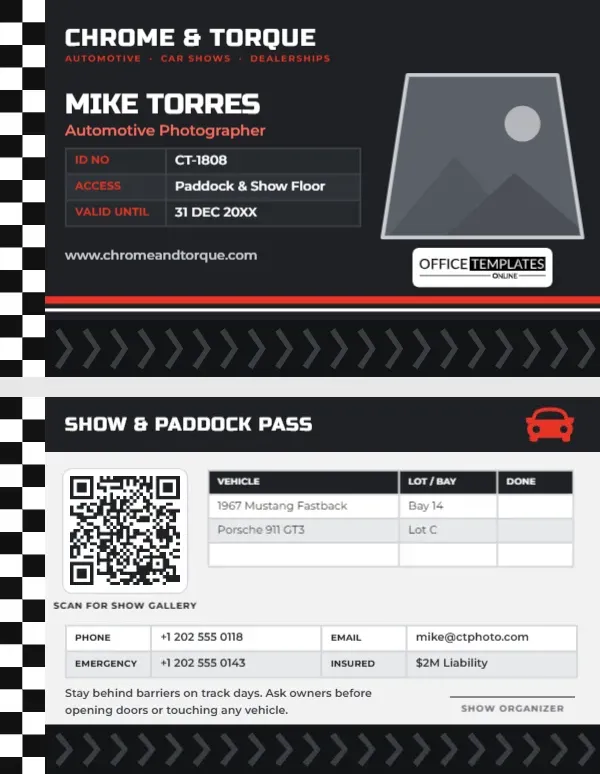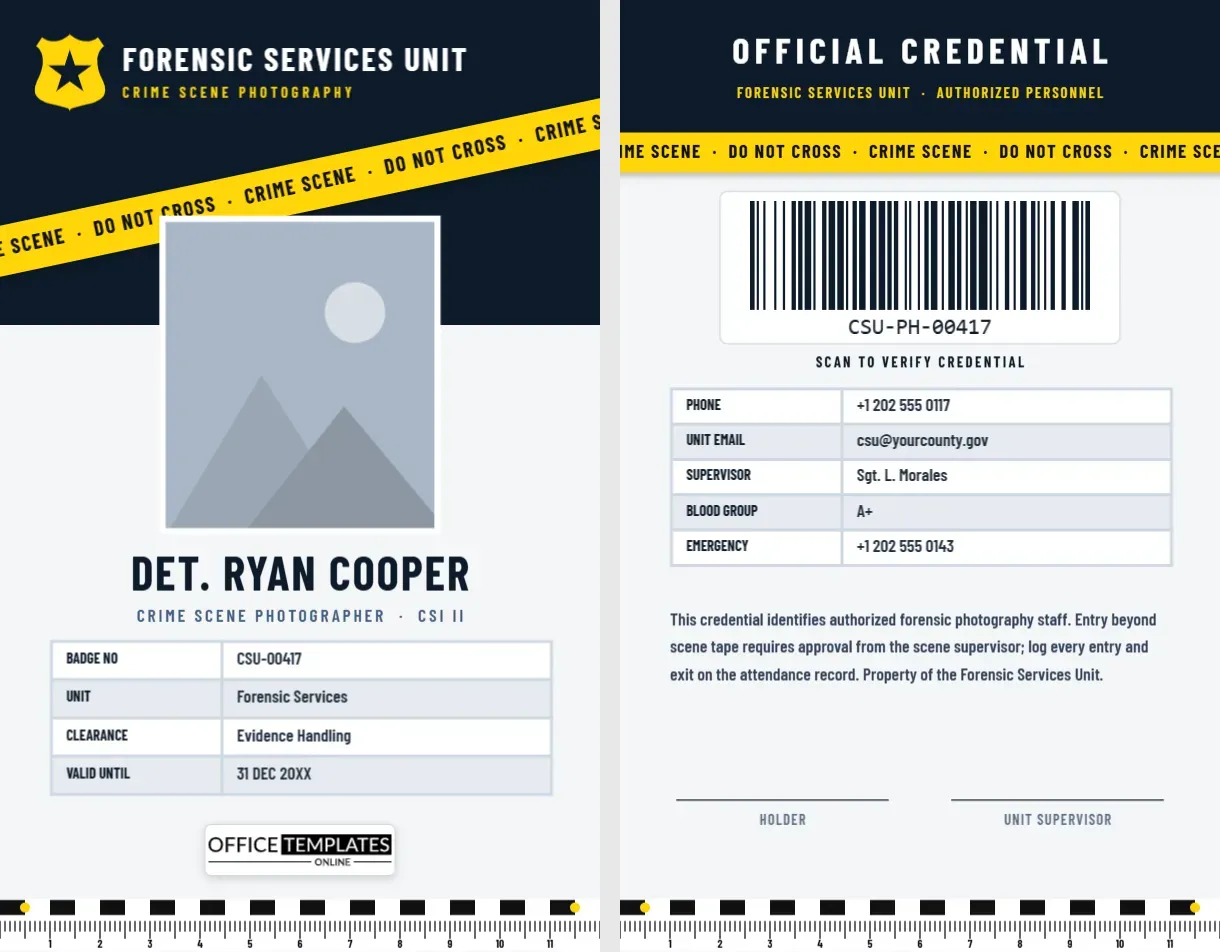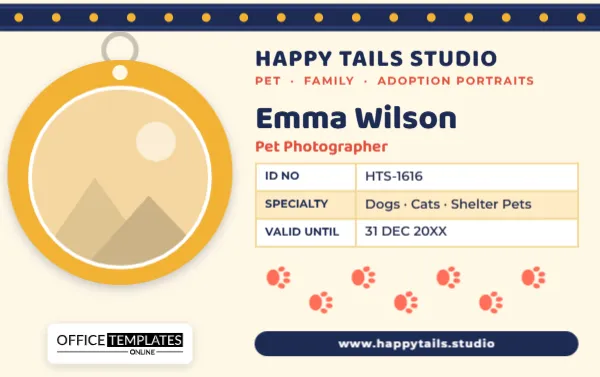
Three songs. That is usually all you get. The lights drop, the band walks on, security waves the photographers into the pit, and the clock starts. There is no time to argue at the barrier about who you are. This Concert Photographer Photo Pass is built like the laminates that hang around the necks of tour crews: loud, dark, impossible to miss under stage lights, and packed with the information security staff check when they scan the pit. Use it as a media pass for your festival, a crew credential for your venue, or a personal press ID when you shoot for a magazine or a band.
Built Like a Tour Laminate
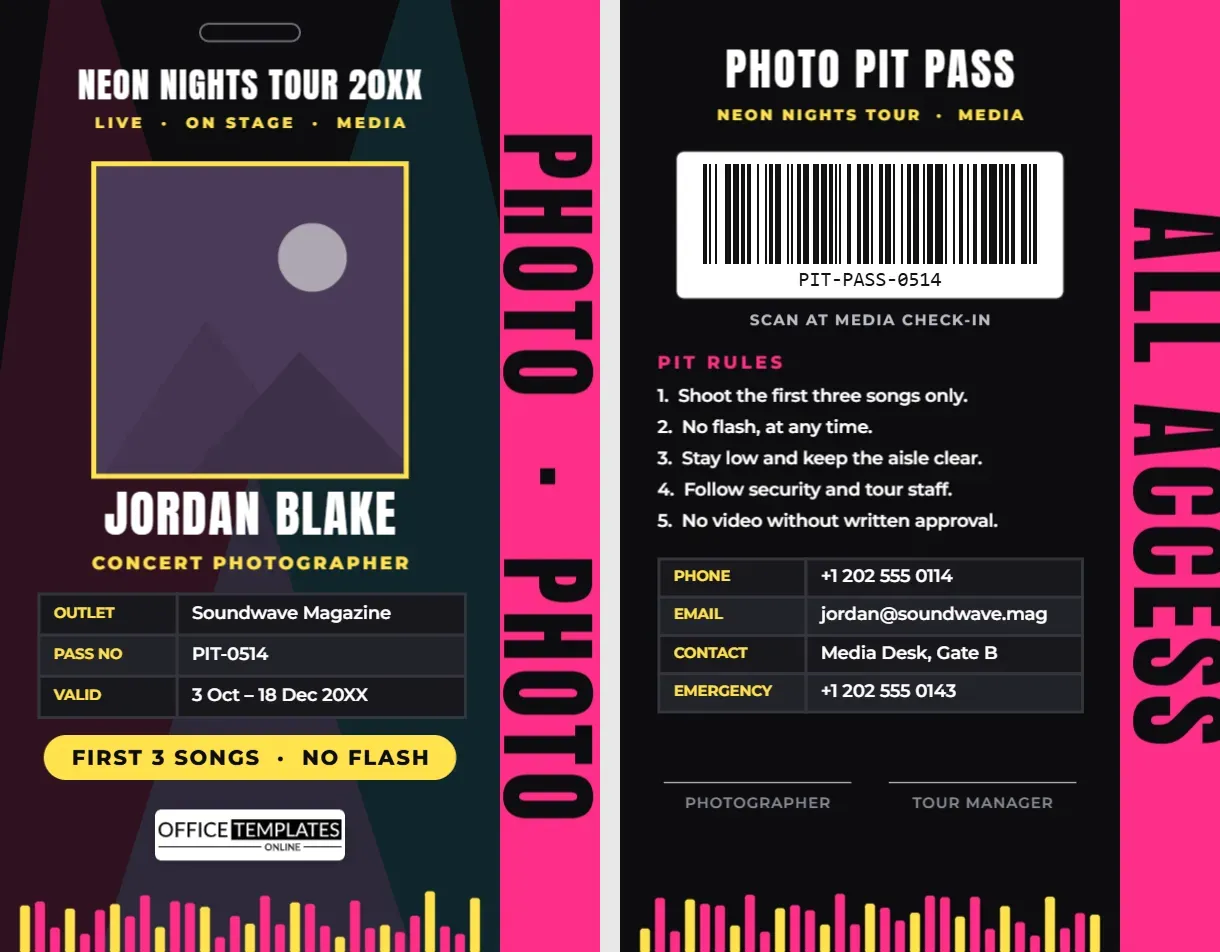
The card is tall and narrow, 2.125 by 3.375 inches, the CR80 size that fits any vertical lanyard sleeve. A hot pink strip runs the full height of the right-hand edge, and the word PHOTO is printed down it twice in huge black Anton capitals, turned on its side. Even when the pass is spinning on a lanyard in a dark room, that strip tells security what you are. At the top, a lanyard slot sits above the tour name, NEON NIGHTS TOUR 20XX, with Live · On Stage · Media in yellow.
Two stage spotlights sweep down from the top corners, one pink and one cyan, crossing behind your photo. The photo itself has a bright yellow border. Under it, your name is set in tall white Anton, JORDAN BLAKE on the sample, with CONCERT PHOTOGRAPHER in yellow. A dark three-row table gives your outlet, pass number, and the dates the pass is valid. Then comes the rule every music photographer knows by heart, printed on a yellow bar: FIRST 3 SONGS · NO FLASH. Our logo sits on a small white plate, and a row of pink and yellow equaliser bars bounces along the bottom edge.
Pit Talk: A Short Glossary
- The pit: The gap between the crowd barrier and the stage where accredited photographers work. It is also the route security uses to pull people out of the crowd, so you share it with them.
- The three-song rule: At most shows, photographers may shoot the first three songs only, then must leave the pit. Some artists allow fewer, occasionally only one song or a song from the soundboard.
- No flash: Flash distracts performers and ruins the lighting design, and it is almost universally banned. Fast lenses and high ISO are the norm.
- Laminate: A durable pass hung on a lanyard, often for crew and media working a whole tour. Single-night access is sometimes a sticker pass instead.
- Soundboard position: Some shows move photographers to the mixing desk in the middle of the venue instead of the pit. Longer lenses needed.
- Photo release: A contract some artists require before you shoot, setting how the images may be used. Read it before you sign.
The Other Side: Barcode, Rules and Contacts
The back keeps the dark background and pink strip, this time printed with ALL ACCESS. At the top, PHOTO PIT PASS in white and the tour name in yellow. A large white panel holds a barcode for media check-in, labelled Scan at media check-in. Below it, the Pit Rules are numbered one to five in plain white type: shoot the first three songs only; no flash, at any time; stay low and keep the aisle clear; follow security and tour staff; no video without written approval. A contact table lists your phone, email, the tour’s media contact and an emergency number, and two signature lines sit above another row of equaliser bars.
Who Prints a Pass Like This
- Festival and venue organisers issuing media accreditation to local press photographers.
- Bands and tour managers credentialing the tour photographer and content crew.
- Music magazines and blogs giving staff photographers a consistent press ID.
- Freelance music photographers who want a professional ID to carry alongside the passes venues provide.
- Student radio and college newspapers covering campus concerts.
If you are a freelancer, remember that your own pass does not get you into a show; the venue or promoter decides that. Your card simply identifies you and your outlet when you collect the official pass and while you are working.
Turning It Into Your Tour’s Pass
- Photo: click inside the yellow frame, choose Replace Image, and pick a clear, well-lit headshot. Dark venues make faces hard to see, so a bright photo helps security match you.
- Tour or festival name: retype NEON NIGHTS TOUR 20XX. Long names can shrink a size or two.
- The side strip: double-click PHOTO · PHOTO to change it to MEDIA, PRESS or CREW. Recolour the strip to colour-code passes: pink for photo, cyan for video, yellow for writers.
- Pass table: use Edit Data to set the outlet, pass number and valid dates.
- Rules bar: if the artist allows only one song, edit the yellow bar to FIRST SONG ONLY · NO FLASH so nobody can say they were not told.
- Barcode: in the Barcodes & QR panel, enter a unique pass number for each photographer so check-in scanners can tell passes apart.
Making the Rules Work on the Night
Printed rules are only useful if everyone sees them before doors. Send the pass design by email with the confirmation, read the rules out at the media meeting point, and have the security lead keep a copy of the photographer list. Walk photographers into the pit together, count the songs aloud if it is a tight venue, and lead them out together. Photographers appreciate clear, consistent handling, and artists appreciate a pit that stays calm.
Printing Neon on Black
Bright pink and yellow on near-black look spectacular on PVC printed with a card printer, and a PVC pass survives sweat, spilt drinks, and crowd surfing far better than paper. For short runs, print on glossy photo cardstock and slide it into a heavy-duty vertical badge holder. Punch the slot where the small outline is drawn at the top, clear of the tour name. Always test-scan the barcode on the printed pass; glossy lamination can cause glare on some scanners, so angle the pass slightly when scanning.
Photo Pit FAQs
Can I use this pass for a one-off gig?
Yes. Change the VALID row to a single date and the tour name to the venue and show.
Do I need to keep the equaliser bars?
They are one grouped object at the bottom of each side, so you can recolour or delete them with one click.
Can the pass show different access levels?
Change the side strip wording and colour (PIT, SOUNDBOARD, ALL ACCESS) and print a version for each level.
Open the template, add your photo and tour details, and hang a pass around your neck that security will recognise before you reach the barrier.